
 Le Mauna Kea domine la Grande Ile d’Hawaii de ses 4207 mètres. En raison de son isolement et de son altitude, ce volcan considéré comme éteint un lieu idéal pour l’astronomie. Toutefois, les traditions ont la peau dure. Beaucoup d’Hawaiiens considèrent que la montagne est sacrée et ils luttent pour la conserver dans son état naturel. Quand la NASA a voulu construire un télescope au sommet du Mauna Kea, son étude d’impact environnemental a été contestée par les défenseurs du site qui ont finalement gagné la partie. La NASA a retiré sa proposition et tous les autres projets de construction de télescopes ont été abandonnés. Les Hawaiiens restent vigilants et tiennent à protéger cette terre sacrée et ses divinités, comme Poli’ahu qui a élu domicile sur le Mauna Kea.
Quatre jeunes filles revêtues de capes blanches appartiennent à la mythologie hawaiienne. Elles sont toutes d’une grande beauté, pleines d’esprit et de sagesse ; elles adorent l’aventure et détestent Pele, la déesse des volcans. Elles incarnent les idées mythiques de la guerre éternelle entre la chaleur et le froid, le feu et la glace. Ce sont elles qui règnent sur les montagnes au nord et hantent les sommets enneigés. Pour lutter contre le froid glacial, elles revêtent des manteaux de kapa, blancs comme la neige. Les quatre jeunes filles ont toutes le pouvoir d’abandonner cette cape blanche et de la remplacer par des vêtements sur lesquels étincelle la lumière dorée du soleil. Parfois, elles blanchissent les sommets et les pentes des montagnes qui reprennent leurs couleurs naturelles à mesure que les jeunes filles descendent vers la mer en traversant des terres rendues fertiles parcourues par les ruisseaux et inondées de soleil …
Poli’ahu, la plus connue de ces jeunes filles des montagnes, aimait les falaises sur la côte orientale de la Grande Ile Hawaï où elle allait se promener parmi les mortels et rivaliser avec leurs chefs dans leurs nombreux jeux de hasard et d’adresse. Parfois, elle revêtait son manteau blanc fait du kapa le plus pur et venait se reposer sur le rebord de la falaise surplombant les torrents qui tombaient en cascades dans la mer.
C’est au cours de cette période que Poli’ahu a rencontré Pele, la jeune femme détentrice du feu des volcans. Pele aimait pratiquer le « holua« , une course sur des planches longues et étroites filant sur les pentes des montagnes. Le plus souvent, elle apparaissait sous la forme d’une femme merveilleusement belle, bien différente des autres femmes qui pratiquaient ce sport.
Les chefs des différentes îles hawaiiennes avaient leurs propres lieux de rencontre pour chacun des sports auquel ils se livraient. C’étaient des lieux abrités où se pratiquaient les jeux d’argent, des clairières ouvertes où ils s’adonnaient à la boxe et au jet de lances, ou encore des côtes où la splendeur des fortes vagues provoquait des sensations enivrantes.
Soudain apparut une étrangère d’une beauté incomparable. Poli’ahu l’accueillit et les courses continuèrent. Certaines légendes racontent que Pele n’a pas accepté la supériorité de Poli’ahu dans la pratique du holua. Elle se débarrassa alors de tout déguisement et fit jaillir le feu des profondeurs du Mauna Kea. Elle pourchassa Poli’ahu de ses fontaines de lave et la fit s’enfuir vers le sommet de la montagne. La cape de neige faite de kapa fut vite atteinte par la lave et commença à brûler. Mais Poli’ahu reprit des forces. Elle se saisit de sa cape, la traîna et l’emporta avec elle. Elle la jeta d’un geste ample au-dessus de la montagne, tandis que toute la Grande Ile étaient secouée de tremblements de terre. Obéissant à l’appel de la déesse des neiges, les nuages recouvrirent le sommet de la montagne et se déployèrent sur les pentes, jusqu’à atteindre les fontaines de feu. La lave commença à refroidir et durcir, si bien que les coulées furent repoussées dans les profondeurs du Mauna Loa et du Kilauea.
Poli’ahu a affronté Pele d’autres fois dans des batailles légendaires. Elle a réussi à maintenir la partie supérieure du Mauna Kea sous son manteau de neige et de glace. En descendant vers la mer, les vallées fertiles témoignent des dons de la déesse à la beauté de la terre et au bien-être des hommes.
Sortie du Mauna Loa, Pele a continué à provoquer de puissantes éruptions pour essayer de vaincre la jeune fille au blanc manteau de neige, mais les Hawaiiens disent que Pele a toujours été vaincue et sera toujours défaite dans ce genre d’affrontement. Le royaume de Pele se limite à la moitié sud de l’île Hawaï, tandis que les jeunes filles des neiges règnent sur les terres du nord.
———————————————-
Because of its isolation and height (4,207 m), Mauna Kea is ideal territory for astronomy, but those who consider the mountain sacred have struggled to keep it in its natural state. When NASA wanted to build a telescope at the very top of the mountain, its environmental impact study was challenged by Mauna Kea’s defenders who eventually won when NASA ultimately withdrew its proposal and all other plans to build telescopes atop the mountains were abandoned. Those who follow the old ways will continue their vigilance in order to protect this sacred land and divine beings, like Poli’ahu, who call Mauna Kea home.
There are four maidens with white mantles in the mythology of the Hawaiians. They are all queens of beauty, full of wit and wisdom, lovers of adventure, and enemies of Pele, the goddess of volcanoes. They embody the mythical ideas of eternal warfare between heat and cold, fire and frost. They rule the mountains north of Kilauea and dwell in the cloud-capped summits. They clothe themselves against the bitter cold with snow-mantles. They all have the power of laying aside the white garment and taking in its place clothes made from the golden sunshine. Sometimes the 4 maidens clothe the mountain tops and upper slopes with white, which melts as the maidens come down closer to the sea through lands made fertile by streams and sunshine…
Poli’ahu, the best-known among the maidens of the mountains, loved the eastern cliffs of the great island Hawaii. Here she sported among mortals, meeting the chiefs in their many and curious games of chance and skill. Sometimes she wore a mantle of pure white kapa and rested on the ledge of rock overhanging the torrents of water which in various places fell into the sea.
It was in those days that Poli’ahu met Pele, the maiden of volcanic fires. Pele loved the “holua”, the race of sleds, long and narrow, coasting down sloping, grassy hillsides. She usually appeared as a woman of wonderfully beautiful countenance and form, a stranger unknown to any of the different companies engaging in the sport.
The chiefs of the different districts of the various islands had their favorite meeting-places for any sport in which they desired to engage. These were sheltered places where gambling reigned, open glades where boxing and spear throwing could best be practiced, coasts where the splendid surf made riding the waves on surfboards a scene of intoxicating delight. Suddenly in their midst appeared a stranger of surpassing beauty. Poli’ahu welcomed her and the races were continued. Some of the legend-tellers think that Pele was angered by the superiority of Poliahu. The ground began to grow warm and Poli’ahu knew her enemy. Pele threw off all disguise and called for the forces of fire to burst open the doors of the subterranean caverns of Mauna Kea. Up toward the mountain she marshaled her fire fountains. Poli’ahu fled toward the summit. The snow-mantle was seized by the outbursting lava and began to burn up. Poliahu grasped the robe, dragging it away and carrying it with her. Soon she regained strength and threw the mantle over the mountain. There were earthquakes upon earthquakes, shaking the great island from sea to sea.. Clouds gathered over the mountain summit at the call of the snow goddess. Farther and farther down the sides the snow mantle unfolded until it dropped on the very fountains of fire. The lava chilled and hardened and choked the flowing burning rivers. Pele’s servants became her enemies. The lava, becoming stone, filled up the holes out of which the red melted mass was trying to force itself. Checked and chilled the lava streams were beaten back into the depths of Mauna Loa and Kilauea.
Poli’ahu in legendary battles has met Pele many times. She has kept the upper part of the mountain desolate under her mantle of snow and ice; but down toward the sea most fertile and luxuriant valleys and hillside slopes attest the gifts of the goddess to the beauty of the land and the welfare of men.
Out of Mauna Loa, Pele has stepped forth again and again, and has hurled eruptions of mighty force and great extent against the maiden of the snow mantle, but the natives say that in this battle Pele has been and always will be defeated. Pele’s kingdom has been limited to the southern half of the island Hawaii, while the snow maidens rule the territory to the north.
°°°°°°°°°°
Poli’ahu règne sur le Mauna Kea…


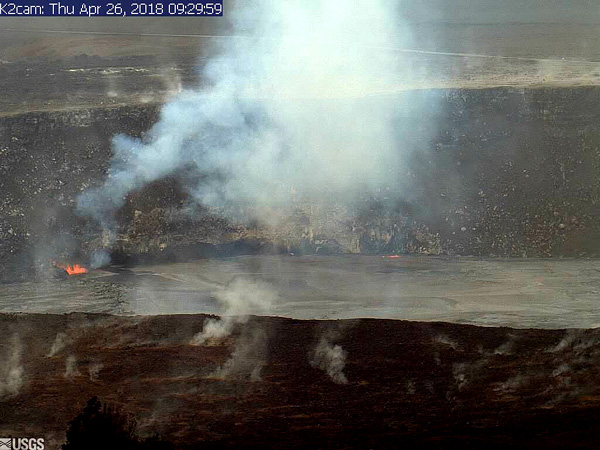
…pendant que Pele surfe sur les vagues de feu du Mauna Loa…


Photos: C. Grandpey




 Claude Grandpey : Volcans et Glaciers