Stromboli : une île à l’abandon? // Stromboli: an abandoned island?

La double catastrophe – incendie en mai et coulées de boue en août – dont a été victime l’ile de Stromboli continue à faire des vagues. Comme je l’ai écrit précédemment, la population de l’île est furieuse contre l’inaction des autorités siciliennes. Elle vient d’être soutenue par section d’Agrigente de l’association Mareamico. Tout le monde s’accorde pour dire que la catastrophe environnementale aurait pu être évitée. Comme l’a dit son président, « une fois encore on a tendance à souligner le caractère exceptionnel de l’événement climatique alors que le vrai problème est l’abandon de Stromboli. »

L’incendie de fin mai qui a détruit la végétation sur l’île a mis la terre à nu et, avec la pluie diluvienne, elle est descendue de la montagne et la boue a envahi les zones habitées. Selon Mareamico, « après l’incendie il y a eu trois mois pour intervenir et sécuriser l’île. Rien n’a été fait et aujourd’hui on assiste passivement une catastrophe environnementale sans précédent. »
La boue qui a envahi Stromboli a également mis au jour des erreurs du passé. Ainsi, une décharge à ciel ouvert jamais contrôlée, au-dessus d’une plage, est descendue avec la boue jusqu’à la mer, emportant avec elle plastique, déchets et débris de toutes sortes. C’est inacceptable pour Stromboli, une île inscrite au patrimoine mondial de l’UNESCO avec les autres îles éoliennes. L’association Mareamico va s’attaquer à tous les choix stratégiques et environnementaux, à commencer par l’usine de compactage des déchets urbains sur la plage près du port de Scari, un scandale qu’il faut régler au plus vite en trouvant une solution plus adéquate.

Mareamico prévient le prochain président de la région de Sicile, quelle que soit sa couleur politique, que la bataille de l’association pour sauver Stromboli de la négligence et de l’abandon sera implacable jusqu’à ce que soit mis en place un plan stratégique environnemental et de sécurité adapté à son caractère exceptionnel. Cela passe avant la recherche de responsabilités, même s’il faudra rembourser les habitants de Stromboli pour les dommages matériels et immatériels subis lors des coulées de boue du 12 août, au plus fort de la saison touristique. Le président de Mareamico a déclaré: « L’amour de Mareamico pour la Sicile nous oblige à être une vigie attentive au délicat équilibre environnemental de sa mer, une ressource infinie à protéger.»

Source: La Sicilia.

——————————————-

The double disaster – a wildfire in May and mudslides in August – suffered by the island of Stromboli continues to make waves. As I have put it before, the population of the island is furious at the inaction of the Sicilian authorities. It has just been supported by the Agrigento section of the Mareamico Association. Everyone agrees that the environmental disaster could have been avoided. As its president said, « once again we tend to emphasize the exceptional nature of the climatic event when the real problem is the abandonment of Stromboli.  »
The wildfire at the end of May which destroyed the vegetation on the island left the land bare and, together with the torrential rain, it descended from the mountain and the mud invaded the inhabited areas. According to Mareamico, « after the fire there were three months to intervene and secure the island. Nothing was done and today we are passively witnessing an unprecedented environmental disaster. »
The mud that invaded Stromboli also exposed past mistakes. Thus, an uncontrolled open dump, above a beach, descended with the mud to the sea, carrying with it plastic, waste and debris of all kinds. This is unacceptable for Stromboli, an island listed as a UNESCO World Heritage Site along with the other Aeolian Islands. The Mareamico association will tackle all the strategic and environmental choices, starting with the urban waste compaction plant on the beach near the port of Scari, a scandal that must be resolved as quickly as possible by finding a more adequate solution.
Mareamico warns the next president of the region of Sicily, whatever his political color, that the association’s battle to save Stromboli from neglect and abandonment will be relentless until a strategic plan of environment and safety is put in place, adapted to its exceptional character. This goes before the search for responsibilities, even if it will be necessary to reimburse the inhabitants of Stromboli for the material and immaterial damage suffered during the mudslides of August 12th, at the height of the tourist season. The President of Mareamico said: « Mareamico’s love for Sicily compels us to be an attentive watchtower of the delicate environmental balance of its sea, an infinite resource to be protected. »
Source: La Sicilia.

Stromboli après l’incendie (Source: presse italienne)

Quelles mesures pour empêcher que Reynisfjara tue à nouveau? // What measures to prevent Reynisfjara from killing again?

Suite au décès survenu sur la plage de Reynisfjara (Islande) le 10 juin 2022 (voir mon article du 13 juin), le cinquième de ce type au cours des sept dernières années, une réunion a été organisée pour discuter de l’opportunité de fermer Reynisfjara complètement, partiellement ou de mettre en place une autre mesure.
La ministre du Tourisme a déclaré que cette situation ne pouvait plus durer, et cette remarque ne s’applique pas seulement à Reynisfjara, mais aussi à d’autres endroits en Islande qui, bien qu’ils soient d’une grande beauté, peuvent s’avérer dangereux pour les non-initiés.
La ministre a suggéré de fermer temporairement Reynisfjara. Elle a ajouté : « Personne ne parle de fermer complètement Reynisfjara. Juste pendant les périodes où les marées peuvent s’avérer mortelles. Nous agirons bien sûr en coopération avec les propriétaires fonciers et l’industrie du tourisme.
Bien que la plupart des guides disent aux touristes d’éviter de s’approcher des vagues, tout le monde n’écoute pas et rappeler aux gens que cette zone est dangereuse n’est pas toujours chose aisée. L’un des guides a déclaré: « Après le dernier gros incident, nous avons crié aux gens de s’éloigner de l’océan. Certaines personnes nous ont écouté, mais il y en a d’autres qui sont venues vers nous et ont dit : « Qui êtes-vous, la police ? » Ils nous ont insultés et nous ont dit d’aller nous faire foutre.
Ce guide touristique n’est pas en faveur de la fermeture complète de Reynisfjara. Il pense que la surveillance devrait être assurée par « des spécialistes formés à la gestion de grands groupes de personnes se trouvant dans une situation potentiellement dangereuse. Des personnes ayant le pouvoir d’agir ». Il pense qu’il pourrait y avoir deux personnes à tout moment de la journée, en particulier quand il ne fait pas nuit.
Pour le moment, les autorités islandaises n’ont pas envisagé officiellement la mise en place de services de sécurité à Reynisfjara, mais les pourparlers entre l’État, les propriétaires terriens et l’industrie du tourisme sont toujours en cours.
Source : Reykjavik Grapevine.

—————————————–

Following the death at Reynisfjara beach (Iceland) on June 10th, 2022 (see my post of June 13th), the fifth such death in the past seven years, discussion has renewed over whether to close Reynisfjara completely, partially, or try another strategy.

The Minister of Tourism said this situation could not be accepted for much longer, and this does not only apply to Reynisfjara but to other locations in Iceland that, while certainly beautiful, can prove dangerous for the uninitiated.

The Minister suggested to close Reynisfjara temporarily. She added : “No one is talking about closing Reynisfjara completely. Just when the tides are at such a point that they can prove deadly. But we will of course do this in cooperation with the landowners and the tourism industry.”

A tour guide said that while he and most other tour guides tell tourists to avoid the waterline, not everyone listens, and trying to call people back from the waterline is not always effective. He said: “After the last big incident, we’d be down there, screaming at people to get away from the ocean. Some people listen to us, but then there’s some people who will confront us and say ‘What are you, police?’ They’ll be swearing at us, telling us to f*ck off and all this.”

This tour guide does not believe Reynisfjara should be closed altogether. He thinks there should be « specialists trained in how to manage large groups of people coming into a potentially dangerous situation. People with the authority to act. » He thinks there might be two people at any one time throughout the day, particularly through the hours of daylight.

For the time being, increasing the human security presence at Reynisfjara has not entered the discussion on any official level, but talks between the state, the landowners and the tourism industry are still ongoing.

Source: Reykjavik Grapevine.

Photos: C. Grandpey

Surfer sur un volcan…! // Volcano boarding..!

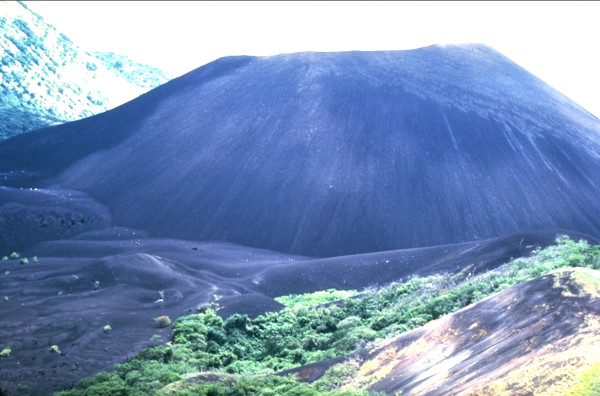
Le Cerro Negro (728 m) est un volcan actif du Nicaragua. Il est devenu le site d’une attraction touristique : le surf ! Dévaler ses pentes couvertes de cendres sur une planche est une expérience de 40 secondes qui permet aux participants de dire qu’ils ont surfé sur un volcan.
Bien qu’actif, le Cerro Negro n’émet ni cendres ni gaz. Sa dernière éruption majeure remonte à 1999.
Selon un touriste portugais, le meilleur moment est « d’être en contact avec la terre. Je pense que c’est la meilleure expérience humaine que l’on puisse vivre pour ressentir la chaleur de la terre ».
Des centaines de personnes viennent surfer sur le Cerro Negro, une aubaine pour le tourisme dans un pays qui a connu une crise politique en 2018 avec la répression brutale de manifestants et ensuite la pandémie de coronavirus.
L’idée de surfer sur le Cerro Negro a été lancée pour la première fois en 2006. Comme tout le tourisme au Nicaragua, le surf sur le volcan a été touché par la crise politique et la pandémie. Toute activité s’est arrêtée pendant environ huit mois, mais maintenant les gens commencent à revenir dans le pays et ils ont envie de surfer sur un volcan. À Leon, la grande ville la plus proche du Cerro Negro, au moins 12 voyagistes proposent, pour une trentaine de dollars, de glisser sur une planche le long des pentes du Cerro Negro. Les localités à proximité du volcan, soit un demi-million de personnes, vivent directement ou indirectement du tourisme.

Source : The Independent.
En ce qui me concerne, je me souviens avoir suggéré aux guides de Stromboli, dans les années 1990, d’organiser des descentes à ski sur le Rina Grande, une grande pente de cendre sur le volcan. J’ai expliqué qu’en retirant quelques pierres de la cendre, cette activité pourrait attirer de nombreux touristes. Mais ma suggestion est tombée à la mer…
Source : The Independent.

——————————————-

Cerro Negro (728 m) is an active volcano in Nicaragua. It has become the site of atourist attraction: volcano boarding. Sliding down its ash-covered slopes on a board is a 40-second thrill that allows participants to say they have surfed a volcano.

Although active, Cerro Negro does not emit ash or gases. Its last major eruption was in 1999.

According to a Portuguese tourist, the best moment was « being in contact with the earth. I think it’s the best human experience you can have to feel the warmth of the earth. »

Hundreds of persons converge on Cerro Negro, a boon for tourism in a country that has been hammered by a political crisis sparked in 2018 with the brutal repression of street protesters and exacerbated by the coronavirus pandemic.

The pioneers of volcano boarding first tackled the Cerro Negro slopes in 2006. Like all tourism in Nicaragua, volcano boarding was hit by the political crisis and pandemic. All activity stopped for about eight months, but now people are starting to come back to the country and obviously they always come looking for volcano boarding. In Leon, the closest big town to the volcano, there are at least 12 tour operators offering boarding experiences on Cerro Negro for around $30. Twelve communities living close to the volcano, making up half a million people, live directly or indirectly off tourism.

Source: The Independent.

As far as I’m concerned, I can remeber suggesting skiing down the Rina Grande, an ash-covered slope on Stromboli many years ago. I said that, removing some stones from the ash, it could attract many tourists. But my suggestion fell into the sea…

Vue du Cerro Negro (Source: Smithsonian Institution)

Le tourisme à La Palma (Iles Canaries) après l’éruption // Tourism in La Palma (Canary Islands) after the eruption

L’éruption du volcan Cumbre Vieja à La Palma (îles Canaries) a officiellement pris fin le jour de Noël 2021 après que la lave ait envahi 1 219 hectares de terres, détruit environ 3 000 bâtiments et des bananeraies, l’épine dorsale de l’économie de La Palma. Sur les 84 000 habitants de l’île, 7 000 ont dû être évacués.
Malgré cette destruction à grande échelle, La Palma attire beaucoup de touristes, même si le volcan n’émet plus aucune lave. C’est une bonne chose car l’île a besoin d’argent.
Il y a certainement du voyeurisme ou de la curiosité morbide parmi les touristes qui visitent La Palma aujourd’hui. Ils sont impatients de voir de leurs propres yeux les conséquences d’une éruption qui a duré 85 jours. Cependant, les milliers d’habitants dont les maisons et les moyens de subsistance ont été détruits par l’éruption n’apprécient pas forcément la vue des touristes bouche bée devant leurs maisons détruites par les coulées de lave.
La demande de circuits sur le thème des volcans a explosé et les autorités investissent massivement dans la promotion de La Palma, l’une des îles Canaries les moins visitées, comparé à Tenerife ou Lanzarote, par exemple.
L’Islande et Hawaï attirent les touristes après les éruptions volcaniques. La Palma espère faire de même. Le nombre de navires de croisière faisant escale à La Palma a augmenté. Faire venir davantage de touristes pourrait aider La Palma à se diversifier et à tirer des revenus autres que ceux de l’agriculture. Le gouvernement espagnol vient d’annoncer un plan de 9,5 millions d’euros pour promouvoir le tourisme à La Palma. Cela compensera un peu les arrivées de touristes qui ont été plus que divisées par deux au cours des quatre derniers mois de 2021. Le maire d’El Paso, l’une des localités les plus affectées par l’éruption, a déclaré : « Le volcan est en train de rendre à cette île et à ses habitants ce qu’il leur a pris. » Il a imaginé des projets susceptibles de tirer profit de l’éruption, comme des sentiers de randonnée volcaniques, un centre de congrès axé sur la science ou un téléphérique qui survolerait des zones dévastées. Les affaires sont en plein essor pour une société qui organise un voyage de 11 heures autour du volcan à l’attention des touristes en provenance de l’île voisine de Tenerife. Le périple coûte 125 euros par adulte. Il y a un an, une trentaine de personnes arrivaient chaque semaine à La Palma depuis Tenerife pour visiter l’île dans son ensemble. Ce nombre a grimpé à 1 200 au moment de l’éruption et à environ 150 par semaine maintenant. Un astrophysicien qui effectuait quatre visites par semaine avant l’éruption afin de montrer aux visiteurs le ciel nocturne très clair de l’île, envisage maintenant de proposer un cours de volcanologie.

Il faut espérer que La Palma pansera rapidement ses blessures et que le Cumbre Vieja laissera aux Palmeros le temps de retrouver une vie normale.
Source : médias espagnols.

———————————————–

The Cumbre Vieja eruption in La Palma (Canary Islands) officially came to an end on Christmas Day 2021 after lava spread over 1,219 hectares, destroying about 3,000 buildings and banana plantations, the backbone of La Palma’s economy. Of the island’s population of 84,000, 7,000 had to be evacuated..
Despite this large-scale destruction, La Palma is attracting a lot of tourists, although no more lava is emitted by the volcano. This is a good thing because the island needs money.

There is certainly some voyeurism among the tourists today. They are eager to see for themselves the aftermath of an eruption that lasted 85 days. However, the thousands of local residents whose homes and livelihoods were destroyed may not appreciate the sight of tourists gawping at the destruction of their houses.

Demand for volcano-themed tours has soared and authorities are investing heavily in promoting La Palma, one of the less visited of the Canary Islands, compared to Tenerife or Lanzarote, for instance.

Iceland and Hawaii attract tourists after they experienced volcanic eruptions. La Palma hopes to do the same. The number of cruise ships stopping at La Palma has increased. Bringing in more tourists could help La Palma diversify from agriculture. The Spanish government has just announced a 9.5-million-euro plan to promote tourism to La Palma after arrivals more than halved in the last four months of 2021. The mayor of El Paso, one of the most ravaged municipalities said : « The volcano is returning to this island and its residents what it took from them. » He has imagined potential projects likely to exploit the eruption, like volcano trails, a science-focused convention centre or a cable car overlooking devastated areas. Business is already booming for a tour company which runs an 11-hour trip around the volcano for tourists from the nearby island of Tenerife at 125 euros per adult. A year ago, around 30 people a week would arrive at La Palma from Tenerife for a general tour. That number soared to 1,200 during the eruption and is around 150 a week now. An astrophysicist who used to run four tours a week before the eruption, showing visitors the island’s clear night skies, is now considering doing a course on volcanology.

Let’s hope La Palma will heal its wounds quickly and Cumbre Vieja will give the Palmeros time to return to a normal life.

Source: Spanish news media.

Image du début de l’éruption, la plus longue à La Palma (Crédit photo: El Pais)