 La fuite de méthane (à raison d’environ 1 800 000 mètres cubes par jour depuis le 23 octobre) continue en Californie et provoque une catastrophe écologique. Un responsable local a même évoqué « un mini-Tchernobyl. » Les médias américains – le Los Angeles Times en particulier – pour la plupart réticents à admettre que le changement climatique est causé par les activités humaines, ne s’étendent pas trop sur le sujet.
Les responsables de la compagnie SoCalGas ont déclaré dimanche qu’ils allaient installer des équipements pour aspirer et réduire ainsi une partie de la fuite de méthane. Le plan consiste à siphonner et brûler en toute sécurité une partie du méthane qui s’échappe du sol. Selon un porte-parole, « la société développe un système conçu pour contrôler une partie de la fuite de gaz naturel à partir du puits. »
L’opération permettra de réduire – mais pas d’éliminer – la fuite. Un tuyau devrait être installé dans la zone d’écoulement du gaz afin de juguler une partie de la fuite, puis d’acheminer le gaz vers des unités qui retireront les fluides du gaz qui sera ensuite incinéré, ou dépourvu de son composant odorant.
Les autorités sanitaires restent préoccupées par le niveau de benzène, bien connu pour provoquer des cancers du sang, malgré les affirmations de la société SoCalGas selon laquelle la fuite ne présenterait pas de danger pour la santé. Les scientifiques et la population de Porter Ranch – où les écoles ont été fermées et les habitants évacués – ont déclaré que la compagnie et les autorités californiennes ont été lentes à reconnaître l’ampleur du problème ou à avertir la population des dangers potentiels. Le 10 novembre, le niveau de benzène était près de six fois plus élevé que les limites acceptables pour une période d’exposition de plus de huit heures.
SoCalGas n’a pas précisé à quelle date l’équipement serait installé, ni quelle quantité de gaz pourrait finalement être brûlée. La compagnie a seulement déclaré que le système a été conçu pour brûler environ un tiers de la fuite au moment de son débit maximal. .
Source: The Guardian.
Tandis que le méthane ne cesse de s’échapper du sol en Californie, Lapindo Brantas prévoit d’entreprendre en Indonésie un forage de gaz à proximité du site de Sidoarjo qui a provoqué la catastrophe à laquelle la compagnie n’est probablement pas étrangère. Il ne faudrait pas oublier qu’il y a une dizaine d’années, le volcan de boue a inondé 12 villages et déplacé environ 60.000 personnes.
Lapindo Brantas a payé la grande majorité des indemnisations, aidée par un prêt du gouvernement l’année dernière. Maintenant, la compagnie veut reprendre les forages, en partie pour rembourser ses dettes au gouvernement.
Les nouveaux puits seraient forés à environ 4 kilomètres du site du volcan de boue et atteindraient une profondeur maximale d’environ 1.200 mètres, soit environ le tiers du forage de 2006. Lapindo Brantas n’a pas foré de nouveaux puits depuis la coulée de boue de Sidoarjo et sa production de gaz a chuté d’environ 90 pour cent par rapport à 2004.
Il est prévu de commencer le forage de deux puits au début du mois de mars. Cependant, le projet pourrait être retardé par une décision prise par le gouvernement indonésien la semaine dernière, suite aux protestations de la population de la région. Le gouvernement veut s’assurer que l’entreprise a satisfait toutes les obligations techniques et répondu aux exigences sociales et environnementales. On ne connaît pas la date à laquelle le forage pourrait commencer.
Source: Reuters.
—————————————
The methane leak (about 62 million cubic feet of methane gas into the air every day since October 23rd) is going on in California and causing an environmental disaster. A local official called it “a mini Chernobyl” It is clear that the American news media, most of which are reluctant to admit that climate change is caused by human activities, do not publish long articles about the situation.
SoCalGas said on Sunday they would install equipment to suck up and capture some of the leaking methane. They are working on a plan to siphon off and safely burn some of the leaking methane. Said a spokesman: “The company is developing a system designed to capture and control a portion of the natural gas leaking from the well.”
The operation will reduce – but not eliminate – the leak. The design calls for a pipe to be installed in the area of the gas flow to capture a portion of the leaking gas and then carry it to separate units that will remove the fluids from the gas and then either incinerate it or filter the odorant out of it.
Public health experts said they remained concerned about levels of benzene, known to cause blood cancers – despite the companies’ assurances there was no danger from the leak. Scientists and residents of Porter Ranch – where schools have closed and residents been evacuated – said the gas company and California authorities were slow to recognise the magnitude of the problem, or warn locals of potential dangers. On November 10th, benzene levels recorded by the company reached nearly six times higher than the safe limits for exposure period over eight hours.
SoCalGas would not say when the equipment would be installed – or how much gas could ultimately be burned or captured. It said the system was designed to burn up about a third of the leak at its height.
Source : The Guardian.
While methane keeps leaking in California, Indonesian energy company Lapindo Brantas plans to resume drilling for gas near the site of the Sidoarjo mud volcano that caused a disaster that the company probably helped to create around 10 years ago. The mud volcano inundated 12 villages and has displaced around 60,000 people.
The company has paid off the vast majority of compensation claims it was ordered to pay, helped by a government loan last year. Now, it needs to resume drilling partly to pay back its debts to the government.
The new wells would be drilled around 4 kilometres from the site of the mud volcano and would go to a maximum depth of about 1,200 metres, around one-third as deep as the well Lapindo was drilling in 2006. The company has not drilled any new wells since the mudflow began, and as a result its gas output has fallen around 90 percent from 2004 levels.
Lapindo wants to start drilling the two wells in early March. However, Lapindo’s latest plans may be held up by a temporary stoppage in preparations imposed by the government late last week amid public concerns. The government wants to ensure the company has met technical as well as social and environmental requirements. It has not provided an estimate on when it might allow drilling to begin.
Source : Reuters.
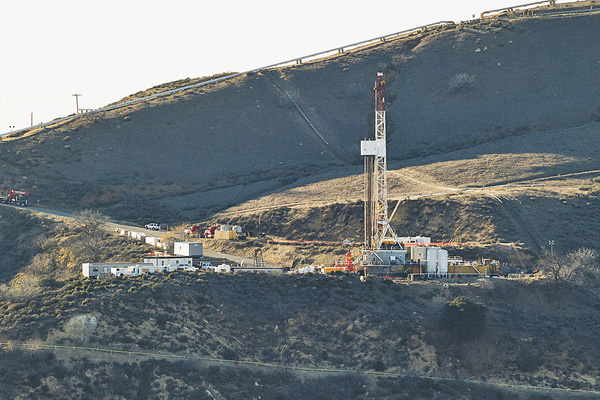
Site d’Aliso Canyon (Californie) où a lieu la fuite de méthane (Crédit photo: Wikipedia)
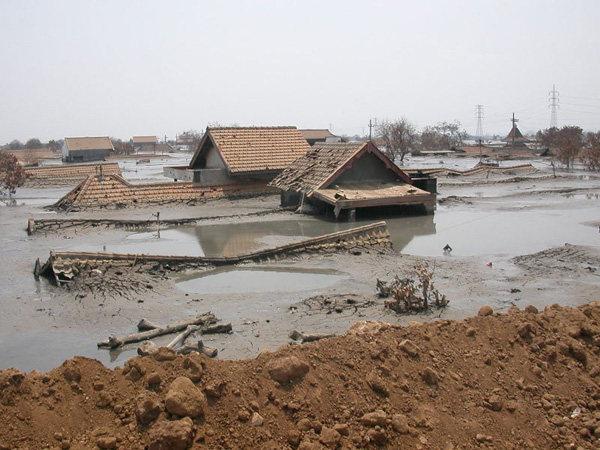
Maisons englouties par la coulée de boue à Sidoarjo (Indonésie)
[Crédit photo: Wikipedia]

 L’éruption du Bromo continue. Le VSI indique que le panache de cendre monte souvent jusqu’à 1800 mètres au-dessus du cratère avant de s’étirer au-dessus de la région où les retombées causent de graves dégâts à l’agriculture.
 The eruption of Mt Bromo continues. VSI indicates that the ash plumes mostly rise up to 1,800 metres above the crater. The ash then drifts over the region with ashfall that cause serious damage to the agriculture.
 Claude Grandpey : Volcans et Glaciers