 Dans deux notes publiés le 28 septembre 2021 et le 22 janvier 2024, j’expliquais qu’un nouveau projet – Krafla Magma Testbed (KMT) – est en cours de développement en Islande.
Un article publié le 23 mars 2024 sur le site Iceland Monitor nous informe que deux des principaux objectifs du projet sont « d’améliorer considérablement les prévisions des éruptions volcaniques dans le monde et de concevoir de nouvelles méthodes plus économiques pour la production d’énergie géothermique. »
La société KMT vise à construire dans les années à venir un centre de recherche international de recherche en matière de volcanisme et d’énergie dans la région du Krafla à Þingeyjarsveit. L’idée du projet est née du forage IDDP-1 qui, en 2009, a atteint de manière tout à fait inattendue une poche de magma dans la région du Krafla, à une profondeur de 2,1 km.
L’équipement utilisé en 2009 n’était pas capable de résister à la chaleur, à la pression et à la corrosion à proximité du magma, mais des informations importantes ont été recueillies au niveau du forage avant sa fermeture. Les scientifiques ont pu déterminer l’emplacement exact d’une chambre magmatique, une première mondiale, et le forage s’est avéré dix fois plus puissant que les forages traditionnels déjà réalisés dans la région du Krafla.
Quinze ans après le forage de 2009, l’objectif est de récidiver avec une nouvelle technologie mise au point par la société KMT.
Voici une vidéo de KMT (en anglais) expliquant le projet et ses ambitions :
https://youtu.be/Bf-yA_L8mZA


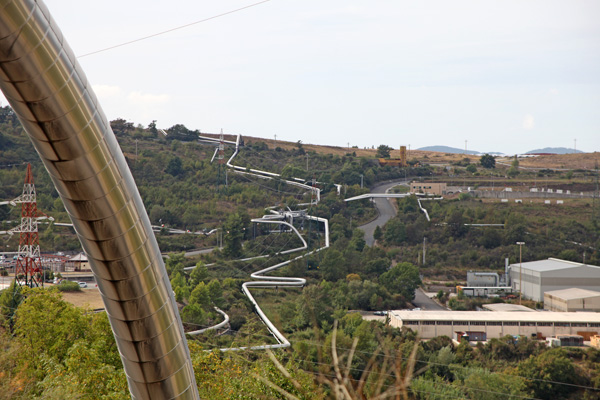
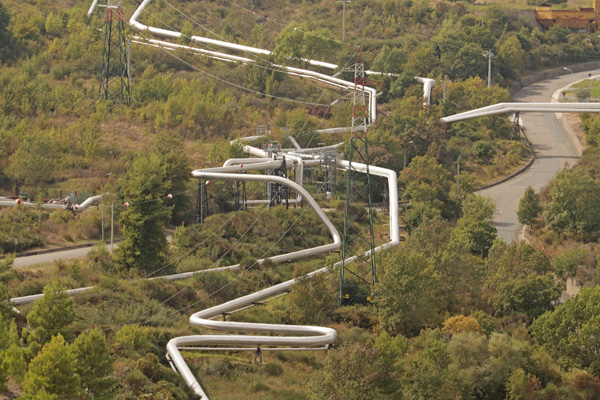
Photos: C. Grandpey
————————————————-
 In two posts released on September 28th, 2021 and January 22nd, 2024, I explained that a new project – Krafla Magma Testbed (KMT) – is being developed in Iceland.
An article published on March 23rd, 2024 on the website Iceland Monitor informs us that two of the main goals of the project are « to greatly improve global volcanic eruption predictions and design new and more cost-effective methods for the energy production of geothermal energy. »
KMT aims to build an international research center for volcanic and energy research in the Krafla area in Þingeyjarsveit in the coming years. The idea for the project stems from the Icelandic deep-water drilling project IDDP-1, where they unexpectedly drilled into magma at Krafla at a depth of 2.1 km in 2009.
The equipment used in IDDP-1 in 2009 was not able to withstand the heat, pressure, and corrosion closer to the magma but important information was gathered from the borehole before it was closed. Scientists were now able to determine the exact location of a base magma chamber, which is considered unique worldwide, and the borehole was found to be ten times more powerful than traditional production boreholes in Krafla.
Now fifteen years after the unexpected drilling of magma in Krafla, the aim is to do so again with a new instrumentation that KMT is developing.
Here is a video from KMT explaining the project and its ambitions:
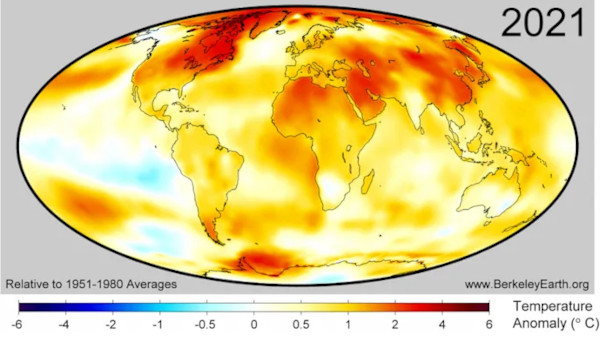
 Selon une nouvelle étude, publiée le 1er février 2022 dans les Proceedings de l’Académie Nationale des Sciences, le monde court un risque de plus en plus important de devoir faire face à des événements météorologiques extrêmes. Pour arriver à cette conclusion, les auteurs de l’étude ont analysé comment l’augmentation de la température de surface de la Terre modifiera à la fois l’humidité et une partie de l’énergie contenue dans l’atmosphère.
 According to a new study, published on February 1st, 2022 in the Proceedings of the National Academy of Sciences, the world is at growing risk of extreme weather events. To come to this conclusion, the aauthors of the study analysed how increasing surface temperatures will alter both humidity and a measure of the energy contained in the atmosphere.