Des chercheurs et des scientifiques ont élaboré un projet visant à repousser les limites de l’énergie renouvelable en forant au cœur de la chambre magmatique d’un volcan. Initié en 2014, l’ambitieux projet, baptisé Krafla Magma Testbed (KMT), vise à exploiter la chambre magmatique du Krafla, dans le nord de l’Islande, d’ici 2026.
Pour mener le projet à son terme, KMT recherche un financement de 100 millions de dollars et prévoit de commencer les forages d’ici 2027. KMT est une alliance internationale qui vise à réaliser « la première entreprise de recherche sur le magma pour effectuer des études et des expériences de pointe ». Le projet est porté par des scientifiques et des ingénieurs de 38 instituts de recherche et entreprises de onze pays dont les Etats-Unis, le Royaume-Uni et la France. Si elle réussit, cette stratégie permettra une production d’énergie géothermique sans précédent et ouvrira la voie à une alimentation énergétique illimitée dans toute l’Islande.
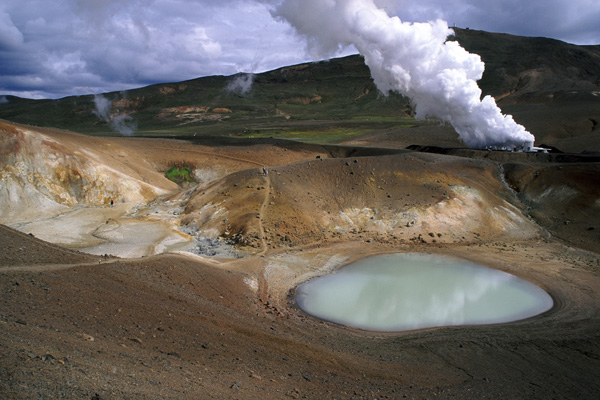
Le Krafla présente une caldeira volcanique d’une dizaine de kilomètres de diamètre et une zone de fissures de 90 kilomètres de long. Le volcan est l’un des systèmes géothermiques les plus étudiés. C’est le site de la première centrale géothermique du pays.
La chambre magmatique du Krafla se trouve à une profondeur relativement faible, entre 1,5 et 3 km seulement sous la surface, avec des températures atteignant 1 300°C. Elle a attiré l’attention de manière tout à fait inattendue en 2009 lors d’un projet de forage géothermique pour le compte de la société Landsvirkjun. Un trépan a rencontré par hasard une poche magmatique près du Krafla, à 2,1 km de profondeur. L’incident n’a pas provoqué d’éruption volcanique, ce qui montre qu’un forage directement dans le magma peut être effectué en toute sécurité. A des kilomètres sous terre, la roche atteint des températures si extrêmes que les fluides rencontrés sont dits « supercritiques », c’est-à-dire au comportement intermédiaire entre l’état liquide et gazeux. L’énergie produite y est cinq à dix fois plus importante qu’avec un puits conventionnel. Lors de l’accident de 2009, la vapeur remontant à la surface a atteint 450°C. Deux puits supercritiques suffiraient pour atteindre la puissance de 60 mégawatts, ce que génère la centrale actuellement avec 18 puits conventionnels.
Le financement de 100 millions de dollars permettra d’accélérer l’avancement de ce projet grâce à l’acquisition des équipements de forage les plus performants, capables de résister à des températures extrêmement élevées. KMT a également l’intention de déployer un ensemble de capteurs haute technologie pour surveiller en permanence différents paramètres du magma, notamment sa température. L’équipe KMT s’est fixé un calendrier ambitieux, visant à exploiter la chambre magmatique du Krafla d’ici 2026.
D’un coût de 25 millions de dollars, la première phase de forage prévoit plusieurs trous d’exploration autour du magma. Le forage, maintenu ouvert, permettra ensuite d’atteindre le magma et de prélever des échantillons. Grâce à cette exploration directe, les scientifiques de KMT espèrent améliorer leur compréhension du magma et de ses propriétés. KMT prévoit de procéder ensuite à un deuxième forage pour examiner la faisabilité de l’exploitation de l’énergie géothermique.
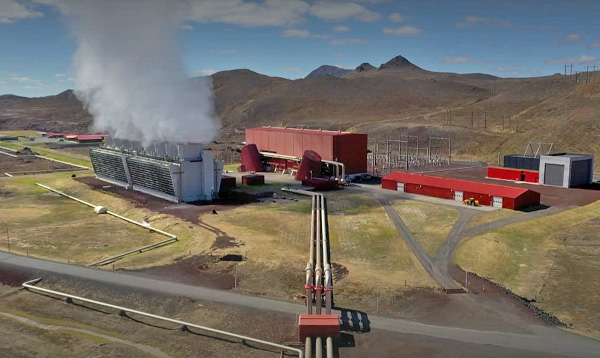
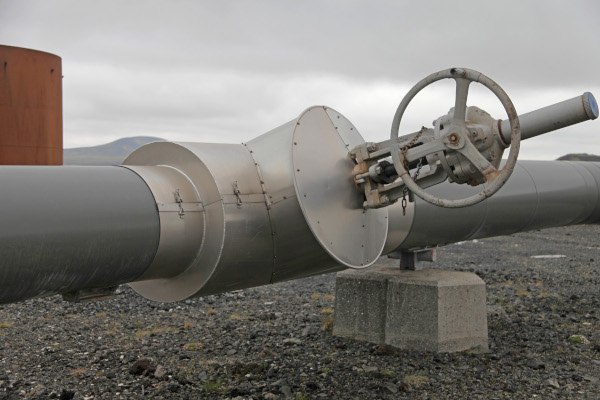
L’énergie géothermique est utilisée en Islande depuis plusieurs années grâce à un processus qui suppose des forages dans des régions dont le sous-sol est à haute température afin d’exploiter la chaleur naturelle de la Terre. La chaleur en provenance de l’intérieur de la Terre chauffe l’eau des réservoirs souterrains et la transforme en vapeur. Cette vapeur est ensuite canalisée à l’aide d’une tuyauterie vers des turbines reliées à des générateurs qui convertissent l’énergie en électricité. En Islande, cette stratégie s’est avérée efficace pour produire de l’électricité et répondre à une grande partie des besoins énergétiques de la population.
Avec la réussite du projet, l’Islande anticipe un bouleversement de son paysage énergétique. Le projet KMT pourrait non seulement transformer la production d’énergie en Islande, mais aussi servir de modèle pour d’autres régions volcaniques à travers le monde, tant sur terre qu’en mer.
Source : Interesting Engineering.
Remarque personnelle : le projet KMT est ambitieux, mais il ne devra pas oublier que le Krafla est un volcan actif dont les éruptions peuvent être très spectaculaires. Le choix des emplacements des forages et des infrastructures devra se faire avec le plus grand soin pour éviter leur destruction par un accès de colère du volcan.
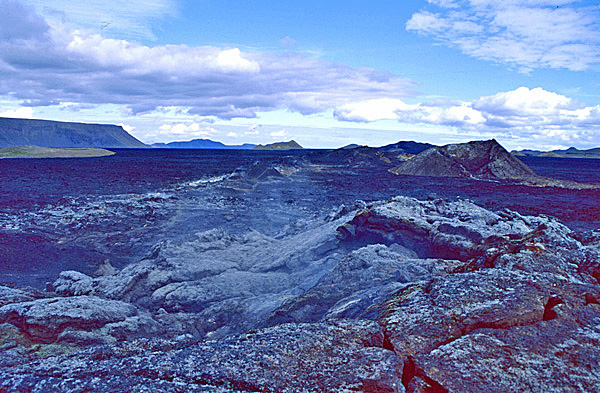
Photos: C. Grandpey
—————————————————
 Researchers and scientists have worked out a project to transform the renewable energy landscape by drilling into the heart of a volcano’s magma chamber. Initiated in 2014, the ambitious Krafla Magma Testbed (KMT) project aims to tap into the magma chamber of Krafla in northern Iceland by 2026.
To make this vision a reality, KMT is actively seeking 100 million dollars in funding, with plans to begin drilling by 2027. KMT is an international initiative that seeks to construct the « world’s first magma research facility for advanced studies and experiments. » The project is led by scientists and engineers from 38 research institutes and companies from eleven countries including the United States, the United Kingdom and France. If successful, this strategy would allow for unparalleled geothermal energy output, opening the path to provide a limitless energy supply to houses across Iceland.
Krafla evinces a volcanic caldera with a diameter of around ten kilometers and a 90-kilometer-long fissure zone. It is recognized as one of the most extensively studied geothermal systems. It is the site of the country´s first geothermal power station.
Krafla’s magma chamber is located at a relatively short depth of only 1.5 – 3 km below the surface, with temperatures reaching 1,300°C.
The shallow depth of Krafla’s magma chamber gained attention unexpectedly in 2009 during a geothermal drilling project for the Iceland energy company Landsvirkjun. The project unexpectedly encountered a magma chamber near the Krafla volcano, at a depth of 2.1 km. The fact that the crew was not immediately faced with a volcanic eruption provided reassuring evidence that drilling into magma could be done safely. Kilometers underground, the rock reaches temperatures so extreme that the fluids encountered are called « supercritical », that is to say with intermediate behavior between the liquid and gaseous state. The energy produced there is five to ten times greater than in a conventional well. During the 2009 accident, the steam rising to the surface reached 450°C. Two supercritical wells would be enough to reach the power of 60 megawatts that the plant currently generates with 18 conventional wells.
The 100-million-dollar funding will expedite the advancement of this project by enabling the acquisition of advanced drilling equipment capable of withstanding higher temperatures. KMT also intends to deploy a set of high-tech sensors to continually monitor different magma parameters, including temperature.
The first phase of drilling should be carried out by 2026 or 2027. Costing $25 million, it includes several exploration holes around and below the magma. The drilling, kept open, will make it possible to reach the magma and take samples.
The first borehole is likely to be drilled by either 2026 or 2027. Through this direct exploration, KMT scientists aim to enhance their understanding of magma and its properties. Following this, KMT plans to drill a second borehole to examine the feasibility of harnessing geothermal energy.
Geothermal energy has been utilized in Iceland for several years through a process that involves drilling into hot underground regions to tap into the Earth’s natural heat. The heat from the Earth’s interior causes water in these underground reservoirs to become hot and turn into steam. This steam is then channeled to drive turbines connected to generators, converting the energy into electricity. In Iceland, this strategy has proven effective in producing power and meeting a large amount of the country’s energy requirements.
As the project unfolds, Iceland anticipates a revolutionary shift in its energy landscape, harnessing the power of volcanoes to provide a renewable and sustainable source of electricity for homes and industries. The KMT project could not only transform energy production in Iceland, but also serve as a model for other volcanic regions around the world, both on land and at sea.
Source : Interesting Engineering.
Personal note: the KMT project is ambitious, but it should not forget that Krafla is an active volcano whose eruptions can be very spectacular. The choice of drilling and infrastructure locations should be made with the greatest care to avoid their destruction by the volcano’s anger.

 Dans une note publiée le 24 mars 2026, j’évoquais un projet de tunnel reliant l’Islande continentale aux îles Vestmann. Aujourd’hui, le projet progresse et des forages sont sur le point de commencer dans les îles Vestmann pour une durée d’environ un mois, afin de prélever des carottes de sédiments et de les analyser. Ensuite, la foreuse sera déplacée à Landeyjasandur, sur l’Islande continentale, pour y effectuer des prélèvements semblables.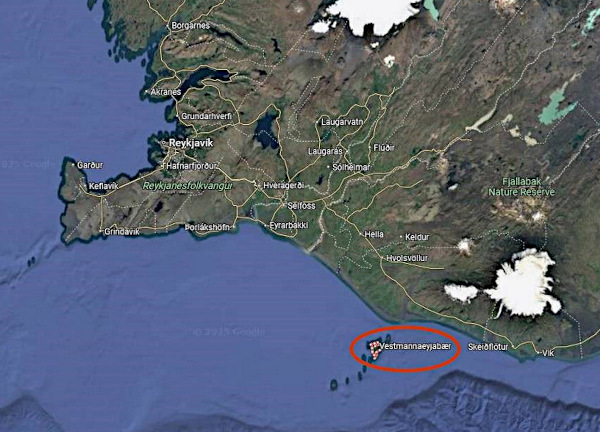
 In a post relaesed on 24 March 2026, I told about a tunnel project to connect mainland Iceland and the Westmann Islands. Today, the project is moving forward and drilling is about to srart in the Westman Islands for about a month in order to collect core samples and analyze them. After that, the drill will be moved to Landeyjasandur on mainland Iceland so as to take samples there.
 Dans deux notes publiés le 28 septembre 2021 et le 22 janvier 2024, j’expliquais qu’un nouveau projet – Krafla Magma Testbed (KMT) – est en cours de développement en Islande.

 In two posts released on September 28th, 2021 and January 22nd, 2024, I explained that a new project – Krafla Magma Testbed (KMT) – is being developed in Iceland.