Des cryovolcans sur Pluton ? (suite) // Cryovolcanoes on Pluto ? (continued)

drapeau-francaisLe 12 novembre 2015, je diffusais une note sur la présence possible de cryovolcans sur Pluton.
https://claudegrandpeyvolcansetglaciers.com/2015/11/12/des-cryovolcans-sur-pluton-cryovolcanoes-on-pluto/

Le Daily Mail vient de mettre en ligne de belles images permettant d’illustrer ce sujet :

http://www.dailymail.co.uk/sciencetech/article-3400164/The-biggest-volcano-solar-Stunning-new-images-reveal-90-mile-wide-CRYOVOLCANO-Pluto.html?ITO=1490&ns_mchannel=rss&ns_campaign=1490

——————————-

drapeau-anglaisOn November 12th 2015, I wrote a post about the possible presence of cryovolcanoes on Pluto. The Daily Mail has just released an article with dramatic images illustrating this topic:
https://claudegrandpeyvolcansetglaciers.com/2015/11/12/des-cryovolcans-sur-pluton-cryovolcanoes-on-pluto/

The Daily Mail has just released an article with dramatic images illustrating this topic:

http://www.dailymail.co.uk/sciencetech/article-3400164/The-biggest-volcano-solar-Stunning-new-images-reveal-90-mile-wide-CRYOVOLCANO-Pluto.html?ITO=1490&ns_mchannel=rss&ns_campaign=1490

Le CO2 indien et les Trapps du Deccan // Indian CO2 and Deccan Traps

drapeau-francaisDans une note en date du 22 décembre 2015, j’écrivais que l’Inde semblait indifférente aux conclusions de la COP 21. En effet, le pays a toujours l’intention de doubler sa production de charbon d’ici 2020 et compte bien s’appuyer sur cette ressource dans les décennies à venir. En agissant ainsi, l’Inde restera probablement le troisième plus grand émetteur de carbone au monde.
La solution aux émissions de CO2 pourrait bien se trouver à l’intérieur de l’Inde! En effet, les géologues pensent que le pays possède une infrastructure géologique extraordinaire susceptible de fournir une solution naturelle au problème du changement climatique. Cette solution consisterait à capter le CO2 en provenance des centrales au charbon et à l’injecter sous les Trapps du Deccan pour un stockage permanent.
Les Trapps du Deccan – une épaisse accumulation de basalte solidifié résultat d’éruptions volcaniques il y a 65 millions d’années – occupent environ un tiers de la péninsule indienne. Leur épaisseur varie entre quelques centaines et quelques milliers de mètres et ils recouvrent d’épaisses roches sédimentaires. L’idée est d’injecter le CO2 dans les roches sédimentaires poreuses et d’utiliser la couche de basalte comme couvercle pour empêcher le gaz de s’échapper.
Des études en laboratoire ont confirmé que le CO2 réagit avec le calcium, le magnésium et les silicates riches en fer à l’intérieur de la lave, les transformant en carbonates stables tels que la calcite, la dolomite, la magnésite et la sidérite. Les chercheurs estiment que l’on pourrait entreposer dans les Trapps du Deccan 300 000 millions de tonnes de CO2 – l’équivalent de ce que les humains produisent en 20 ans. Plusieurs tentatives fructueuses à petite échelle ont été effectuées pour injecter du CO2 dans du basalte en Islande et dans l’État de Washington.
Lorsqu’elles réalisèrent le potentiel des Trapps du Deccan comme option de stockage du CO2 sur le long terme, les agences gouvernementales indiennes, en collaboration avec des scientifiques américains, ont proposé en 2007 une étude sur le terrain pour étudier la faisabilité du projet. Malheureusement, l’étude n’a jamais été menée à son terme. L’Inde s’est retirée du projet en 2009 quand elle a réalisé qu’il n’y aurait pas, dans le court terme, d’accords internationaux contraignants sur les émissions de gaz à effet de serre. Il ne fait malheureusement guère de doute que la COP 21 ne fera pas, elle non plus, avancer les choses.
Source: The Economic Times.

———————————-

drapeau-anglaisIn a previous post (December 22nd, 2015), I indicated that it looked as if India was indifferent to the conclusions of the Paris climate conference. Indeed, the country still plans to double its coal output by 2020 and rely on the resource for decades afterwards. Doing so, India will probably remain the world’s third-largest carbon emitter.
The solution to the Indian CO2 emissions might well lie in India itself! Indeed, geologists think the country is blessed with an extraordinary geological feature that may provide a natural solution to the problem of climate change. This solution would consist in capturing the CO2 coming out of coal-fired power plants and injecting it below the Deccan Traps for permanent storage.
The Deccan Traps – a thick accumulation of solidified basalt from volcanic eruptions 65 million years ago – occupies about a third of peninsular India. The trap cover varies in thickness from a few hundred to a few thousand metres and, below this, lie thick sedimentary rocks. The idea is to pump the CO2 through the porous sedimentary rocks and use the basalt layer above as a « cap » to stop the gas from escaping.
Laboratory studies have confirmed that CO2 reacts with calcium, magnesium and iron rich silicates in the lava, turning them into stable carbonate minerals such as calcite, dolomite, magnesite and siderite. Researchers estimate that the Deccan Traps might be able to hold 300,000 million tonnes of CO2 – as much as humans produce in 20 years. Several small-scale but successful attempts have been made to inject CO2 into basalts in Iceland and in Washington State.
Realizing the potential of the Deccan Traps as long-term CO2 storage option, Indian government agencies, jointly with American scientists, proposed in 2007 a field study to investigate the feasibility of the project. Unfortunately, the study was never completed. Interest on the Indian side waned after it became clear in 2009 that no binding international emissions agreements were going to happen any time soon. The odds are that the last Paris climate conference will not make matters better.
Source: The Economic Times.

https://claudegrandpeyvolcansetglaciers.com/wp-content/uploads/2015/10/trapps.jpg

Vue des Trapps du Deccan (Photo: Wikipedia)

Ça gaze en Californie et en Indonésie ! // Gas everywhere in California and Indonesia !

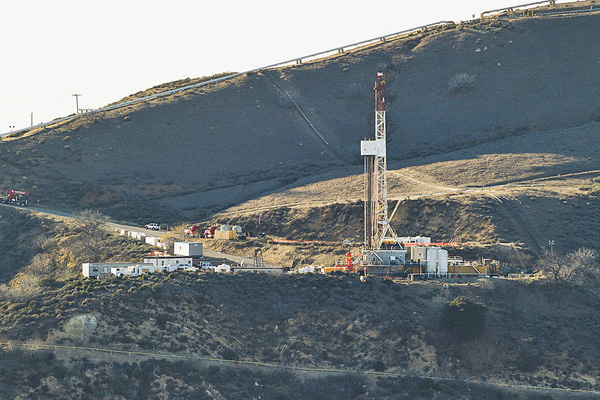
drapeau-francaisLa fuite de méthane (à raison d’environ 1 800 000 mètres cubes par jour depuis le 23 octobre) continue en Californie et provoque une catastrophe écologique. Un responsable local a même évoqué « un mini-Tchernobyl. » Les médias américains – le Los Angeles Times en particulier – pour la plupart réticents à admettre que le changement climatique est causé par les activités humaines, ne s’étendent pas trop sur le sujet.
Les responsables de la compagnie SoCalGas ont déclaré dimanche qu’ils allaient installer des équipements pour aspirer et réduire ainsi une partie de la fuite de méthane. Le plan consiste à siphonner et brûler en toute sécurité une partie du méthane qui s’échappe du sol. Selon un porte-parole, « la société développe un système conçu pour contrôler une partie de la fuite de gaz naturel à partir du puits. »
L’opération permettra de réduire – mais pas d’éliminer – la fuite. Un tuyau devrait être installé dans la zone d’écoulement du gaz afin de juguler une partie de la fuite, puis d’acheminer le gaz vers des unités qui retireront les fluides du gaz qui sera ensuite incinéré, ou dépourvu de son composant odorant.
Les autorités sanitaires restent préoccupées par le niveau de benzène, bien connu pour provoquer des cancers du sang, malgré les affirmations de la société SoCalGas selon laquelle la fuite ne présenterait pas de danger pour la santé. Les scientifiques et la population de Porter Ranch – où les écoles ont été fermées et les habitants évacués – ont déclaré que la compagnie et les autorités californiennes ont été lentes à reconnaître l’ampleur du problème ou à avertir la population des dangers potentiels. Le 10 novembre, le niveau de benzène était près de six fois plus élevé que les limites acceptables pour une période d’exposition de plus de huit heures.
SoCalGas n’a pas précisé à quelle date l’équipement serait installé, ni quelle quantité de gaz pourrait finalement être brûlée. La compagnie a seulement déclaré que le système a été conçu pour brûler environ un tiers de la fuite au moment de son débit maximal. .
Source: The Guardian.

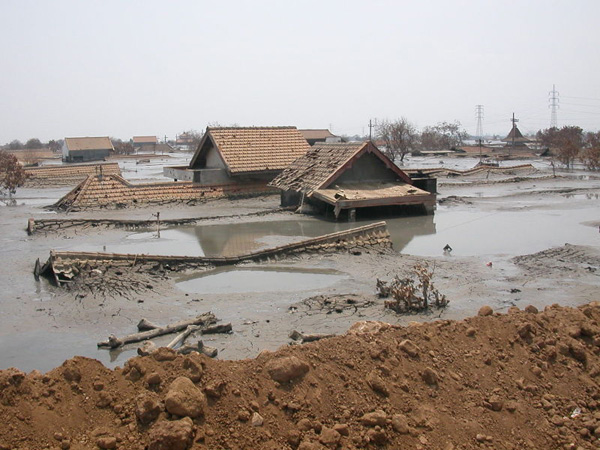
Tandis que le méthane ne cesse de s’échapper du sol en Californie, Lapindo Brantas prévoit d’entreprendre en Indonésie un forage de gaz à proximité du site de Sidoarjo qui a provoqué la catastrophe à laquelle la compagnie n’est probablement pas étrangère. Il ne faudrait pas oublier qu’il y a une dizaine d’années, le volcan de boue a inondé 12 villages et déplacé environ 60.000 personnes.
Lapindo Brantas a payé la grande majorité des indemnisations, aidée par un prêt du gouvernement l’année dernière. Maintenant, la compagnie veut reprendre les forages, en partie pour rembourser ses dettes au gouvernement.
Les nouveaux puits seraient forés à environ 4 kilomètres du site du volcan de boue et atteindraient une profondeur maximale d’environ 1.200 mètres, soit environ le tiers du forage de 2006. Lapindo Brantas n’a pas foré de nouveaux puits depuis la coulée de boue de Sidoarjo et sa production de gaz a chuté d’environ 90 pour cent par rapport à 2004.
Il est prévu de commencer le forage de deux puits au début du mois de mars. Cependant, le projet pourrait être retardé par une décision prise par le gouvernement indonésien la semaine dernière, suite aux protestations de la population de la région. Le gouvernement veut s’assurer que l’entreprise a satisfait toutes les obligations techniques et répondu aux exigences sociales et environnementales. On ne connaît pas la date à laquelle le forage pourrait commencer.
Source: Reuters.

—————————————

The methane leak (about 62 million cubic feet of methane gas into the air every day since October 23rd) is going on in California and causing an environmental disaster. A local official called it “a mini Chernobyl” It is clear that the American news media, most of which are reluctant to admit that climate change is caused by human activities, do not publish long articles about the situation.
SoCalGas said on Sunday they would install equipment to suck up and capture some of the leaking methane. They are working on a plan to siphon off and safely burn some of the leaking methane. Said a spokesman: “The company is developing a system designed to capture and control a portion of the natural gas leaking from the well.”
The operation will reduce – but not eliminate – the leak. The design calls for a pipe to be installed in the area of the gas flow to capture a portion of the leaking gas and then carry it to separate units that will remove the fluids from the gas and then either incinerate it or filter the odorant out of it.
Public health experts said they remained concerned about levels of benzene, known to cause blood cancers – despite the companies’ assurances there was no danger from the leak. Scientists and residents of Porter Ranch – where schools have closed and residents been evacuated – said the gas company and California authorities were slow to recognise the magnitude of the problem, or warn locals of potential dangers. On November 10th, benzene levels recorded by the company reached nearly six times higher than the safe limits for exposure period over eight hours.
SoCalGas would not say when the equipment would be installed – or how much gas could ultimately be burned or captured. It said the system was designed to burn up about a third of the leak at its height.
Source : The Guardian.

While methane keeps leaking in California, Indonesian energy company Lapindo Brantas plans to resume drilling for gas near the site of the Sidoarjo mud volcano that caused a disaster that the company probably helped to create around 10 years ago. The mud volcano inundated 12 villages and has displaced around 60,000 people.
The company has paid off the vast majority of compensation claims it was ordered to pay, helped by a government loan last year. Now, it needs to resume drilling partly to pay back its debts to the government.
The new wells would be drilled around 4 kilometres from the site of the mud volcano and would go to a maximum depth of about 1,200 metres, around one-third as deep as the well Lapindo was drilling in 2006. The company has not drilled any new wells since the mudflow began, and as a result its gas output has fallen around 90 percent from 2004 levels.
Lapindo wants to start drilling the two wells in early March. However, Lapindo’s latest plans may be held up by a temporary stoppage in preparations imposed by the government late last week amid public concerns. The government wants to ensure the company has met technical as well as social and environmental requirements. It has not provided an estimate on when it might allow drilling to begin.
Source : Reuters.
Methane

Site d’Aliso Canyon (Californie) où a lieu la fuite de méthane (Crédit photo: Wikipedia)
Sidoarjo 2

Maisons englouties par la coulée de boue à Sidoarjo (Indonésie)

[Crédit photo: Wikipedia]
Shiveluch & Karymsky (Kamchatka / Russie)

drapeau-francaisL’activité est actuellement relativement normale sur les volcans du Kamtchatka. Seuls le Shiveluch et le Karymsky ont l’alerte aérienne à l’Orange.
Dans son dernier rapport, le KVERT indique que la croissance du dôme de lave continue sur le Shiveluch, avec des explosions de cendre modérées, une activité de fumerollienne et de l’incandescence au niveau du dôme. Des coulées pyroclastiques se déclenchent ponctuellement lors des effondrements du dôme. Les données satellitaires montrent une anomalie thermique sur le volcan.
Le KVERT indique par ailleurs que l’on continue à observer une activité éruptive modérée sur le Karymsky. Les données satellitaires montrent une anomalie thermique sur le volcan.

———————————–

drapeau-anglaisActivity is currently quite normal at Kamchatka volcanoes with only Shiveluch and Karymsky with aviation colour codes at Orange.
In its latest report, KVERT indicated that the growth of the lava dome continues at Shiveluch, with moderate ash explosions, fumarolic activity, incandescence of the dome.Hot avalanches are occasionally triggered during dome collapses. Satellite data showed a thermal anomaly over the volcano.
KVERT indicates that moderate eruptive activity of Karymsky volcano continues. Satellite data showed a thermal anomaly over the volcano.

Shiveluch decembre

Activité éruptive typique du Shiveluch le 31 décembre 2015

(Crédit photo: Y. Demyanchuk / KVERT)