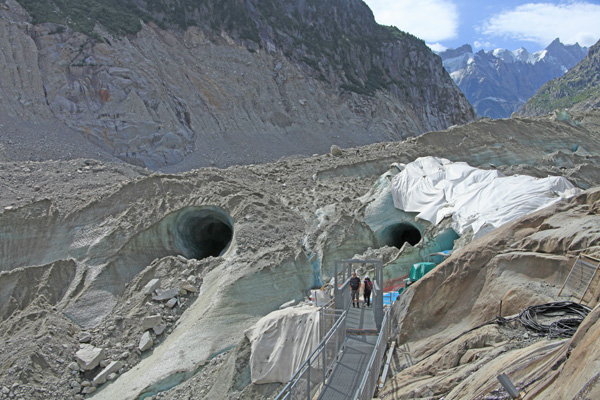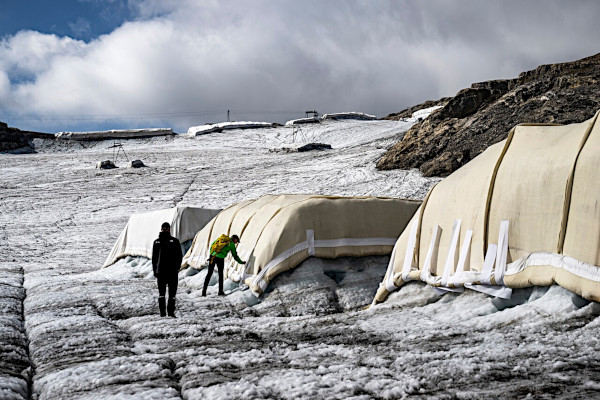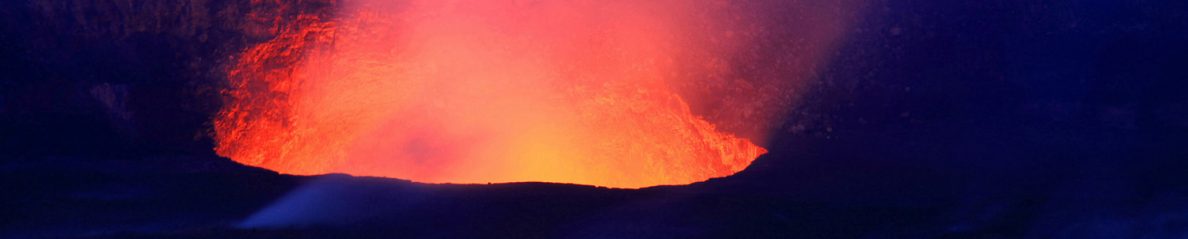
 Ces derniers temps, avec le réchauffement climatique et la fonte des glaciers, on a beaucoup parlé de rebond isostatique à propos de l’Islande. Le rebond isostatique est un phénomène pendant lequel la perte de masse des glaciers en train de fondre provoque un soulèvement du substrat rocheux. Selon certains volcanologues, le phénomène pourrait favoriser la poussée du magma qui sommeille sous la surface de la Terre et déclencher des éruptions plus fréquentes. Pour le moment aucune éruption n’est venue étayer cette théorie et nous ne possédons pas suffisamment de recul pour tirer des conclusions.

Un bel exemple de rebond isostatique est en train de se produire en Finlande où de nouvelles terres émergent lentement de la mer Baltique, le long de la côte occidentale du pays. Ce phénomène est particulièrement visible dans l’archipel de Kvarken, près de Vaasa, où le sol s’élève d’environ huit millimètres par an. Les îles s’agrandissent et fusionnent progressivement, les baies peu profondes se transforment en lacs et des fonds marins deviennent des terres émergées. Certes, cette transformation est trop lente pour être perceptible lors d’un court séjour, mais elle est suffisamment rapide pour modifier le paysage à l’échelle d’une vie humaine.
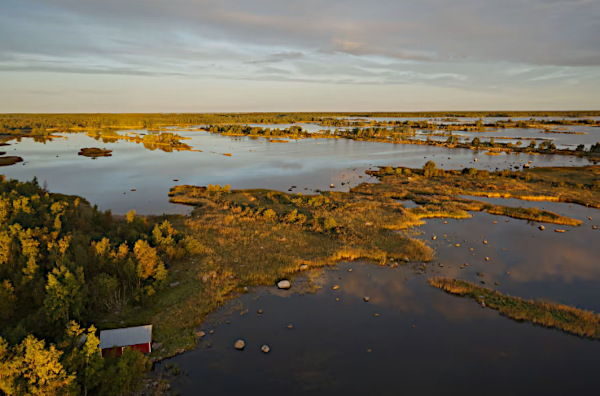
Crédit photo: Finland Tourism
L’explication de ce soulèvement des terres remonte à la dernière période glaciaire. Une vaste calotte de glace recouvrait autrefois cette partie de l’Europe du Nord, exerçant une pression considérable avec une épaisseur de glace atteignant près de trois kilomètres sur la croûte terrestre. Lorsque la glace a commencé à fondre, il y a environ 18 000 ans, cette pression a disparu. Le sol situé sous la glace a alors commencé à se soulever, un peu comme un matelas comprimé qui reprend lentement sa forme initiale. Dans cette région de Finlande, ce processus est toujours en cours.
Dans la région de la Haute Côte (Höga Kusten) et de Kvarken, le sol se soulève depuis des millénaires. L’UNESCO considère cette zone comme l’un des meilleurs endroits au monde pour comprendre le phénomène de soulèvement glacio-isostatique.
À Kvarken, le rythme actuel se soulèvement est d’environ huit millimètres par an. Chaque année, près d’un kilomètre carré de nouvelles terres émerge, et le littoral, aux eaux très peu profondes, continue d’évoluer. À ce rythme, la carte de la région présentera un aspect sensiblement différent pour les générations futures.
Ce mouvement entraîne une conséquence encore plus surprenante. Kvarken constitue déjà la partie la plus étroite du Golfe de Botnie. Si ce soulèvement géologique se poursuivait indéfiniment au rythme actuel, la Finlande et la Suède finiraient par être reliées par la terre ferme ! L’évaluation initiale de l’UNESCO estimait que cela pourrait se produire dans environ 2 500 ans.
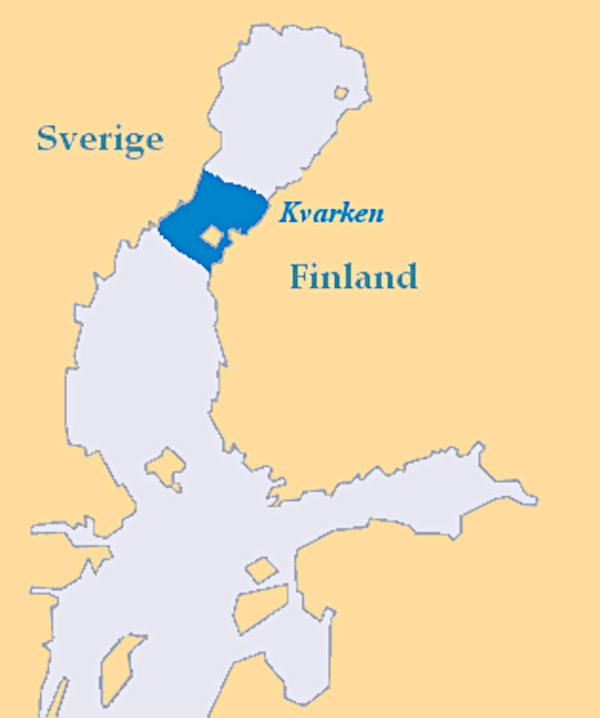
Les articles de presse ne le disent pas, mais on ne peut exclure qu’avec le réchauffement climatique et l’élévation du niveau mondial des océans, cette montée des eaux compense le soulèvement des terres provoqué par le rebond isostatique !
Source : Yahoo Actualités.
——————————————-
 Recently, amidst global warming and melting glaciers, there has been much discussion regarding isostatic rebound in Iceland. Isostatic rebound is a phenomenon in which the loss of mass from melting glaciers causes the underlying bedrock to rise. According to some volcanologists, this process could facilitate the ascent of magma slumbering beneath the Earth’s surface and trigger more frequent eruptions. So far, no eruption has substantiated this theory, but we lack sufficient long-term data to draw definitive conclusions.
A prime example of isostatic rebound is currently taking place in Finland where new land is slowly emerging from the Baltic Sea along the country’s western coast. The phenomenon is particularly visible in the Kvarken Archipelago near Vaasa, where the land rises by around eight millimeters every year. Islands gradually grow and join together, shallow bays become lakes, and stretches of seabed become dry land. Of course, the change is slow enough to escape notice on a short visit, but it is fast enough to alter the landscape within a human lifetime.
The explanation for the rising land begins with the last Ice Age. A vast ice sheet once covered this part of northern Europe, with the weight of almost three kilometers of ice pushing down on the Earth’s crust. When the ice began to melt around 18,000 years ago, that pressure disappeared. The land underneath the ice started to rebound, rather like a compressed mattress slowly returning to its original shape. In this part of Finland, it has not finished yet.
Across the High Coast and Kvarken region, the land has been rising for thousands of years. UNESCO considers the area one of the world’s best places to understand glacio-isostatic uplift.
In Kvarken, the current rate is about eight millimeters every year. Roughly one square kilometer of new land emerges annually and the extremely shallow coastline continues to change. At that rate, the map of the region will look noticeably different to future generations.
There is an even stranger consequence of all this movement. Kvarken is already the narrowest stretch of the Gulf of Bothnia. If geological uplift continued indefinitely at today’s rate, Finland and Sweden would eventually become connected by land ! UNESCO’s original evaluation estimated that could happen in approximately 2,500 years. However, we could add that with global warming global sea level is risinf the the ligher sea level might offset the land rise caused by the isostatic rebound !
Source : Yaloo News.