Islande : réouverture du Blue Lagoon // Iceland : the Blue Lagoon is open again

Le Blue Lagoon est à nouveau ouvert au public depuis ce 6 avril 2024 à midi, même si les autorités préviennent que la situation actuelle est toujours susceptible d’être menacée par les coulées de lave et la pollution par les gaz en provenance de Svartsengi. A noter toutefois que le Blue Lagoon est désormais équipé de capteurs de gaz et d’une station météo.
Il convient de noter que les visiteurs du Blue Lagoon, ainsi que toutes les autres personnes, à l’exception du personnel de secours, des scientifiques, des journalistes et des employés de la centrale de Svartsengi, ne sont pas autorisés à accéder au site de l’éruption depuis le parking du Blue Lagoon ou la Grindavíkurvegur. En effet, des concentrations élevées de SO2 ont été mesurés sur le site éruptif. Cette pollution est considérée comme très malsaine, avec un risque pour le système respiratoire.
Source ; Iceland Monitor.
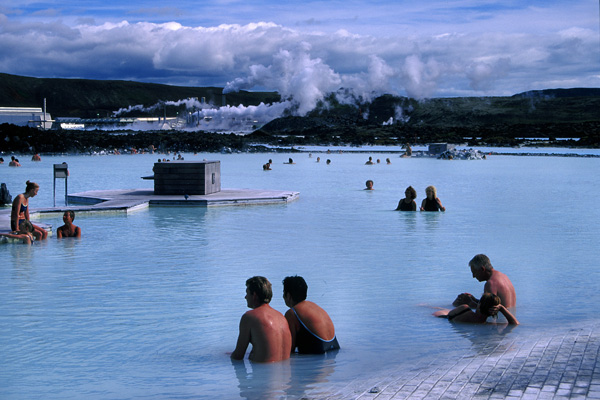
Photo: C. Grandpey

——————————————————-

The Blue Lagoon opened again to the public today April 6th, 2024 at noon, even though local authorities warn that the current situation could be threatened by lava flow and gas pollution at Svartsengi. However, the Blue Lagoon is now equipped with gas meters. In addition, a weather station has been set up on the site.

It should be noted that visitors to the Blue Lagoon, as well as all others excluding rescue personnel, earth scientists, journalists, and those working inside Svartsengi, are not allowed to access the eruption site from the parking lot of the Blue Lagoon or Grindavíkurvegur road. High levels of SO2 have been measured on the eruptive site. This pollution is considered very unhealthy and most people are likely to experience symptoms in the respiratory system.

Source ; Iceland Monitor.

Islande : quelques nouvelles de l’éruption // Iceland : some news of the eruption

Le Met Office indique qu’il n’y a aucun signe indiquant que l’éruption sur la péninsule de Reykjanes touche à sa fin. Ce qui est intéressant, c’est qu’il n’y a pas de déformation ou d’inflation dans le secteur de Svartsengi, comme ce fut le cas lors des trois éruptions précédentes. Le flux de magma en provenance de la chambre profonde, probablement à 15 kilomètres de profondeur, est stable et aucun magma ne s’accumule dans la chambre superficielle. Le magma semble s’écouler directement par la fracture éruptive. Il sera intéressant d’avoir les résultats de l’analyse de la chimie de la lave pour avoir confirmation de cette situation.
Les scientifiques du Met Office affirment qu’il faut être prudent en matière de prévisions. L’éruption peut durer encore un certain temps, mais elle peut également s’arrêter avec peu ou pas de préavis.
Il s’agit de la quatrième éruption sur la chaîne de cratères de Sundhnúkagígar en moins de quatre mois. Les trois premières n’ont duré que quelques jours tandis que l’événement actuel dure beaucoup plus longtemps. Personne ne sait pourquoi cette éruption se comporte différemment. Il y a des désaccords entre les scientifiques. L’un d’eux a déclaré fort justement : « Des circonstances complexes dans la croûte régissent le déroulement de cette éruption. Nous ne disposons probablement d’aucune mesure permettant de dire exactement ce qui se passe. » Une fois de plus, on se rend compte que c’est la Nature qui commande et que l’être humain doit faire preuve d’humilité.
Source : Iceland Monitor.

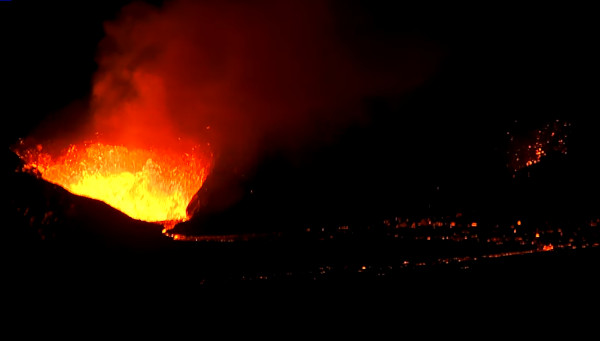
Image webcam de l’éruptionle 3 avril 2024 au soir. En ce moment, le site éruptif est dans le brouillard

———————————————————

The Met Office indicates that there are no signs that the eruption on the Reykjanes Peninsulais coming to an end. What is interesting is that there is no deformation or inflation in the Svartsengi area, as this was the case with the previous three eruptions. The flow of magma from the deep chamber, probably 15 kilometers deep, is stable and there is no magma accumulating in the shallow chamber, rather it flows directly out through the fissure. It will be interesting to have the results of the lava analysis to have a confirmation of this situation.

Scientists at the Met Office say one should be careful about making predictions. The eruption may last some time more, but it could also stop with little or no notice.

This is the fourth eruption in the Sundhnúkagígar crater row in less than four months. The first three lasted only a few days while the current one is lasting much longer. Nobody knows why this eruption is behaving differently. There are disagreements in the points of view. One scientist aptly said : « There are some complicated circumstances in the crust that govern how this eruption has panned out. We may not have any measurements that can tell us exactly what is going on. » Once again, we realize that Nature is in charge and that human beings should demonstrate humility.

Source : Iceland Monitor.

Islande : l’heure des pronostics ! // Iceland : time for predictions !

Les scientifiques islandais du Met Office et de l’Université d’Islande adorent faire des pronostics et des prévisions éruptives. Lorsque l’activité a commencé sur le Fagradalsfjall en 2021, ils ont affirmé que l’éruption était le début d’un nouveau cycle éruptif qui pourrait durer des mois, des années, voire plus. En fait, l’événement a duré six mois (19 mars – 18 septembre 2021). Une nouvelle éruption a débuté le 3 août 2022, et une autre, plus courte, a commencé le 10 juillet 2023 et s’est arrêtée le 5 août de cette même année.
Cette fois, en 2024, le Met Office est persuadé que l’éruption actuelle à Sundhnúkagígar marque probablement la fin d’une série dans la zone proche de Grindavík, même si elle est entrée dans sa troisième semaine et se poursuit au moment où j’écris ces lignes.
L’éruption a commencé le 16 mars 2024. L’activité reste confinée dans deux cratères, avec une émission de lave constante et aucun signe montrant que l’éruption est sur le point de se terminer. La majeure partie de l’activité se déroule dans le plus grand des deux cratères. Une certaine pollution par les gaz est parfois observée à Grindavík et Hafnir.
Selon un professeur de volcanologie de l’Université d’Islande, certains signes laissent supposer qu’il s’agit de la dernière éruption d’un cycle qui a débuté en décembre 2023. La chambre magmatique la moins profonde, située sous Svartsengi, n’est plus alimentée. Cela signifie que le magma en provenance de la chambre magmatique profonde monte directement vers vers la surface. L’éruption pourrait prendre fin dans les prochains jours.
Source  : Iceland Review.

Image webcam de l’éruption le 1er avril 2024

—————————————————–

Icelandic scientists at the Met office and the University of Icelad love making predictions. When activity started at Fagradalsfjall in 2021, they said the eruption was the start of a new eruptive cycle which might last for months, years or even more. Actually the event lasted six months (19 March – 18 September, 2021). A new eruption started aon August 3rd, 2022, and another short one began on July 10th, 2023 and stopped on Augsu 5th. .

This time, in 2024, the Met Office is persuaded that the current eruption in Sundhnúkagígar could mark the end of a string of eruptions in the area near Grindavík, although it is in its third week and still continuing.

The eruption began on March 16th 2024.Activity remains in two craters in the area, with steady lava flow and no immediate signs of the eruption ending. Most of the activity is ongoing in the larger of the two craters. Some gas pollution is sometimes detected in Grindavík and Hafnir.

According to a professor of volcanology at the University of Iceland, there are signs that this might be the final eruption in the cycle of volcanic activity which began in December 2023. The shallower magma chamber in the area, situated under Svartsengi, is no longer receiving magma from the eruption. Therefore, magma from the deeper magma chamber in the area is flowing to the surface and the eruption might come to an end in the next few days.

Source : Iceland Review.

KMT, un projet ambitieux en Islande // KMT, an ambitious project in Iceland

Dans deux notes publiés le 28 septembre 2021 et le 22 janvier 2024, j’expliquais qu’un nouveau projet – Krafla Magma Testbed (KMT) – est en cours de développement en Islande.

https://claudegrandpeyvolcansetglaciers.com/2021/09/28/voyage-au-centre-de-la-terre-journey-to-the-centre-of-the-earth-3/

https://claudegrandpeyvolcansetglaciers.com/2024/01/22/islande-la-geothermie-au-coeur-dun-volcan-iceland-geothermy-at-the-heart-of-a-volcano/

Un article publié le 23 mars 2024 sur le site Iceland Monitor nous informe que deux des principaux objectifs du projet sont « d’améliorer considérablement les prévisions des éruptions volcaniques dans le monde et de concevoir de nouvelles méthodes plus économiques pour la production d’énergie géothermique. »
La société KMT vise à construire dans les années à venir un centre de recherche international de recherche en matière de volcanisme et d’énergie dans la région du Krafla à Þingeyjarsveit. L’idée du projet est née du forage IDDP-1 qui, en 2009, a atteint de manière tout à fait inattendue une poche de magma dans la région du Krafla, à une profondeur de 2,1 km.
L’équipement utilisé en 2009 n’était pas capable de résister à la chaleur, à la pression et à la corrosion à proximité du magma, mais des informations importantes ont été recueillies au niveau du forage avant sa fermeture. Les scientifiques ont pu déterminer l’emplacement exact d’une chambre magmatique, une première mondiale, et le forage s’est avéré dix fois plus puissant que les forages traditionnels déjà réalisés dans la région du Krafla.
Quinze ans après le forage de 2009, l’objectif est de récidiver avec une nouvelle technologie mise au point par la société KMT.
Voici une vidéo de KMT (en anglais) expliquant le projet et ses ambitions :
https://youtu.be/Bf-yA_L8mZA

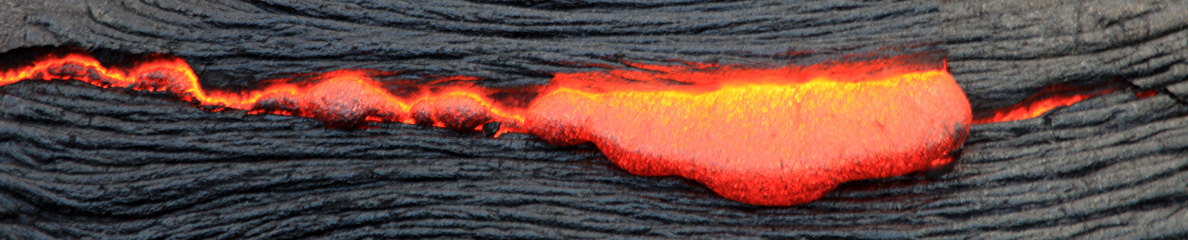
Photos: C. Grandpey

————————————————-

In two posts released on September 28th, 2021 and January 22nd, 2024, I explained that a new project – Krafla Magma Testbed (KMT) – is being developed in Iceland.

https://claudegrandpeyvolcansetglaciers.com/2021/09/28/voyage-au-centre-de-la-terre-journey-to-the-centre-of-the-earth-3/

https://claudegrandpeyvolcansetglaciers.com/2024/01/22/islande-la-geothermie-au-coeur-dun-volcan-iceland-geothermy-at-the-heart-of-a-volcano/

An article published on March 23rd, 2024 on the website Iceland Monitor informs us that two of the main goals of the project are « to greatly improve global volcanic eruption predictions and design new and more cost-effective methods for the energy production of geothermal energy. »

KMT aims to build an international research center for volcanic and energy research in the Krafla area in Þingeyjarsveit in the coming years. The idea for the project stems from the Icelandic deep-water drilling project IDDP-1, where they unexpectedly drilled into magma at Krafla at a depth of 2.1 km in 2009.

The equipment used in IDDP-1 in 2009 was not able to withstand the heat, pressure, and corrosion closer to the magma but important information was gathered from the borehole before it was closed. Scientists were now able to determine the exact location of a base magma chamber, which is considered unique worldwide, and the borehole was found to be ten times more powerful than traditional production boreholes in Krafla.

Now fifteen years after the unexpected drilling of magma in Krafla, the aim is to do so again with a new instrumentation that KMT is developing.

Here is a video from KMT explaining the project and its ambitions:

https://youtu.be/Bf-yA_L8mZA