Islande : éruption imminente ?
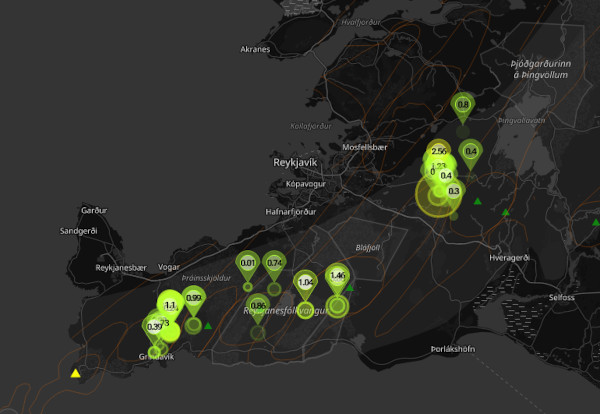
Selon le Met Office et des scientifiques de l’Université d’Islande, la hausse de l’activité sismique sur la péninsule de Reykjanes annonce une éruption imminente entre Hagafell et Stóra-Skógarfell. L’événement pourrait débuter entre le 28 février et le 4 mars au plus tard. Le volume de magma dans la chambre superficielle a atteint son niveau maximum. Comme je l’ai déjà écrit, le Met Office s’inquiète du fait que les gens soient revenus à Grindavík mais espère qu’ils seront prêts à quitter la ville rapidement car l’éruption pourrait commencer très soudainement.
Il semble que tous les signes indiquent une éruption entre Hagafell et Stóra-Skógarfell. Cependant, les volcanologues locaux affirment qu’il ne peut être exclu qu’une fissure s’ouvre plus au nord ou au sud, la plus grande probabilité se trouvant sur la crête de Sundhnjúkar. Ils affirment également que le schéma actuel d’éruptions sur la péninsule de Reykjanes – où les éruptions se produisent toutes les trois semaines et durent entre un et trois jours – pourrait se poursuivre au cours des prochains mois, voire des prochaines années.
Si une éruption devait se produire dans le secteur de Svartsengi, ce serait la quatrième depuis décembre 2023.
Source : Met Office, Université d’Islande.
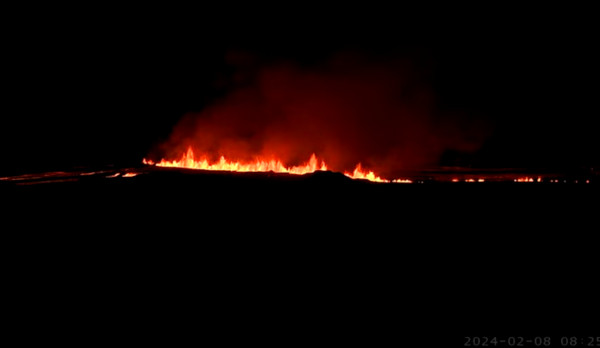
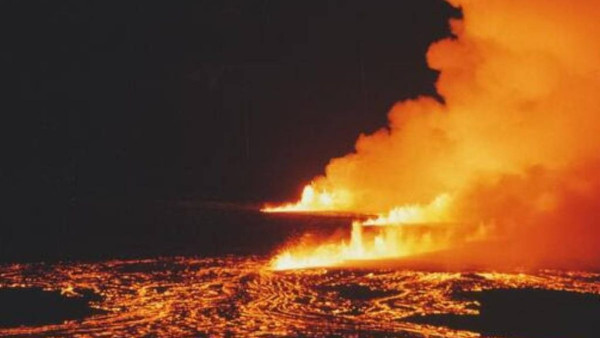
Une éruption comme celle du 8 janvier (Image webcam)
++++++++++
Voyeurisme et tourisme morbide à Grindavik.
Après une catastrophe ou un drame, vous êtes sûr de voir des badauds visiter le site ou venir à des funérailles, même s’ils n’ont jamais connu la famille du défunt. C’est du voyeurisme, de la curiosité morbide contre laquelle on ne peut pas faire grand-chose. La nature humaine est ainsi faite.
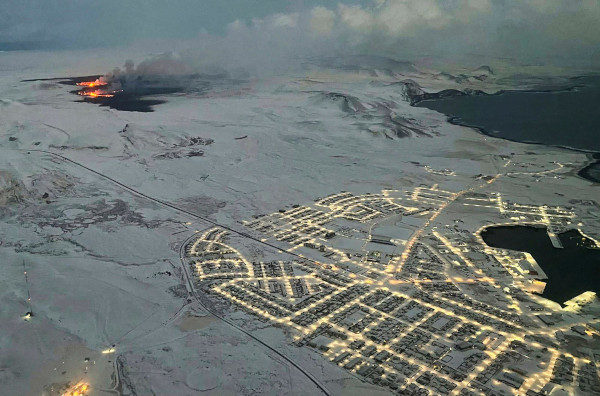
C’est ce qui se passe actuellement à Grindavik qui a été gravement endommagée par des séismes, où des fractures se sont ouvertes dans le sol, et où trois maisons ont été détruites par une coulée de lave.
Les habitants de Grindavik ont été évacués après les séismes de novembre 2023 et ont récemment été autorisés à revenir, même si tout est loin d’être parfait. Beaucoup d’entre eux ont préféré ne pas revenir… mais les touristes sont présents !
Alors que les habitants de Grindavík étaient contraints de quitter la ville après avoir pris leurs biens essentiels, les touristes venus au Blue Lagoon ont pu tranquillement entrer dans la ville sans surveillance. Une habitante du port de pêche a aperçu des touristes déambulant sur la lave chaude, en train de prendre des photos des maisons détruites par la coulée du 8 janvier 2024. Elle a déclaré : « Les habitants de Grindavik ne le feraient pas, par respect pour ceux qui ont perdu leur maison. » (NDLR : mais la goujaterie n’a pas de limites chez les touristes). Elle a vu des touristes grimper sur la lave encore brûlante. « Ensuite, si quelqu’un se blesse, ce sont nous, les habitants de Grindavík, qui serons critiqués, alors que c’est quelque chose que nous ne ferions jamais. »
Au moment où cette habitante quittait Grindavik après avoir récupéré ses affaires, elle a rencontré un bus touristique se dirigeant vers le Blue Lagoon sans personne pour surveiller ses déplacements, ni contrôler s’il allait entrer dans le port de pêche, alors que les habitants sont soumis à des rstrictions d’ accès. . .
Source : Iceland Monitor.
—————————————————
 Iceland : an eruption in the very short term ?
According to the Met Office and scientists at the University of Iceland, increased seismic activity on the Reykjanes Peninsula suggests an imminent eruption between Hagafell and Stóra-Skógarfell. The event could start between February 28th and March 4th at the latest. The volume of magma in the shallow storage chamber is reaching its threshold. As I put it before, the Met Office worries about people staying in Grindavík but hopes they are ready to leave town quickly as the eruption might start very suddenly.
It looks as if all signs are pointing to an eruption between Hagafell and Stóra-Skógarfell. However, local volcanologists say it cannot be ruled out that a fissure might open further north or south, with the highest likelihood being on the Sundhnjúkar ridge. They also say that the recent pattern of eruptions on Reykjanes – where eruptions occur every three weeks and last between one to three days – might continue over the next months or even years,
If an eruption were to occur near the Svartsengi area, it would be the fourth eruption since December 2023.
Source : Met Office, University of Iceland.
++++++++++
Voyeurism and morbid tourism in Grindavik.
This is sure to happen after a disaster or a drama. You are sure to see people roming around the site or coming to a funeral, even if they never lived there and never knew the family of the deceased .
This is what is currently happening in Grindavik which was severely damaged by earthquakes and the opening of fissures, and where three houses were destroyed by a lava flow.
Residents of Grindavik were evacuated after the November 2023 earthquakes and were recently allowed to come back , even though everything was far from perfect. Many people decided not to come back…but the tourists were there !
At the same time that the residents of Grindavík were forced to leave their homes and leave the town after visiting their property, tourists who had come to the Blue Lagoon could enter the town unsupervised. A resident of the fishing port could seet tourists standing on hot lava and taking pictures of properties that went under the lava. She said : « As a resident, we would not do it out of respect for those who are losing their houses. » She adds that tourists have been climbing on scalding hot lava. « Then someone gets injured and then it’s us the residents of Grindavík who are criticized. But this is something we would never do. » While the resident was leaving Grindavik after taking her belongings, she met a group of tourist buses going to the Blue Lagoon, and there was noone monitoring their travels, and whether they went into town or not, whereas local residents have a much more restricted access. .
Source : Iceland Monitor.