Hausse du niveau d’alerte du Mont Zao (Japon) // The alert level has been raised on Mount Zao (Japan)

L’Agence Météorologique Japonaise (JMA) a fait passer le niveau d’alerte de 1 à 2 sur le Mont Zao le 30 janvier 2018, exactement une semaine après qu’une éruption du volcan Moto-Shirane ait tué un homme, blessé près d’une douzaine d’autres personnes et bloqué des skieurs pendant plusieurs heures.
Le Mont Zao fait partie d’un complexe volcanique à la limite des préfectures de Yamagata et de Miyagi. Le point culminant est de 1 841 mètres.
Le niveau d’alerte actuel signifie que les gens doivent éviter de s’approcher du cratère. La JMA précise qu’il y a possibilité d’une éruption mineure car un certain nombre de petits mouvements du sol ont été détectés, ainsi qu’un léger gonflement du sol dans une zone.
Selon l’Agence, une activité sismique provoquée par des mouvements de fluides hydrothermaux et de gaz sous le volcan a été observée pendant 31 minutes à partir de 14h18. le 30 janvier. Cette activité était plus intense que celle enregistrée dimanche et mardi matin en début de matinée. Les autorités locales de Yamagata ont émis un avis d’évacuation pour les zones autour du cratère et ont également conseillé à une station de ski située à proximité de rester en alerte.
L’annonce a été faite une semaine après la mort d’un membre des Forces d’autodéfense japonaises lors d’une éruption soudaine du Mont Moto-Shirane. Entre l’éruption et le 26 janvier, un peu plus de 20 000 personnes ont annulé des réservations de chambres à Kusatsu.
Comme sur le Moto-Shirane, une station de sports d’hiver très populaire se trouve sur les pentes du Mont Zao ; elle est connue pour ses «monstres de neige» qui sont façonnés par la vapeur d’eau qui gèle sur les arbres en hiver. Ses pentes regorgent de skieurs en hiver et de randonneurs pendant les autres saisons.
En septembre 2014, 63 personnes ont été tuées sur le Mont Ontake lors de la pire catastrophe volcanique au Japon en près de 90 ans.
Source: The Japan Times.

———————————————-

The Japan Meteorological Agency (JMA) raised the alert level from 1 to 2 on Mount Zao on Tuesday, January 30th 2018 exactly a week after a dramatic eruption at Mount Moto-Shirane  killed one man, injured nearly a dozen others and stranded scores of skiers for several hours.

Mount Zao is one of a cluster of volcanoes on the border of Yamagata and Miyagi prefectures whose highest point is 1,841 metres.

The current alert level means people should avoid going near the crater. JMA says there is a possibility of a small-scale eruption as a number of small earth movements were detected, along with a slight bulging of the ground in one area.

According to the Agency, volcanic tremors, caused by movements of hot subterranean water and volcanic gas, were observed over a period of 31 minutes from 2:18 p.m. on Tuesday and were larger than those recorded on Sunday and early Tuesday morning. The Yamagata Municipal Government has issued an evacuation advisory for the areas around the crater and also advised a nearby ski resort to stay on alert.

The announcement came a week after a member of Japan’s Self-Defense Forces was killed during a sudden eruption of Mount Moto-Shirane at a mountain resort in Gunma Prefecture. Between the eruption and January 26th, a little more than 20,000 people cancelled room reservations in Kusatsu.

Zao, like Moto-Shirane, is a popular resort area famed for its so called “snow monsters” that are created by water vapour freezing on trees in winter. Its slopes are packed with skiers in winter and hikers in other seasons.

In September 2014, 63 people were killed on Mount Ontake in the country’s worst volcanic disaster in nearly 90 years.

Source: The Japan Times.

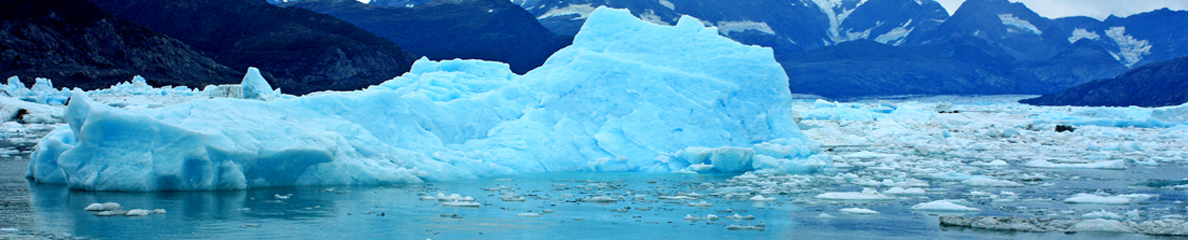
Vue du cratère du Mont Zao (Source: JMA)
Un No Man’s Land autour du Mayon (Philippines)? // A No Man’s Land around Mayon Volcano (Philippines)?

Le chef de la Protection Civile philippine a suggéré que la zone de danger permanent autour du Mayon soit transformés en «no man’s land» définitif pour éviter d’évacuer des milliers d’habitants chaque fois que le volcan entre en éruption. En outre, alors que des milliers de personnes ont été évacuées de la zone de danger, de nombreux villageois viennent en cachette vérifier que tout va bien dans leurs maisons ou leurs fermes. De plus, la police et l’armée doivent intervenir pour empêcher des touristes de s’approcher du Mayon.
Le président philippin, Rodrigo Duterte, a approuvé l’idée de créer un «no man’s land» permanent autour du Mayon. Il a toutefois fait remarquer que le gouvernement devrait probablement exproprier des propriétaires privés et qu’une telle mesure pourrait engendrer « un nouveau problème social ».
La proposition est difficile à mettre en oeuvre car des milliers de villageois aux ressources très modestes se sont installés au fil des ans à l’intérieur de la zone officielle de danger permanent de 6 kilomètres de rayon autour du volcan, où ils ont survécu pendant des générations.
Lorsque l’activité du Mayon s’est intensifiée ce mois-ci, les autorités ont agrandi la zone de danger et, de ce fait, obligé des milliers d’autres personnes à aller s’installer dans des dizaines de centres d’hébergement d’urgence où une baisse des aides commence à se faire cruellement sentir.

Il y a quinze jours, les autorités d’Albay ont décrété l’état de catastrophe naturelle pour la province qui regroupe plus de 1,3 million de personnes. Cela a permis de débloquer plus rapidement des fonds de secours.

En tout, plus de 80 000 villageois ont fui vers des écoles transformées en abris d’urgence, et où on observe un manque de toilettes et d’autres problèmes de promiscuité.
Un parc national pourrait être créé au pied du Mayon. Des arbres pourraient y être plantés. Ils joueraient le rôle de tampon pour arrêter les inondations et les lahars dévastateurs qui menacent de recouvrir des villes et des villages. Le premier travail des autorités locales sera de trouver une solution pour les personnes qui travaillent dans la terre qu’elles possèdent et qui ont un titre de propriété à leur nom.
Sources: ABC News et The Seattle Times.

—————————————-

The head of the Philippine Civil Defense has recommended that villages in the danger zone around erupting Mount Mayon be turned into a permanent « no man’s land » to avoid evacuating thousands of residents each time the volcano explodes. Besides, while thousands have evacuated areas around the volcano, many villagers have sneaked back in to check on their homes, farms and animals, and police and army troops have struggled to turn back tourists who want a closer view of Mayon.

Philippine President Rodrigo Duterte expressed support for the recommendation to create a permanent « no man’s land ». But he said the government may have to expropriate land from private owners and added that such a move could spark « a social problem again. »

The proposal is complicated given that thousands of impoverished villagers have settled through the years in a government-declared 6-kilometre permanent danger zone around Mayon, where they have survived on farming for generations.

As Mayon grew more restive this month, authorities expanded the danger zone to cover more communities and forced thousands more to swarm into dozens of emergency school shelters where provincial disaster funds were running low.

Albay officials declared the entire province of more than 1.3 million people under a state of calamity two weeks ago to allow faster releases of disaster funds. In all, more than 80,000 villagers have fled to dozens of schools turned into emergency shelters, where a lack of toilets and other problems with congestion have emerged.

A national park in Mayon’s shadow could be expanded around the base of the volcano where trees could grow partly as a buffer to stop volcanic floodwater and mudflows from devastating nearby towns and cities. The first thing that local authorities have to find out is what would be the solution for people who are there tilling the land which they own and is titled in their name.

Sources: ABC News & The Seattle Times.

Source: Wikipedia

La belle légende du Mayon // The beautiful legend of Mayon Volcano

Beaucoup de volcans sont habités par des légendes. Un certain nombre d’entre elles figurent dans le livre Mémoires Volcaniques que j’ai eu le plaisir d’écrire avec l’ami Jacques Drouin (voir colonne de droite de ce blog).

Il y a quelques jours, j’ai pu lire sur Internet la belle légende du Mayon, volcan des Philippines dont les colères inquiètent périodiquement les populations venues vivre sur ses flancs.

++++++++++

Il était une fois, il y a très longtemps, dans un endroit nommé Ibalon, une belle jeune fille qui s’appelait Daragang Magayon (L’Adorable). Elle était la fille de Makusog (Le Fort), le chef de la tribu.
Un jour, Daragang Magayon se promenait près d’une rivière. En la traversant, elle trébucha sur un rocher et tomba dans l’eau. Elle fut rapidement emportée par le courant.
« Au secours ! Au secours ! » cria-t-elle. Heureusement, ses appels à l’aide furent entendus par Pangaronon (Le Fier) ​​et son garde du corps Amihan (Le Froid) qui passaient par là. Pangaronon se précipita dans la rivière et sauva Daragang Magayon de la noyade.
« Vous avez risqué votre vie pour me sauver », dit la jeune fille en pleurant. « Que puis-je faire pour vous remercier? Mon père est le chef de notre tribu. Je suis sûre qu’il récompensera votre héroïsme, quel que soit le prix à payer »

La beauté de Daragang Magayon avait tout de suite fasciné Pangaronon. Il avait réalisé qu’il avait enfin rencontré la femme parfaite. Dans le même temps, Daragang Mayon avait, elle aussi, été immédiatement attirée par le jeune homme.
Panganoron demanda à Makusog la permission d’épouser Daragang Magayon. Hélas, Makusog ne pouvait pas autoriser ce mariage. La loi tribale interdisait tout mariage en dehors du clan. En tant que chef de tribu, il devait appliquer la loi. Pourtant, en tant que père, il voulait rendre sa fille heureuse.
Patuga (L’Eruptif), le prétendant le plus ardent de Daragang Magayon, apprit l’intention de Panganoron. Pendant des années, il avait demandé à la jeune fille de l’épouser, mais en vain.
Une nuit, Patuga envoya ses hommes kidnapper Makusog. Puis, il envoya dire à Daragang Magayon que son père mourrait si elle ne l’épousait pas. Comme elle n’avait pas le choix, elle accepta. Patuga libéra Makusog. Patuga et Daragang Magayon se marièrent, mais au milieu de la cérémonie du mariage, il y eut un grand brouhaha quand arrivèrent Panganoron et ses hommes. Des combats s’ensuivirent entre les deux tribus. En quelques minutes, Panganoron blessa mortellement Patuga mais, pendant leur confrontation, une flèche empoisonnée tirée de nulle part transperça la poitrine de Daragang Magayon. Panganoron se précipita à son secours et, tandis qu’il s’agenouillait au chevet de la jeune fille en train de rendre l’âme, un ennemi lui trancha la tête.
Après la bataille, Daragang Magayon fut mise en terre et sa mort fut pleurée partout dans le pays. A l’endroit même où elle reposait, une montagne apparut mystérieusement. Cette montagne est aujourd’hui connue sous le nom de Mayon. Il se dit que même dans la mort et sous une autre forme, elle est toujours hantée par les hommes qui étaient amoureux de Daragang Magayon. Quand le Mayon entre en éruption, la légende raconte que c’est Patuga qui défie Panganoron. Mais quand le Mayon est calme, c’est Panganoron qui embrasse sa belle. Les larmes de chagrin de Panganoron se répandent comme de la pluie…

—————————————

Many volcanoes have given birth to legends. A number of them appear in the book Mémoires Volcaniques that I had the pleasure of writing with my friend Jacques Drouin. A few days ago, I could read on the Internet the beautiful legend of Mayon, a volcano in the Philippines whose eruptions periodically worry the populations that have come to live on its flanks.

++++++++++

Long ago in a place called Ibalon, there lived a beautiful maiden. Her name was Daragang Magayon (the lovely one). She was the daughter of Makusog (the strong one), chief of the tribe.

One day, Daragang Magayon strolled near the river. While crossing the river, she stumbled on a rock and fell quickly in the water. She was swiftly swept down stream by the current.

“Help! Help me!” she cried. Fortunately, her cries were heard by Pangaronon (the proud one) and his bodyguard Amihan (the cold one). Pangaronon jumped into the river and saved Daragang Magayon.

“Thank you for risking your life to save me”, she cried. “How can I repay you? My father is the chief of our tribe. Surely, he will reward your heroism whatever it may take.”

Her beauty immediately captivated Pangaronon. He realized that he had finally met the perfect woman for him. At the same time, Daragang Mayon was instantly attracted to him.

Panganoron asked Makusog’s permission to marry Daragang Magayon. But Makusog could not permit them to marry. Tribal law forbade marriage outside of the clan. As tribe leader he had to enforce the law. Yet, as a father, he wanted to make his daughter happy.

Meanwhile, Patuga (the eruptive one) learned about Panganoron’s intention. Patuga was the most ardent suitor of Daragang Magayon. For years, he had been convincing her to marry him, but to no avail.

One night, Patuga and his cohorts kidnapped Makusog. Then, he sent word to Daragang Magayon that her father would die if she did not marry him. Without a choice, she acceded. Only then did Patuga release Makusog. Soon Patuga and Daragang Magayon were wed. But in the midst of the merrymaking, pandemonium broke out when Panganoron and his men arrived. Fighting ensued between teh two tribes. In a few minutes, Panganoron fatally struck Patuga. However, during the skirmish, a poisoned arrow shot from nowhere, fell on Daragang Magayon’s breast.

Panganoron rushed to her aid and as he kneeled over the dying Daragang Magayon, an enemy hacked his head off.

After the battle, Daragang Magayon was buried and her death was mourned all over the land. Where she was put to rest, a mountain mysteriously appeared.

This mountain is now known as Mayon. It is said that even in death and in another form, she is still haunted by the men who loved her. When Mayon is said to erupt, this is Patuga challenging Panganoron. But when Mayon is calm, Panganoron is embracing her. The tears of Panganoron are shed as rain at times in his grief.

Until today, many are still delighted by the love story behind the legend of the Mayon Volcano.

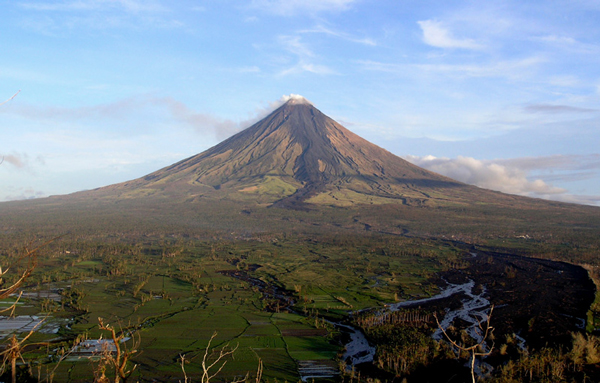
Le beau cône du Mayon serait-il l’incarnation de la séduisante Daragang Magayon? (Crédit photo: Wikipedia)

Mayon (Philippines): Photos de l’éruption

En cliquant sur le lien ci-dessous, vous verrez une galerie de 25 photos du Mayon mise en ligne par CBS News. Les clichés montrent l’éruption (coulées de lave, avalanches pyroclastiques, lahars) et ses effets sur la population.

https://www.cbsnews.com/pictures/volcanic-eruption-in-the-philippines-mount-mayon/

————————————-

By clicking on the link below, you will see a gallery with 25 photos of Mayon Volcano by the CBS News website. The snapshots show the eruption (lava and pyroclastic flows, lahars) and the effects on the population.

 https://www.cbsnews.com/pictures/volcanic-eruption-in-the-philippines-mount-mayon/

Crédit photo: Wikipedia