Sur la Grande Ile d’Hawaii, la Route 11 (Highway 11) a beaucoup de circulation car elle est empruntée par tous ceux qui voyagent entre l’est et l’ouest Big Island. Cette route serait rapidement menacée si une éruption devait se déclencher sur la SouthWest Rift Zone (SWRZ), zone de fractures qui tranche le versant sud-ouest du Mauna Loa. Quand on conduit sur cette route dans la partie sud-ouest de Big Island, on remarque d’anciennes coulées de lave de part et d’autre de la chaussée.
Au cours des 148 dernières années, les éruptions à partir de la SWRZ du Mauna Loa ont généré des coulées de lave qui ont traversé la route à six reprises en 1868, 1887, 1907, 1919, 1926 et 1950. Certains de ces éruptions ont bloqué la circulation en plusieurs endroits pendant des semaines, voire encore plus longtemps.
On peut voir la coulée de lave de 1868 depuis la Route 11 entre les bornes 70 et 72, juste à l’ouest de l’intersection avec la South Point Road. Cette coulée de lave faisait partie d’une série d’événements qui avaient commencé le 27 mars 1868 avec une brève éruption sommitale du Mauna Loa.
Le 2 avril 1868, le séisme le plus puissant jamais enregistré à ce jour à Hawaii, avec une magnitude estimée à M 7,9, a causé d’importants dégâts dans la région. Il a également déclenché plusieurs glissements de terrain, avec une coulée de boue qui a tué 31 agriculteurs et généré un tsunami qui a balayé les côtes de Ka’u et Puna, tuant au passage 41 autres personnes.
Le 7 avril 1868, une grosse éruption a commencé dans la partie inférieure de la SWRZ. La lave émise par une fracture dévala la pente sur une distance d’environ 16 km qu’elle couvrit en trois heures. Les habitants ont fui leurs maisons, mais 37 structures ont été détruites dans le district de Ka’u. L’éruption a pris fin le 11 avril 1868.
En continuant la Route 11 vers l’ouest, on peut voir la coulée de lave de 1887 entre les bornes 73 et 74. L’éruption a commencé le 16 janvier, avec une brève émission de lave au sommet du Mauna Loa. Deux jours plus tard, des fractures se sont ouvertes sur la SWRZ, juste au-dessus des Hawaiian Ocean View Estates (qui n’existaient pas encore à l’époque) et une coulée de lave a’a a parcouru 24 km en quelque 24 heures, avant d’atteindre l’océan. L’éruption, s’est accompagnée de séismes fréquents et parfois forts, a pris fin le 2 février 1868.
La coulée de lave de 1907 a traversé la Government Road (l’ancêtre de la Highway 11) en deux endroits à proximité des bornes 75 et 78-79. L’éruption a commencé juste après minuit le 10 janvier 1907. La lave, émise une nouvelle fois par une bouche sur la SWRZ, s’est rapidement divisée en deux branches, pahoehoe au début, puis a’a, avec jusqu’à 9 mètres d’épaisseur. En trois jours, les deux branches ont traversé la route où elles ont brûlé des poteaux téléphoniques, coupant toute communication, et bloqué la circulation. La coulée de 1907 n’a pas atteint l’océan. L’éruption a duré environ 2 semaines.
Le 26 septembre 1919, une bouche s’est ouverte dans la partie supérieure de la SWRZ et a laissé échapper de la lave pendant quelques heures. Trois jours plus tard, une nouvelle fracture plus en aval sur la zone de rift a fait jaillir des fontaines de lave de120 mètres de hauteur et a envoyé une rivière de lave sur les pentes boisées du volcan. Pendant environ 20 heures, une coulée a’a de plusieurs centaines de mètres de large a traversé la Government Road (l’ancêtre de la Highway 11) et recouvert le petit village de Alika. On peut voir cette coulée aujourd’hui sur la Route 11, entre les bornes 90 et 91. La coulée de lave de 1919 de lave a parcouru 18 km en environ 24 heures. Elle a atteint l’océan où elle s’est déversée pendant 10 jours. L’éruption déclina ensuite lentement jusqu’à son terme le 5 novembre.
L’éruption de 1926 a commencé le 10 avril au sommet du Mauna Loa, mais des fractures ont bientôt migré vers la SWRZ. Le 14 avril, trois bouches ont envoyé d’énormes coulées de lave a’a vers l’aval. Deux jours plus tard, la coulée principale traversait la route. Cette coulée est visible aujourd’hui le long de la Route 11, au niveau des bornes 87 et 88. La coulée de 1926 s’est épaissie et élargie avant de traverser la route en se dirigeant vers la mer. Le 18 avril un front de lave a’a de 9-12 mètres de haut et de 455-610 mètres de large a’a a traversé le village de Ho`ōpūloa. La destruction a été progressive, mais totale. L’éruption a pris fin le 26 avril.
Après l’éruption de 1926, la SWRZ du Mauna Loa est restée calme pendant 24 ans. Cette période de repos a pris fin en 1950 avec l’une des plus grandes éruptions historiques du volcan.
Le 1er juin 1950, une fracture longue de 2,4 km a donné naissance, vers 21 heures, à une éruption dans la partie haute de la SWRZ. Quelques minutes plus tard, on pouvait entendre le rugissement des fontaines de lave depuis la Route 11, jusqu’à 24 km de distance. Des coulées de lave bien alimentées ont dévalé la pente ouest du volcan, d’autant plus que les fractures se sont étirées encore davantage le long de la zone de rift. En moins de deux heures, la première de ces coulées a traversé la route et a recouvert le village de Pahoehoe. Tous les villageois ont pu s’échapper, certains de justesse, avec seulement leurs vêtements sur le dos. Trente-cinq minutes plus tard, la coulée entrait dans l’océan, créant un nuage de vapeur qui est monté jusqu’à 3 km de hauteur. Il est à noter que, entre la bouche éruptive et la mer, cette imposante coulée de lave a’a a parcouru une distance de 21 km en seulement 3 heures. Deux autres coulées au sud de la première ont atteint l’océan respectivement en 14 et 18 heures.
Avant de se terminer le 23 juin, l’éruption de 1950 a détruit une vingtaine de structures et a coupé la Route 11 en trois endroits (aujourd’hui visibles entre les bornes 92 et 98).
Comme je l’ai indiqué au début de cette note, si une coulée de lave en provenance de la South-West Rift Zone du Mauna Loa traversait la Route 11 aujourd’hui, la vie de milliers de personnes seraient affectée de manière significative, même si elles ne vivent pas à proximité immédiate des coulées. Dans le meilleur des cas, les trajets à partir et à destination des maisons d’habitation, des écoles et des lieux de travail seraient perturbés. Si l’éruption prenait une grande ampleur, les pertes matérielles et les dégâts causés à cette partie de Big Island pourraient être considérables.
Source: HVO / USGS.
——————————————-
 As I put it before, Highway 11, the busy roadway used by both residents and visitors to travel between West and East Hawaii, would be under threat if an eruption started from Mauna Loa’s SouthWest Rift Zone (SWRZ). If you drive along this road in the southwestern part of Hawaii Big Island, you can notice the lava flows alongside the highway.
In the past 148 years, Mauna Loa Southwest Rift Zone eruptions have sent lava flows across the main road six times—in 1868, 1887, 1907, 1919, 1926, and 1950. Some of these eruptions blocked the traffic in several places for weeks or longer.
The 1868 lava flow is visible from Highway 11 at mile-markers 70–72, just west of the South Point Road intersection. This lava flow was part of a series of events that started on March 27th with a brief Mauna Loa summit eruption.
Then, on April 2, 1868, the strongest earthquake known so far in Hawaii, with an estimated magnitude of M 7.9, caused a lot of material damage throughout the district. It also triggered multiple landslides, with a mud flow that killed 31 Hawaiian farmers, and generated a tsunami that swept the Ka‘ū and Puna coastlines and killed another 41 people.
On April 7th, 1868, a voluminous eruption began low on Mauna Loa’s Southwest Rift Zone. Lava gushed from a fissure and quickly advanced downslope, covering a distance of about 16 km in about three hours. Area residents fled their homes and escaped, but 37 buildings in Ka‘ū were destroyed. The eruption ended on April 11th, 1868.
Continuing west on Highway 11, near mile-markers 73–74, you can see the 1887 lava flow. The eruption started on January 16th, when lava briefly broke out at the summit of Mauna Loa. Two days later, fissures on the volcano’s Southwest Rift Zone, just above today’s Hawaiian Ocean View Estates, erupted an a’a lava flow that advanced 24 km to the ocean in about a day. The eruption, which was accompanied by frequent and sometimes strong earthquakes, came to an end on February 2nd, 1868.
The 1907 lava flow crossed the government road (predecessor of Highway 11) in two places—near today’s mile-markers 75 and 78–79. The eruption began just after midnight on January 10th. Lava spewing from a vent on the SWRZ quickly split into two branches, changing from pahoehoe to a’a flows, up to 9 metres thick. Within three days, both branches had crossed the government road, where they burned telephone poles, cutting off all communication, and blocked traffic. The 1907 flow did not reach the ocean. The eruption lasted about 2 weeks.
On September 26th 1919, a vent high on Mauna Loa’s Southwest Rift Zone erupted for just a few hours. Three days later, a breakout lower on the rift zone erupted fountains of lava up to120 metres high and sent a river of lava down the volcano’s forested slopes. Within about 20 hours, an ‘a‘ā flow several hundred metres wide crossed the government road (predecessor of Highway 11), burying the small village of Alika. This flow can be seen today at Highway 11, between mile markers 90 and 91. The 1919 lava flow advanced 18 km in about 24 hours and reached the sea where it poured into the ocean for 10 days. The eruption then slowly waned until November 5th when it came to an end.
The 1926 eruption began on April 10th at the summit of Mauna Loa, but fissures soon migrated down the volcano’s Southwest Rift Zone. By April 14th, three main vents were sending huge a’a flows downslope. Two days later, the main flow crossed the road. This flow is visible today along Highway 11, at mile markers 87 and 88. The 1926 flow thickened and widened as it rapidly advanced beyond the road toward the sea. On April 18th, a 9–12-metre-high and 455–610-metre wide a’a flow advanced through the Ho`ōpūloa village. The destruction was gradual, but complete. The eruption ended on April 26th.
After the 1926 eruption, Mauna Loa’s Southwest Rift Zone was quiet for 24 years. That ended in 1950 with one of the volcano’s largest historical eruptions.
On June 1st, 1950, a 2.4-km-long fissure began erupting high on Mauna Loa’s Southwest Rift Zone around 9:00 p.m. Minutes later, the roar of lava fountains could be heard from Highway 11, up to 24 km away. Floods of lava streamed downslope from the rift zone. As the fissure extended farther down the rift zone, several flows raced down the west flank of the volcano. Within about two hours, the first of these flows crossed the highway and inundated the village of Pahoehoe. All villagers reached safety, but for some, who escaped with only the clothes on their backs, it was a close call. Thirty-five minutes later, the flow entered the ocean, creating a steam cloud that rose 3,000 metres into the air. It’s noteworthy that, from vent to sea, this massive a’a flow travelled a distance of 21 km in only about 3 hours. Two additional flows south of the first one reached the ocean in about 14 and 18 hours.
Before ending on June 23rd, the 1950 eruption destroyed nearly two dozen structures and cut Highway 11 in three places (visible today between mile markers 92 and 98).
If a Mauna Loa Southwest Rift Zone lava flow crossed Highway 11 today, the lives of thousands of residents would be significantly impacted, even if they do not live in the immediate path of the flow. At the very least, travel to homes, schools, and workplaces would be disrupted. If the eruption became a large-scale event, the damage would be far more serious.
Source: HVO / USGS.

Eruptions sur la SWRZ et leur impact sur la Route 11 (Source: USGS)

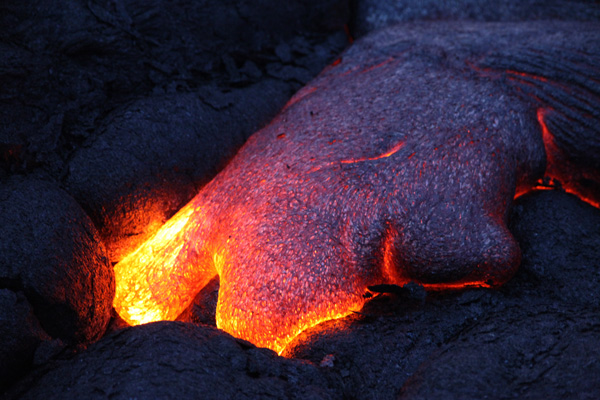
Coulée sur le versant SO du Mauna Loa

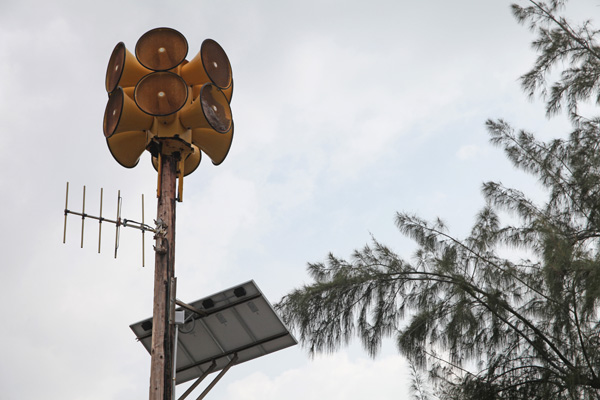
Système d’alerte en cas d’éruption.
(Photos: C. Grandpey)

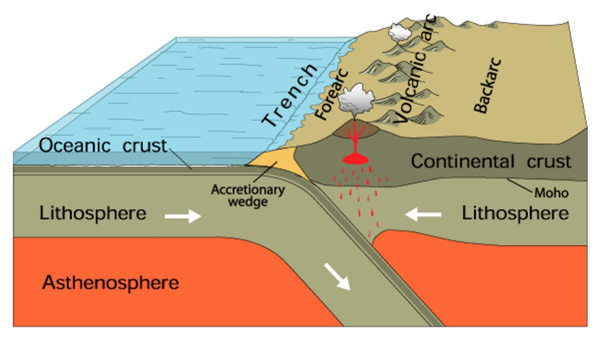
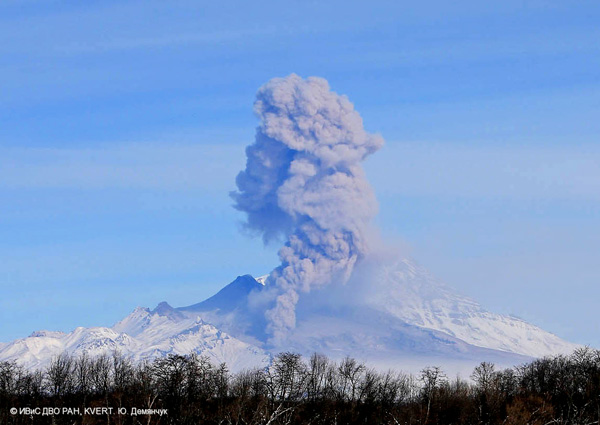
 Les dernières recherches effectuées par des chercheurs de l’Université de Washington et publiées en juin 2016 dans les Proceedings of the National Academy of Sciences au sujet des volcans d’arc montrent qu’ils n’émettent pas à cent pour cent de la lave en provenance du manteau. En effet, cette dernière contient également des éléments qui laissent supposer que le processus de subduction fait entrer en jeu certains matériaux retirés à la plaque de la croûte terrestre pendant qu’elle s’enfonce dans les profondeurs.
 New University of Washington research published in June 2016 in the Proceedings of the National Academy of Sciences about arc volcanoes shows that they are not just emitting molten rock from the mantle. The emitted lava also contains elements that suggest something more complicated is drawing material out of the descending plate of Earth’s crust.