Péninsule de Reykjanes (Islande) : Persistance de la sismicité // Seismicity still strong on the Reykjanes Peninsula

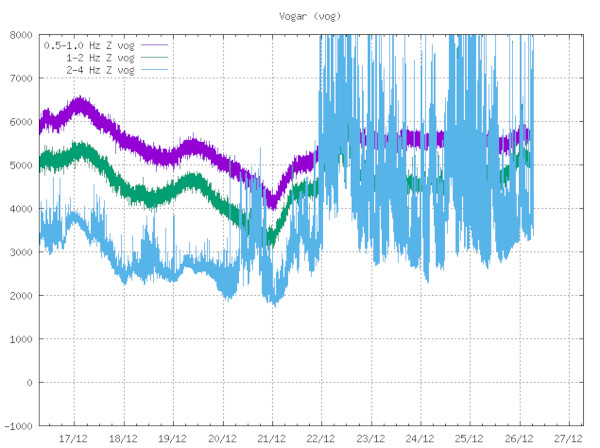
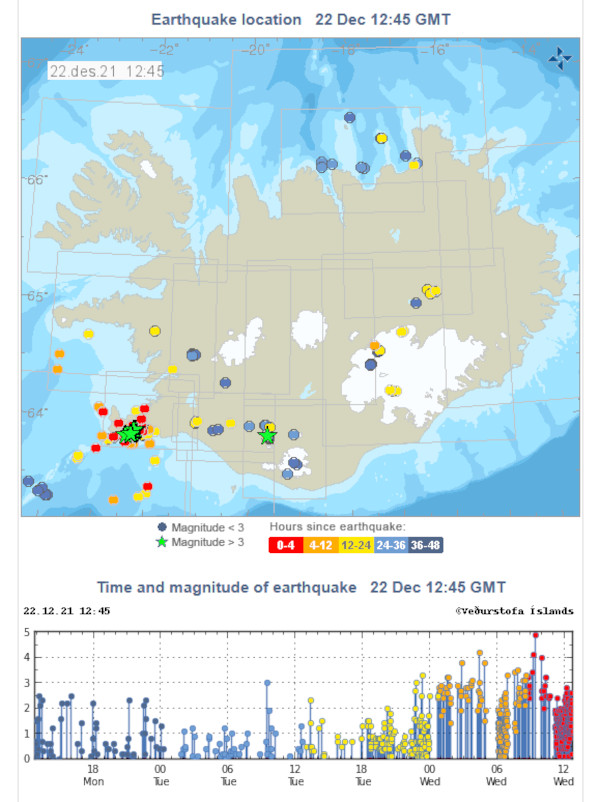
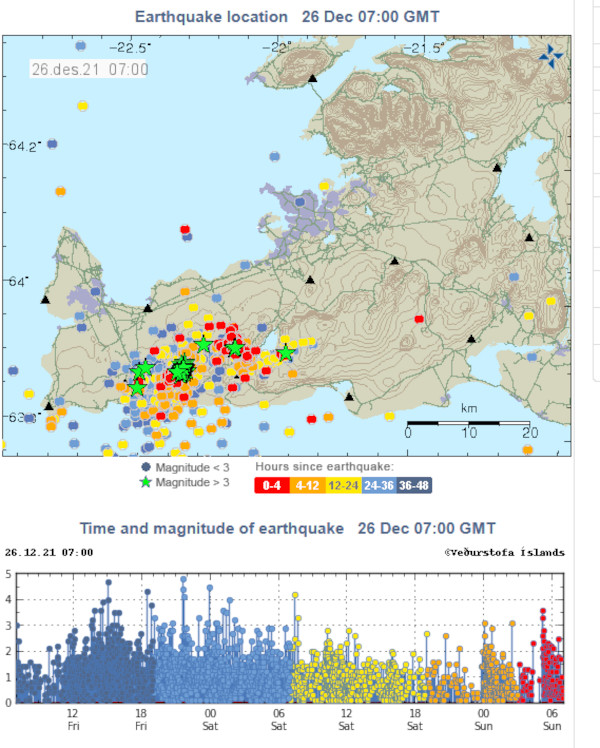
La sismicité reste soutenue sur la Péninsule de Reykjanes, même si on a observé un certain déclin le 25 décembre. Il est vrai que les essaims se produisent par vague et que cette pause relative n’est peut-être que provisoire. Il est à noter qu’au cours des dernières 24 heures, c’est surtout le secteur de Krysuvik qui a été impacté par les secousses. Comme précédemment, les hypocentres se trouvent à 4 – 5 km de profondeur, ce qui serait (il faut utiliser le conditionnel) en relation avec une intrusion magmatique dans la région. Reste à savoir si le magma réussira à percer la surface. Ayant assisté à l’avortement d’une éruption dans la région du Krafla, je reste extrêmement prudent dans mes prévisions…

——————————————-

Seismicity remains strong over the Reykjanes Peninsula, although some decline was observed on December 25th. Swarms do occur in waves and this relative pause may only be temporary. It should be noted that over the past 24 hours, the Krysuvik area has been affected by the tremors. As before, the hypocenters are located at depths of 4 – 5 km, which would be (the conditional must be used) in relation to a magmatic intrusion in the region. It remains to be seen whether magma will succeed in piercing the surface. As I have lived the abortion of an eruption in the Krafla area, I am very cautious in my predictions…

Source : IMO

Péninsule de Reykjanes (Islande) : nouvelle hausse de la sismicité // New increase in seismicity

Ça devient comique! Quelques jours après que les scientifiques islandais aient décrété que l’éruption du Fagradalsfjall était terminée, voilà que l’on assiste à un net regain de la sismicité dans la région! Est-ce à dire que le Père Noël va apporter une nouvelle éruption dans sa hotte? L’hypothèse ne peut être écartée et les autorités ont à nouveau activé la phase d’incertitude.
L’activité sismique actuelle, avec des événements de magnitude M 4,0 et plus, pourrait signifier que du magma s’accumule et se rapproche de la surface sur la Péninsule de Reykjanes. Les volcanologues locaux expliquent que cette activité sismique ressemble aux séismes enregistrés un mois avant l’éruption du Fagradalsfjall. La plupart se situent à des profondeurs d’environ six kilomètres, avec des épicentres dans la Geldingadalir..
Les scientifiques attendent les résultats de diverses mesures, comme les données GPS et satellitaires, pour voir si des déformations ont lieu et s’il y a des signes de mouvement du magma.

La couleur de l’alerte aérienne est passée à l’Orange.
En Islande aussi, la prévision volcanique reste à un niveau très bas.
Source : médias d’information islandais.

——————————————–

It’s getting funny! A few days after Icelandic scientists decided that the Fagradalsfjall eruption was over, there is a marked increase in seismicity in the region! Does this mean that Santa Claus is going to bring a new eruption in his hood? The hypothesis should not be rouled out and the authorities have again activated the uncertainty phase..

The current seismic activity, with events of M4.0 and over, might mean that magma is accumulating and moving closer to the surface in the Reykjanes Peninsula. Local volcanologists explain that this seismic activity resembles the earthquakes a month prior to the Fagradalsfjall eruption, Most of them are at depths, of about six kilometers, with epicentres in the Geldingadalir.
Scientists are waiting for the results of various measurements, including GPS data and satellite data, to see whether deformation is taking place and whether there are signs of magma movement.

The aviation colour code has been raisd to Orange.

In Iceland too, volcanic prediction remains at a low level.

Source: Icelandic news media.

Source : Met Office islandais

Inconscience: un mal à la mode // Recklessness : a fashionable evil

J’aimerais vous faire partager un article qu’un visiteur de mon blog a eu la bonne idée d’insérer sur ma page Facebook. Il se rapporte à la sécurité sur les sites naturels et en particulier les glaciers.

L’article rapporte les propos d’un guide islandais qui fait part de son expérience sur le Sólheimajökull, l’une des ramifications du Myrdalsjökukk dans le sud de l’Islande. Ce glacier souffre du même mal que ses congénères ailleurs dans le monde: il recule à une vitesse très inquiétante. Quand je l’ai visité au mois de juillet 2021, je n’ai pas reconnu le site où je m’étais rendu quelque dix ans auparavant.

Aujourd’hui, les abords du Sólheimajökull ont été aménagés, avec un parking et un large sentier qui permet d’accéder en une quinzaine de minutes à proximité du front du glacier. « A proximité » est important, car aller plus loin peut devenir dangereux. Il ne faut pas oublier qu’un glacier est une rivière de glace en mouvement et que son front se modifie en permanence, avec des effondrements parfois spectaculaires.

L’auteur de l’article regrette le comportement de certains touristes – pas tous heureusement – qui n’ont aucune conscience du danger. Il a vu certaines personnes s’aventurer à la surface du Sólheimajökull sans équipement adéquat. Les images qui illustrent l’article sont très révélatrices. Elles montrent parfaitement qu’un moment agréable peut virer au drame. C’est ce que j’ai expliqué à propos de la plage de Reynisfjara, elle aussi dans le sud de l’Islande, où des lames de fond emportent régulièrement les touristes qui ne peuvent survivre dans l’eau très froide.

Source : Clément Coudeyre / Iceland Geology | Seismic & Volcanic Activity in Iceland

—————————————–

I would like to share an article that a visitor to my blog had the good idea to post on my Facebook page. It deals with safety on natural sites and in particular on glaciers.
The article reports the words of an Icelandic guide who shared his experience on Sólheimajökull, one of the branches of Myrdalsjökukk in southern Iceland. This glacier suffers from the same disease as its congeners elsewhere in the world: it is retreating at a very worrying speed. When I visited it in July 2021, I did not recognize the site I had visited some ten years before.
Today, the surroundings of Sólheimajökull have been developed, with a parking lot and a wide path which allows access in about fifteen minutes near the front of the glacier. « Near the front » is important, because going further can be dangerous. One should not forget that a glacier is a moving river of ice and that its front is constantly changing, with sometimes dramatic collapses.
The author of the article regrets the behaviour of some tourists – not all fortunately – who are unaware of the danger. He saw some people venture to the surface of Sólheimajökull without proper equipment. The images that illustrate the article are very revealing. They perfectly show that a good time can turn into a drama. This is what I explained about Reynisfjara beach, also in the south of Iceland, where rip currents regularly wash away tourists who cannot survive in very cold water..

Source: Clément Coudeyre / Iceland Geology | Seismic & Volcanic Activity in Iceland
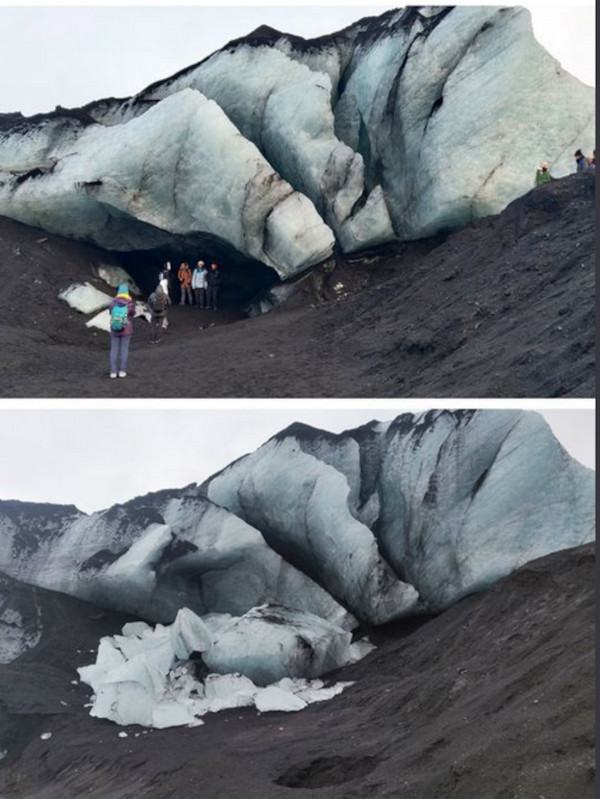
Source: Clément Coudeyre
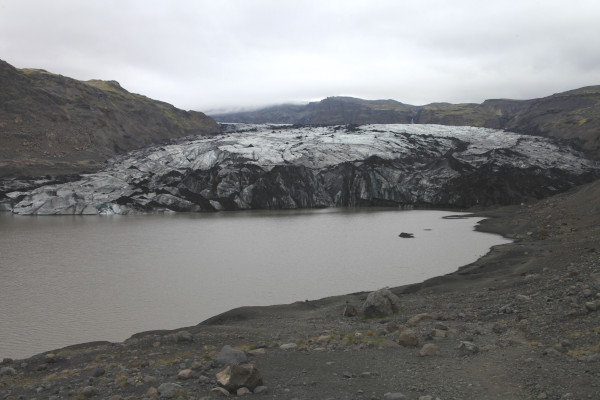
Front du Sólheimajökull en juillet 2021 (Photo: C. Grandpey)
Dépêchez-vous de profiter de la nature sauvage à Krýsuvík (Islande) ! // Hurry up to enjoy wild nature in Krýsuvík (Iceland) !

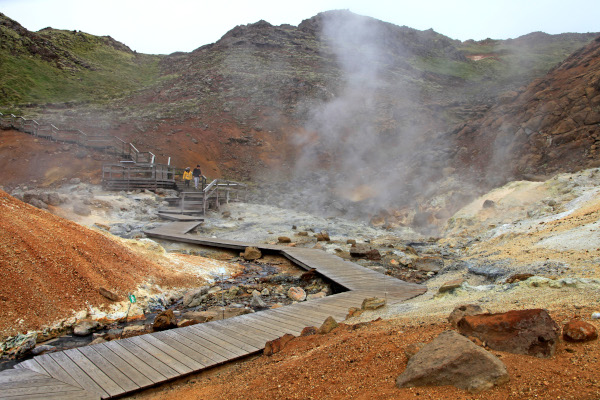
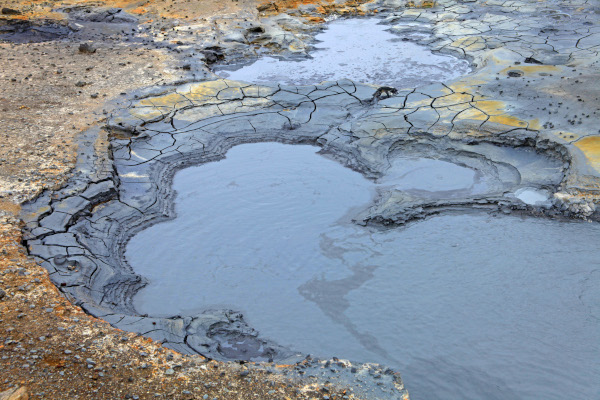
Krýsuvík est une zone géothermale bien connue sur la péninsule de Reykjanes. Comme beaucoup d’autres sites à proximité, elle se trouve sur la dorsale médio-atlantique. La zone englobe plusieurs sites géothermaux parmi lesquels Seltún est le plus visité par les touristes. Des sentiers en bois ont été installés afin de parcourir ce lieu en toute sécurité parmi les fumerolles, les sources d’eau bouillante et les marmites de boue.
Krýsuvík sera peut-être la solution pour résoudre une pénurie d’eau chaude dans la région de Reykjavik dans les prochaines années. Dans ce but, il existe un projet de construction d’une centrale géothermique à Krýsuvík. L’idée a été suggérée par un groupe de travail nommé par la ville de Hafnarfjörður, et dont la mission était d’étudier l’utilisation potentielle de la zone de Krýsuvík.
Le rapport du groupe de travail indique que la faisabilité de la construction d’une centrale géothermique doit être analysée, en prenant en compte la rentabilité d’une telle centrale qui produirait jusqu’à 100 mégawatts (MW) d’électricité et jusqu’à 300 mégawatts thermiques (MWth) d’eau chaude.
Le groupe de travail souligne qu’avant d’entreprendre un tel projet, les habitants de la région devront recevoir une présentation détaillée de ses avantages et inconvénients. La construction d’une centrale électrique à Krýsuvík a longtemps été dans les tuyaux. La compagnie d’électricité HS Orka a obtenu une licence de recherche concernant l’utilisation possible de l’électricité.
En plus de souligner la possibilité d’une station géothermique, le groupe de travail insiste sur l’importance d’améliorer les installations touristiques dans la région. Il faudrait améliorer la route, aménager un parking et une plate-forme d’observation, avec éventuellement un restaurant à proximité de la plate-forme.
Source : Iceland Monitor.

————————————-

Krýsuvík is a geothermal area located on the Reykjanes peninsula. Like many other sites nearby it is located on the Mid-Atlantic Ridge. The area consists of various geothermal fields among which Seltún is the most popular among tourists. Wooden pathways have been installed which allow to safely walk between the numerous fumaroles and mud pots with their boiling water.

Krýsuvík might be a future solution to solve a future shortage of hot water in the capital area. There is a project consisting in building a geothermal power station on the site. the idea has been suggested by a task force appointed by the town of Hafnarfjörður to analyze potential utilization of the Krýsuvík area.

The task force’s report states that the feasibility of building a geothermal power plant must be analyzed, looking at the potential profitability of building a power station that would produce up to 100 MW of electricity and up to 300 MWth of hot water.

The task force emphasizes that before any such project were to be undertaken, residents would first have to be given a detailed presentation of its pros and cons. Building a power plant in Krýsuvík has long been a potential project. The power company HS Orka has obtained a research license in the area regarding possible power utilization.

In addition to pointing out the possibility of a geothermal station, the task force stresses the importance of improving facilities for tourists in the area. That includes the need for an improved road, a parking lot and observation platform and even a restaurant near the platform.

Source: Iceland Monitor.

Photos: C. Grandpey