Une éruption en Islande ? Tôt ou tard, ou jamais. Personne ne sait ! // An eruption in Iceland ? Sooner or later, or never. Nobody knows !

Après plusieurs semaines de fermeture à cause du risque d’éruption dans le secteur, le Blue Lagoon vient de rouvrir, au moins partiellement. L’accès au site est limité pour ne pas gêner les travaux d’édification d’une digue de terre autour de la centrale géothermique de Svartsengi. Ce rempart de quelque 5 kilomètres de longueur est censé protéger les infrastructures contre d’éventuelles coulées de lave.

Cela fait presque deux mois que le Met Office islandais nous serine qu’une éruption est susceptible de se produire sur la péninsule de Reykjanes. On est passé du stade d’ « imminent », à celui de «  probable » ou « possible », mais la lave n’a toujours pas daigné montrer le bout de son nez.

Pourtant, une chose est certaine : du magma s’agite dans le sous-sol et les instruments ont fourni la preuve d’une importante intrusion magmatique qui a fait se soulever le sol, ouvert des fractures et entraîné l’évacuation de Grindavik. A ce sujet, on vient d’apprendre que les habitants de cette bourgade pourraient être autorisés à revenir chez eux pour Noël.

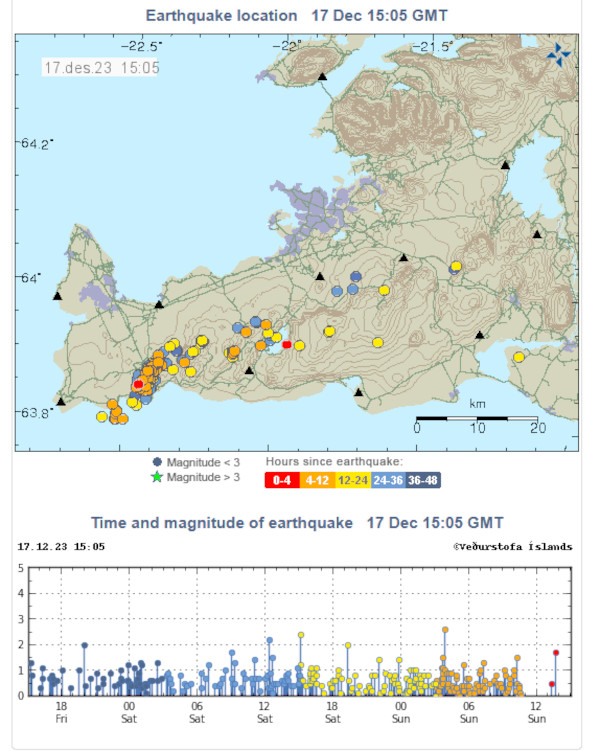
Aujourd’hui, un soulèvement du sol est toujours enregistré à proximité de la centrale de Svartsengi. Une faible sismicité est toujours présente, avec des événements d’une magnitude inférieure à M 2.0 le plus souvent. Cette sismicité affecte principalement le secteur de Grindavik.
Source: IMO

Il semble donc que l’intrusion magmatique ne soit pas terminée, mais que la pression exercée par le magma ne soit pas suffisante pour lui permettre de s’élever vers la surface. Il est bien évident qu’une nouvelle arrivée de magma dans l’intrusion changerait la donne, mais les sismographes le feront savoir. Pour le moment ce n’est pas le cas. Nous avons atteint les limites de la prévision éruptive. La seule chose à faire est d’attendre et voir, car c’est la Nature qui commande…

°°°°°°°°°°

Dernière minute : ce 18 décembre 2023 au soir, il semble qu’un essaim sismique ait débuté dans la région de Fagradalsfjall avec des événements à faible profondeur (environ 1, 5 k pour la plupart). L’un d’eux avait une magnitude de M 3.0 et un autre une magnitude de M 4,2 à Krysuvik à 4,7 km de profondeur. A surveiller.
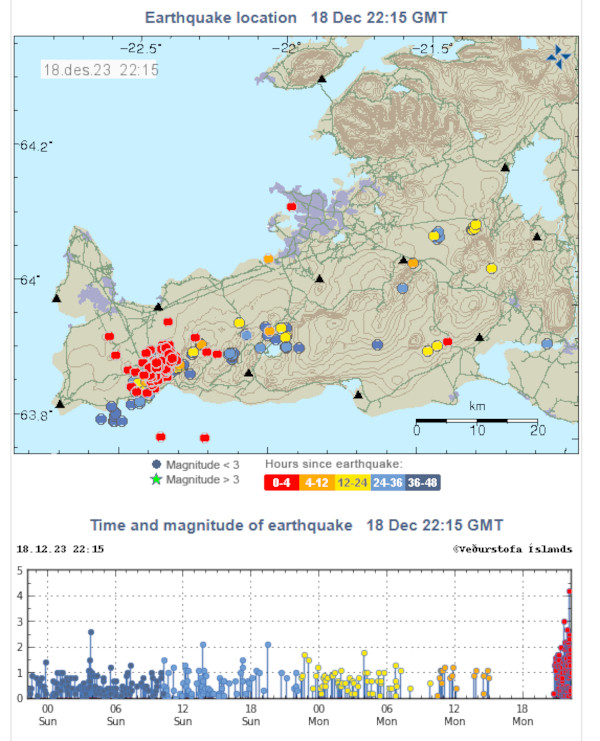
Source: IMO

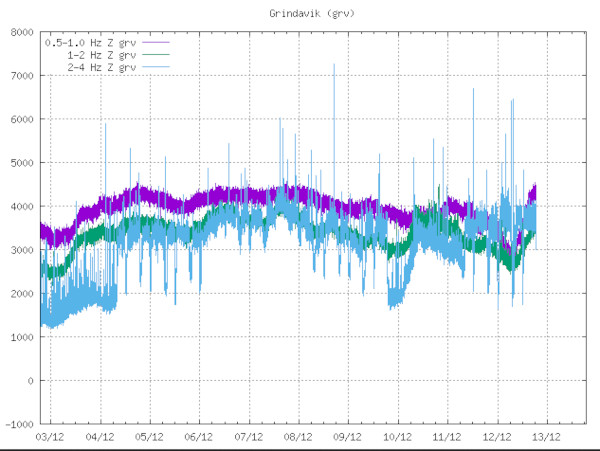
Eruption! C’est vraiment parti très vite! Image webcam.

———————————————-

After several weeks of closure due to the risk of eruption in the area, the Blue Lagoon has just reopened, at least partially. Access to the site is limited so as not to interfere with work to build an earthen dike around the Svartsengi geothermal power plant. This rampart, some 5 kilometers long, is supposed to protect the infrastructure against possible lava flows.
The Icelandic Met Office has been warning us for almost two months that an eruption is likely to occur on the Reykjanes Peninsula. We have moved from « imminent » to « probable » or « possible », but lava has still not accepted to show the tip of its nose.
However, one thing is certain: magma is stirring in the subsoil and the instruments have provided proof of a major magmatic intrusion which caused the ground to rise, opened up fractures and led to the evacuation of the town of Grindavik. Residents have just been informed that they might be allowed to return home for Christmas.
Today, ground uplift is still recorded near the Svartsengi power plant. Low seismicity is still present, with events less than M 2.0 most often. This seismicity mainly affects the Grindavik area. It therefore seems that the magma intrusion is not complete, but the pressure exerted by magma is not sufficient to allow it to rise towards the surface. It is obvious that a newinflux of magma in the intrusion would change the situation, but the seismographs will make it known. At the moment this is not the case. We have reached the limits of eruptive prediction. The only thing to do is to wait and see, because Nature is in charge…

°°°°°°°°°°

Last minute : this evening of December 18th, 2023, it seems that a seismic swarm started in the Fagradalsfjall area with events at shallow depths (around 1.5 k for most). One of them had a magnitude of M 3.0 and another had a magnitude of 4.5 at Krysuvik, at a depth of 4.7 km.

°°°°°°°°°°

Eruption! It started very quickly. See webcam image above.
Faut-il encore croire à une éruption sur la péninsule de Reykjanes ? // Should we still believe in an eruption on the Reykjanes Peninsula?

Bien que la sismicité soit très faible sur la péninsule de Reykjanes, les volcanologues islandais pensent toujours qu’une éruption est susceptible de se produire, ou que l’on pourrait assister à l’ouverture de nouvelles fissures à Grindavik, comme le 10 novembre 2023.
Les instruments montrent que le magma continue de s’accumuler sous la surface dans le secteur de Svartsengi, même si le phénomène a récemment ralenti. Le Met Office islandais explique que la vitesse de soulèvement du sol est toujours supérieure à celle mesurée dans les jours qui ont précédé le 10 novembre, lorsque le dyke magmatique s’est formé sous Grindavík .
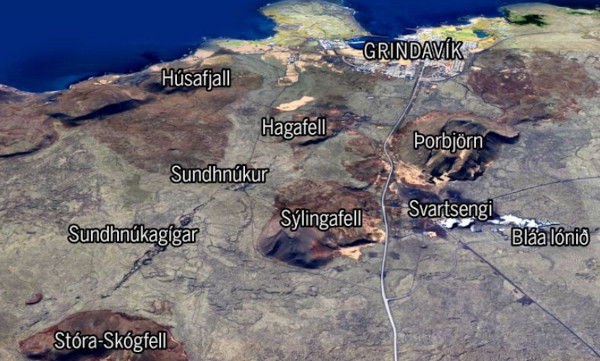
Si une nouvelle intrusion se produit, le Met Office pense qu’il est très probable que le magma fera son retour dans le dyke qui s’est formé le 10 novembre et qu’une éruption se produira au nord de Grindavík, vers Hagafell et la zone autour de la ligne de cratères de Sundhnúkagígar.
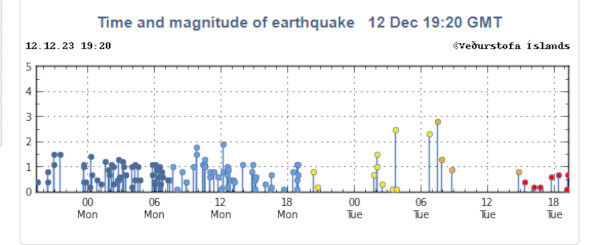
125 séismes ont été mesurés près de Grindavík au cours des dernières heures, dont trois au-dessus de M 2,0 à Hagafell. Un volcanologue local s’attend à une activité sismique soutenue le long du dyke.
Comme je l’ai déjà écrit, je ne crois pas à une prochaine éruption. Une chose est quand même sûre : l’intrusion magmatique n’est pas terminée. Il est probable que le magma continue de pousser par en dessous, avec sa source dans la région de Svartsengi, mais il n’a plus la force nécessaire pour percer la surface. Le seul événement qui pourrait changer la donne serait un nouvel afflux important de magma. Il est évident que les sismographes nous en informeraient. On observerait aussi un soulèvement de sol plus important, avec un risque réel d’éruption.
Pour le moment, la sismicité est faible et le tremor ne montre aucun signe d’activité volcanique à venir. Cela fait une cinquantaine de jours que l’on observe un soulèvement du sol. Si une éruption avait dû se produire, elle se serait probablement déjà produite. Quoi qu’il en soit, au bout du compte, c’est la Nature qui décidera, et elle nous rappelle que nous ne savons pas prévoir une éruption volcanique !
Source  : Iceland Monitor, Iceland Review.

Rien de très inquiétant au niveau sismique sur la péninsule de Reykjanes (Source: Met Office)

————————————————-

Although seismicity is very low on the Reykjanes Peninsula, Icelandic volcanologists still belive an eruption might occur, or another event like the opening of fissures that was observed in Grindavik on November 10th, 2023.

The instruments show that magma continues to accumulate under the surface at Svartsengi, although it has recently slowed. The Icelandic Met Office (IMO) explains that the speed of the land rising is still higher than the speed measured in the days before November 10th, when the magma dike under Grindavík was formed.

If a new intrusion happens, IMO thinks it is most likely that the magma will run back into the magma dike that was formed on November 10th and that a volcanic eruption would occur north of Grindavík, towards Hagafell and the area around Sundhnúkagígar crater row.

125 earthquakes have been measured near Grindavík in the past hours, three of which were above M 2.0 at Hagafell. Sustained seismic activity is expected by a local volcanologist along the magma dike.

As I put it before, I don’t believe an eruption will occur. There is one sure thing : the magma intrusion is not over. It is likely that magma is still pushing from beneath, with its source in the Svartsengy area, but it no longer has the necessary strength to pierce the surface. The only event that might change the situation would be a new significant influx of magma, but the seismographs would inform us and more ground uplift would be observed, with the real risk of an eruption.

For the moment, seismicity is low and the tremor does not show signs of an upcoming volcanic activity. Ground deformation has been observed for about 50 days now. If an eruption were to occur, it would have already happened. Anyway, Nature will decide in the end, with the confirmation that we cannot predict a volcanic eruption !

Source : Iceland Monitor, Iceland Review.

Islande : pas d’éruption en vue…mais on ne sait jamais ! // Iceland : no eruption in sight…but you never know!

Selon un professeur de géophysique de l’Université d’Islande, la majeure partie de l’intrusion magmatique dans le secteur de Svartsengi s’est solidifiée et la probabilité d’une éruption diminue, d’autant plus que l’inflation du sol dans la région a ralenti. Le géophysicien explique que le dyke a une épaisseur d’environ deux mètres dans la plupart des endroits, mais avec un peu plus de largeur ailleurs. Maintenant que deux semaines se sont écoulées depuis la formation du dyke, 90 % se sont solidifiés. La probabilité d’une éruption s’éloigne donc considérablement.
Cependant, selon le scientifique, « on ne peut exclure le risque d’une éruption. La zone la plus sensible se trouve au milieu de l’intrusion magmatique, à l’est de la montagne Sýlingarfell. Il pense qu’un nouveau processus pourrait démarrer dans un avenir proche, car le magma afflue toujours à une profondeur de 5 à 6 km sous Svartsengi. Toutefois, il n’y a actuellement aucune contrainte et très peu d’activité sismique.
Le professeur affirme que rien n’indique aujourd’hui qu’une éruption va débuter au niveau de la fracture qui traverse Grindavik, car il n’y a aucun signe d’accumulation de magma dans le secteur.
Source :Iceland Monitor.

————————————————

According to a professor of geophysics at the University of Iceland, the majority of the magma channel at Svartsengi has solidified. The likelihood of a volcanic eruption is decreasing and the land rising at Svartsengi has slowed down. The geophysicist explains that the dike is about two metres thick in most places, but somewhat wider elsewhere. Now that two weeks have passed since the dike was formed, 90% of it is solidified. Thus, the likelihood of an eruption has become considerably lower.

However, in his opinion, “there is no way to exclude that there will be an eruption. The most likely area is in the middle of the tunnel, east of Sýlingarfell mountain.”. He thinks a new process can start in the near future because magma is still inflowing into a storage chamber at a depth of 5-6 km below Svartsengi, but there is currently no tension and very little earthquake activity.

The professor says that there are no longer any indications that an eruption will begin in the Grindavik fissure as there are no signs of any magma accumulating there.

Source : Iceland Monitor.

Dernières nouvelles d’Islande // Latest news from Iceland

Personne ne sait ce qui va se passer sur la péninsule de Reykjanes dans les prochains jours. Il semble que l’activité, en particulier l’activité sismique, ait considérablement diminué. La couleur de l’alerte aérienne a été abaissée au Jaune. Cependant, l’inflation du sol persiste dans la région de Svartsengi et Páll Einarsson, célèbre volcanologue islandais, affirme qu’une nouvelle intrusion magmatique est peut-être en formation dans le secteur. Il admet cependant que « la situation est compliquée. Dans les prochains jours, il sera peut-être possible de déterminer si le le magma s’est solidifié dans l’intrusion. »
Source :Iceland monitor. .

°°°°°°°°°°

La ville de Grindavik reste pour l’instant sous le coup d’un ordre d’évacuation. Il faudra des mois avant que tous les habitants puissent rentrer chez eux. Le gouvernement islandais a tenu une conférence de presse le 24 novembre pour présenter un plan d’aide au logement pour les habitants évacués de leurs logements le 10 novembre 2023.
Les habitants de Grindavík recevront une aide financière pour les aider à payer le loyer de leurs logements temporaires. Le montant de l’aide sera fonction du nombre de personnes dans chaque foyer. La société de location Bríet va acheter jusqu’à 150 appartements sur le marché afin de les mettre à la disposition de la population. Un groupe de travail étudie également la possibilité d’importer des mobilhomes.
Les habitants de Grindavík seront autorisés à rentrer chez eux quand les infrastructures de services publics de la ville seront opérationnelles. Certaines ont été endommagées par les puissants séismes au début du mois. Il est possible que les habitants soient autorisés à réintégrer la ville par étapes, car l’ampleur des dégâts varie selon les quartiers.
Source  : Iceland Review.

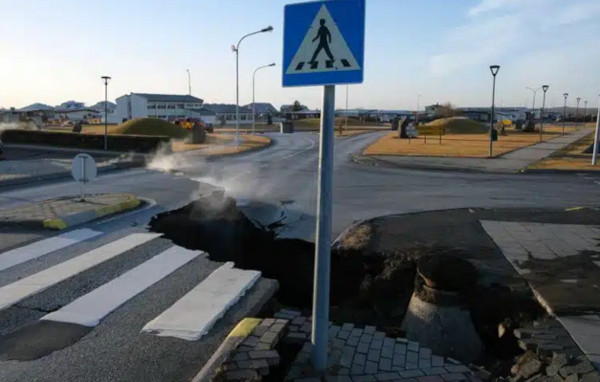
Grindavik a été profondément meurtrie par les derniers événements (Crédit photo: Iceland Review)

———————————————

Nobody knows what could happen on the Reykjanes Peninsula in the coming days. It looks as if avtivity, especially seismic zctivity, has significantly declined. The aviation color code has been lowered to Yellow. However, ground inflation persists in the Svartsengi area and Páll Ein­ar­sson, famous Icelandic volcanologist, says that a new magma channel is possibly form­ing in the area. However, he admits that « the situation is complicated. “In the next few days, it may be possible to determine whether the magma tunnel has hardened.”

Source : Iceland Monitor.

°°°°°°°°°°

The town of Grindavik remains under an evacuation order for the time being. It will be months before all residents can return home. Iceland’s government held a press conference on November 24th to present an action plan on housing support for the town’s residents, who were evacuated from their homes on November 10th.

Grindavík residents will receive financial support to help them cover rent payments on temporary housing. The amount of support will be based on the number of people in each household. Rental company Bríet will buy up to 150 apartments on the market in order to make them available to displaced Grindavík residents. A working group is also exploring the possibility of importing housing units.

The moment when Grindavík residents will be permitted to return home depends on the state of the town’s utilities infrastructure, some of which was damaged by powerful earthquakes earlier this month. It is possible that residents will be permitted to move back into the town in stages, as the amount of damage varies between districts.

Source : Iceland Review.