
 A l’aube de l’année 2023, voici un petit bilan de l’activité volcanique dans le monde en 2022.
L’année 2022 a commencé avec la poursuite de l’éruption du Piton de la Fournaise (Ile de la Réunion). Elle avait commencé le 22 décembre 2021 et a pris fin le 17 janvier 2022.
Une nouvelle éruption a débuté le 19 septembre 2022 sur le flanc sud-ouest, dans le secteur du cratère Rivals, à environ 2200 m d’altitude. L’éruption s’est arrêtée brutalement vers 10h10 (heure locale) le 5 octobre 2022.
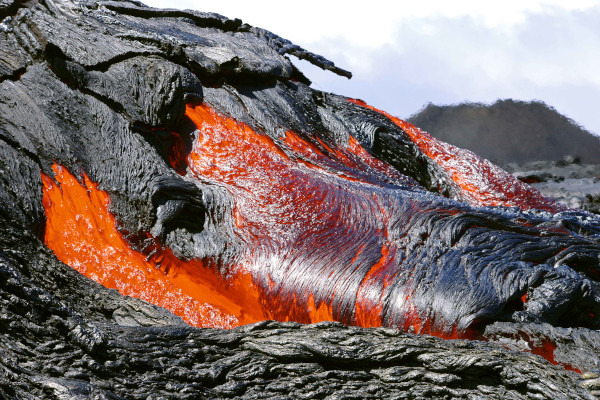
Photo: C. Holveck
Une éruption a commencé sur le volcan Wolf (Galapagos / Equateur) le 7 janvier 2022. La dernière éruption de ce volcan avait eu lieu en 2015 après 33 ans de sommeil, avec un VEI 4.
Débutée le 13 janvier 2022, l’éruption du volcan Hunga Tonga-Hunga Ha’apai (archipel des Tonga) est indéniablement l’événement de l’année. Sa puissance ne cesse de surprendre les scientifiques. Je vous invite à lire les différentes notes parues sur ce blog à propos de cette éruption cataclysmale.
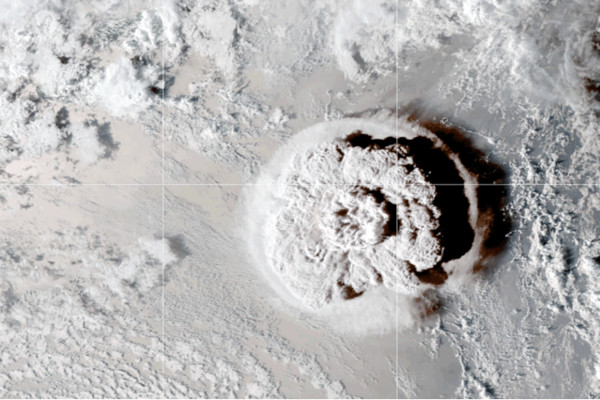
Source: NASA
Une éruption phréato-magmatique s’est produite sur le Taal (Philippines) le 26 mars 2022). En conséquence, le PHIVOLCS a relevé le niveau d’alerte de 2 à 3. L’événement a été de courte durée et a été suivi d’une activité phréatomagmatique quasi continue qui a généré des panaches montant à 1 500 m au-dessus du cratère. Le PHIVOLCS a recommandé l’évacuation de Volcano Island et des barangays proches du lac en raison du risque de coulées pyroclastiques et de tsunami si des éruptions plus fortes devaient se produire.
Une crise sismique faisant craindre une éruption a été enregistrée au mois de mars à São Jorge (Açores). Le niveau d’alerte a été relevé à 2, puis à 3 (sur une échelle de 0 à 6) et même à 4 le 20 mars. Bien qu’aucune évacuation officielle n’ait été décrétée, les personnes vulnérables ont été déplacées vers d’autres endroits de l’île. La population totale de l’île est d’environ 8 400 personnes; environ 1 250 habitants ont décidé de quitter l’île les 23 et 24 mars. A ce jour, aucune éruption n’a eu lieu.
Des variations de température ont été observées dans le lac de cratère du Ruapehu (Nouvelle Zélande), mais aucune activité éruptive ne s’est produite.
L’activité de l’Anak Krakatau a connu une hausse à la fin du mois d’avril 2022, obligeant les autorités à relever le niveau d’alerte de 2 à 3 le 24 avril. La sismicité a fortement augmenté. L’activité éruptive oscillait entre des explosions avec émissions de panaches de cendres et des événements de type strombolien. Une coulée de lave a été observée jusque dans la mer le 23 avril. Le public n’est pas autorisé à s’approcher de l’Anak Krakatau dans un rayon de 5 km.
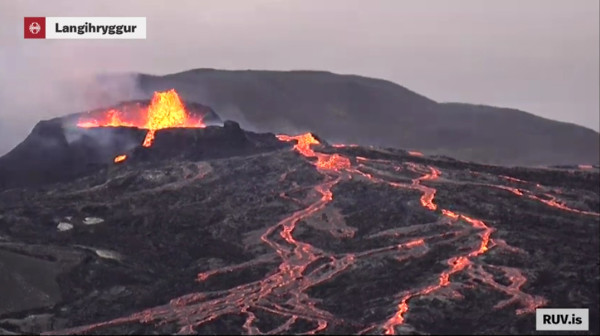
Une éruption a débuté le 3 août 2022 en Islande. Elle a fait suite à l’intense activité sismique observée au cours des semaines précédentes. Le magma a atteint la surface dans la Meradalir sur la péninsule de Reykjanes. Une fissure de 100 mètres s’est ouverte près du Fagradalsfjall, site de la précédente éruption. L’éruption a pris fin officiellement le matin du 21 août 2022.
Le niveau d’alerte du Semeru (Indonésie) a été relevé de 3 à 4 le 4 décembre 2022 après l’éruption du volcan. Le panache de cendres a atteint une hauteur de 15 kilomètres, avec des retombées sur plusieurs villages où des masques ont été distribués. L’agence indonésienne de gestion des catastrophes (BNPB) a conseillé aux gens de ne pas mener d’activités dans un rayon de 5 kilomètres du sommet du Semeru et a déclaré que près de 100 habitants, dont des enfants et des personnes âgées, ont été évacués vers des abris temporaires. Le Semeru a également déclenché des coulées pyroclastiques atteignant 7 kilomètres. Aucun blessé ou décès n’a été signalé.
On enregistre toujours plusieurs explosions par heure sur le Fuego (Guatemala). Elles envoient des matériaux incandescents à une hauteur de 100 à 350 m et génèrent des panaches de cendres qui s’élèvent à environ 1 km au-dessus du sommet. Des retombées de cendres sont signalées dans les zones sous le vent. Des ondes de choc secouent les structures dans les localités autour du volcan. Des avalanches de blocs descendent dans les ravines sur les flancs du Fuego.
Le Fuego peut être très destructeur. Tout le monde garde à l’esprit l’éruption du 3 juin 2018 qui a causé la mort de 190 personnes et fait 256 disparus. Ce sont les chiffres officiels, mais le nombre réel de morts est beaucoup plus élevé. On estime que probablement 2000 personnes ont péri sous les coulées pyroclastiques. Il s’agit de l’éruption la plus meurtrière au Guatemala depuis 1929.
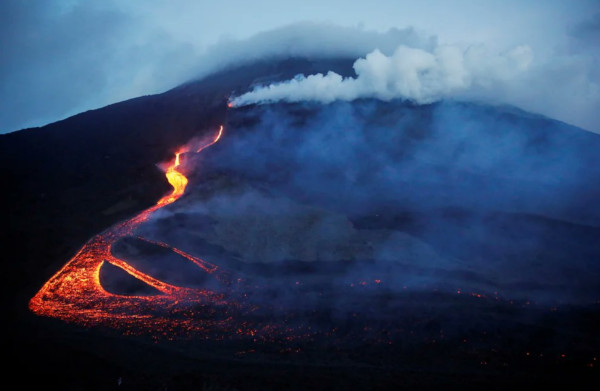
Crédit photo: CONRED
Une éruption a débuté sur la zone de rift NE du Mauna Loa (Hawaii) dans la soirée du 27 novembre 2022. Le volcan n’avait pas émis de lave depuis 1984. On a craint un moment que les coulées coupent la Saddle Road, mais l’éruption a pris fin le 13 décembre 2022.
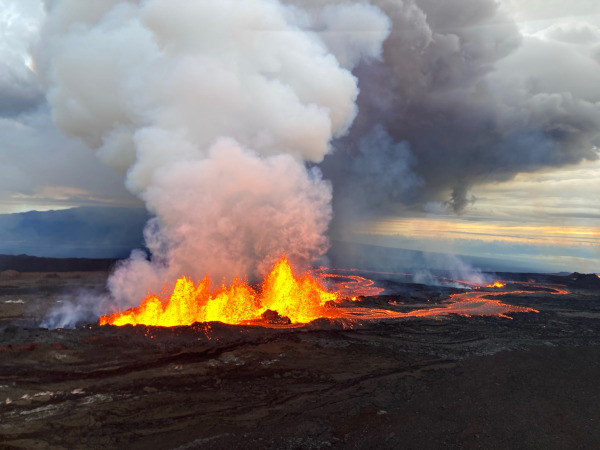
Crédit photo: USGS
L’éruption du Kilauea (Hawaii) qui avait débuté le 29 septembre 2021 s’est poursuivie tranquillement avec un petit lac de lave dans le cratère de l’l’Halema’uma’u, mais l’éruption du Mauna Loa a tout chamboulé et le Kilauea est, lui aussi, parti en vacances le 12 décembre 2022.
En Sicile, l’Etna a connu plusieurs crises éruptives comme celle du 21 février. Ces crises débutent en général dans le Cratère SE par une activité strombolienne qui se transforme en puissantes fontaines de lave et un panache éruptif atteignant plusieurs km de hauteur. Un débordement de lave du cratère peut accompagner ces crises éruptives. Des retombées de cendres sont observées dans les zones sous le vent.
Deux nouvelles bouches se sont ouvertes au mois de mai sur l’Etna, dans la partie haute de la Valle del Bove. La lave se déplaçait lentement vers le Monte Simone.
A partir de 17h00 (UTC) le 27 novembre 2022, le réseau de vidéosurveillance de l’Etna a mis en évidence l’ouverture d’une bouche effusive à la base nord-est du cratère SE, à une altitude d’environ 2800 m d’altitude. A l’heure actuelle, la lave continue de s’écouler dans le Val del Leone.
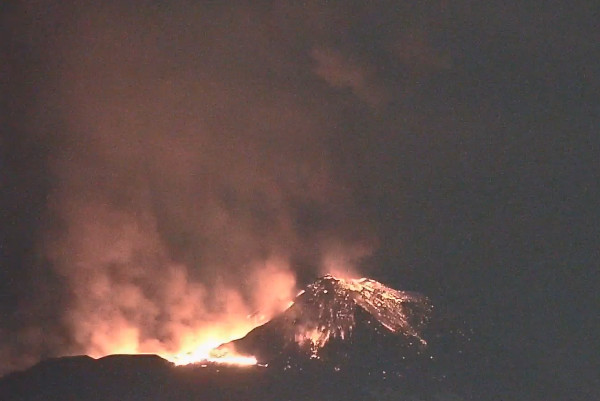
Image webcam
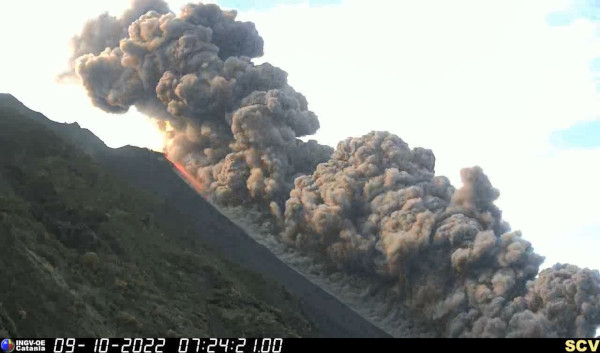
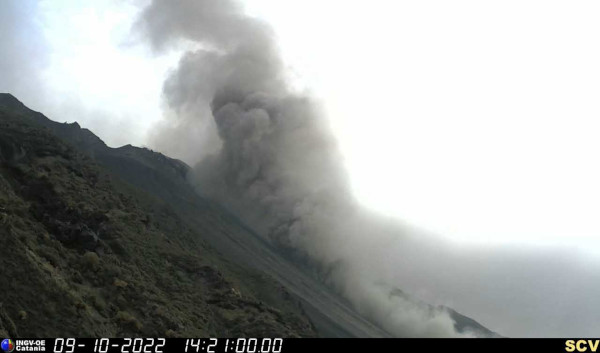
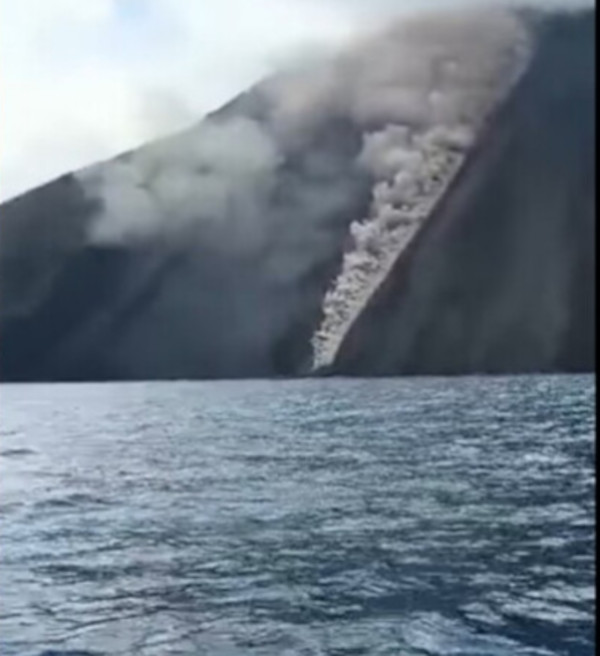
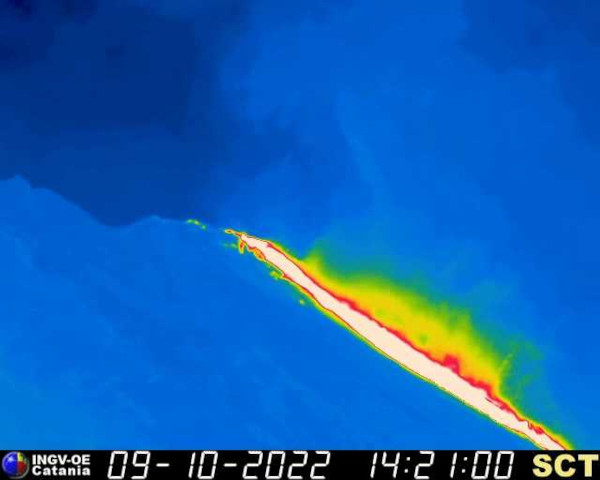
De toute évidence, l’accès à la zone sommitale du Stromboli (Sicile) n’est pas pour demain! Le volcan continue à montrer des crises explosives pouvant être violentes. On observe de temps à autre une activité particulièrement forte dans la zone cratèrique Nord, avec des explosions et des débordements de lave le long de la Sciara del Fuoco. Des coulées pyroclastiques sont également observées, comme le 9 octobre et le 4 décembre 2022.
La situation s’est aggravée à Stromboli à cause d’un violent incendie de végétation au mois de mai 2022 qui s’est déclaré au cours du tournage d’un film. Depuis cette époque, les fortes pluies génèrent des coulées de boue qui envahissent les ruelles de San Vincenzo.
L’île éolienne de Vulcano reste sous surveillance à cause des émissions gazeuses qui restent supérieures à la normale. L’accès au cratère de La Fossa reste interdit. A noter le 23 mai une décoloration de l’eau de mer le long de la plage de Levante, avec des odeurs nauséabondes.
Au Kamtchatka, la couleur de l’alerte aérienne pour le Sheveluch est Orange. Le volcan émet de temps à autre de volumineux panaches de cendres susceptibles d’affecter le trafic aérien dans la région. La couleur est Jaune pour le Bezymiaznny, le Karymsky et le Klyuchevskoy.
Le Sabancaya (Pérou) est régulièrement mentionné dans les bulletins d’activité volcanique. On enregistre en moyenne 30 à 40 explosions pas jour. Elles génèrent des panaches qui montent à 3 ou 4 km au-dessus du volcan.
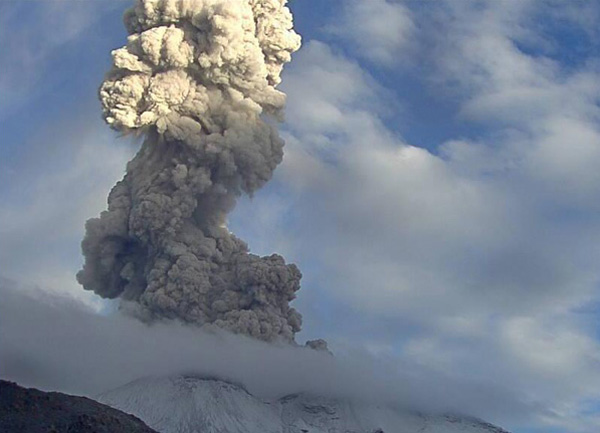
Crédit photo: IGP
Le Sakurajima (Japon) est entré de nouveau en éruption le 24 juillet 2022. Le niveau d’alerte volcanique est passé de 3 à 5, le plus élevé. Les matériaux éjectés par le volcan sont retombés jusqu’à 2,5 kilomètres du cratère, mais il n’est fait état d’aucun blessé. Il a été demandé au public d’évacuer la zone concernée par l’éruption.
White Island (Nouvelle Zélande), le Lewotolok et le Merapi (Indonésie), le Villarrica (Chili), le Nevado del Ruiz (Colombie), le Popocatepetl (Mexique), le Semisopochnoi et le Pavlof (Alaska), Nishinoshima (Japon), le volcan sous marin de Home Reef (Tonga), ou encore le Grimsvötn (Islande) et ses crues glaciaires sont d’autres volcans actifs de la planète. J’ai eu l’occasion de donner de leurs nouvelles au cours de l’année 2022. Pour les retrouver, il suffit de taper leur nom dans le petit moteur de recherche dans la colonne de droite de ce blog.
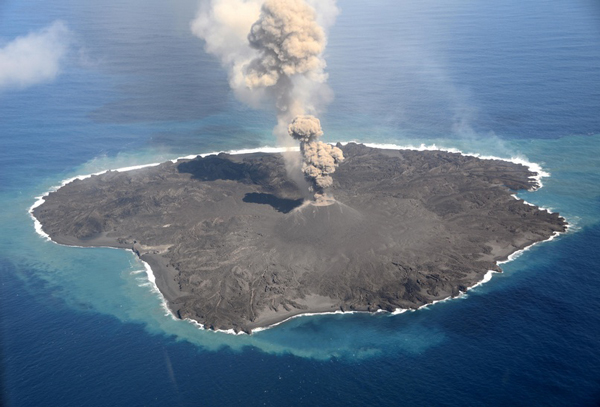
Nishinoshima (Crédit photo: Japan Coast Guard)
 From today October 17th, 2022, and contrary to what was written in the newspaper La Sicilia this morning, excursions on Stromboli are back to normal. On the Stromboli side, one can climb the volcano up to an altitude of 400 m with the accompaniment of guides and freely up to an altitude of 290 m. On the Ginostra side, you can freely walk the Punta dei Corvi trail up to 130 m. Beyond this limit and up to 400 meters, you need the accompaniment of guides.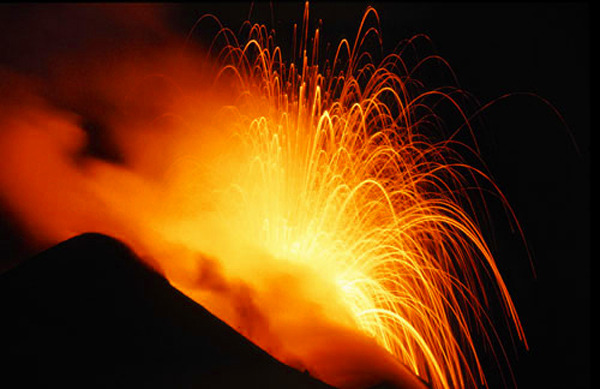

 Claude Grandpey : Volcans et Glaciers