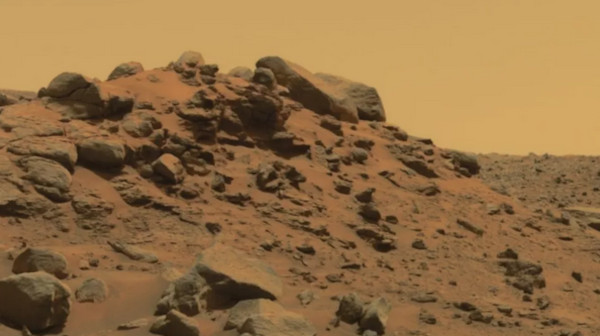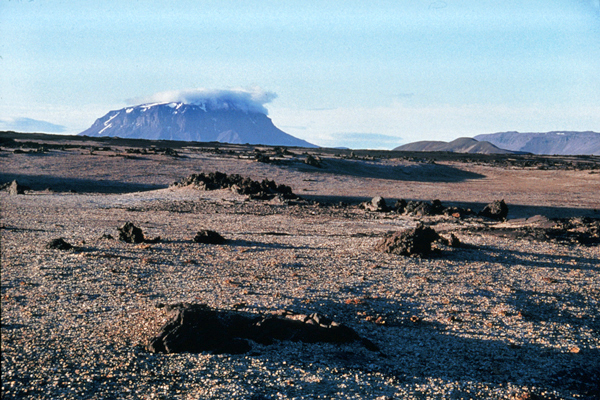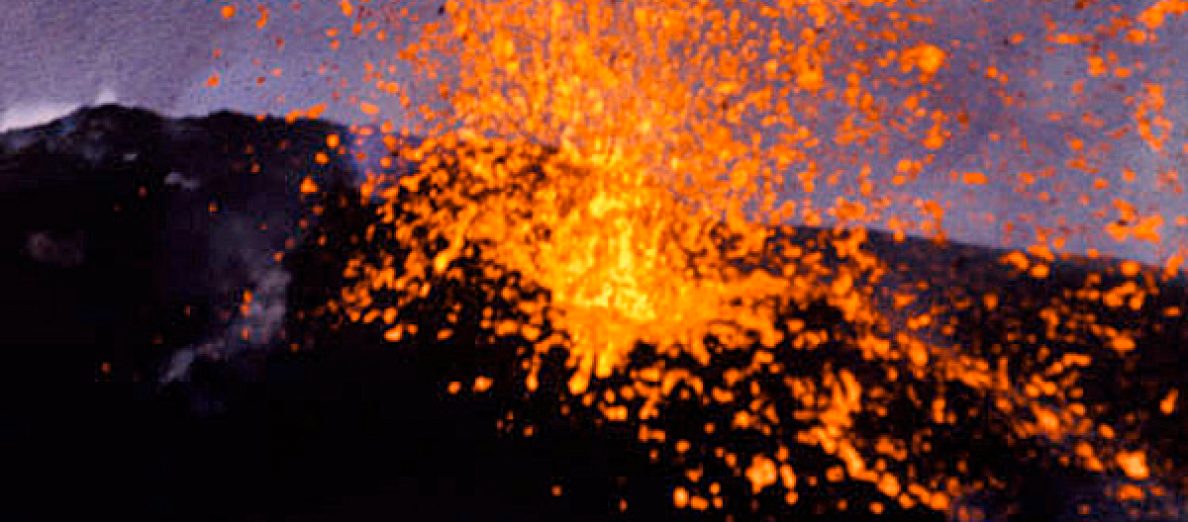
 Le rover italien conçu pour l’exploration lunaire s’appellera Etna, un nom choisi lors d’un sondage effectué via le compte Instagram officiel de l’Agence spatiale italienne (ASI). Acronyme de « Exploration Technology for Navigation & Autonomy » (Technologie d’exploration pour la navigation et l’autonomie), Etna a également été conçu pour naviguer de manière autonome sur des terrains complexes. Ces dernières semaines, l’Etna, avec ses paysages volcaniques accidentés, a reproduit certaines conditions typiques de la surface lunaire.
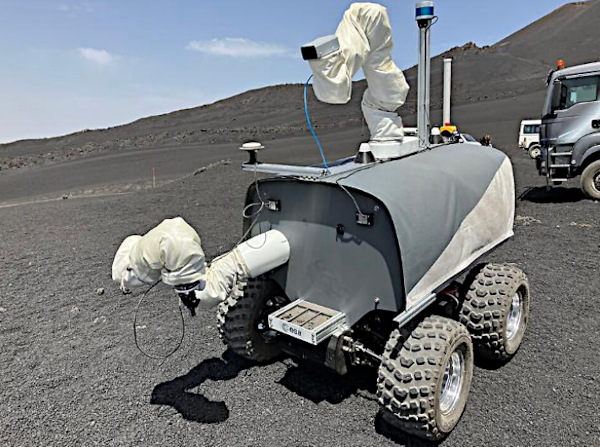
Crédit photo : ASI
Après une phase de validation initiale concluante menée dans les installations d’ALTEC à Turin, les capacités du rover en environnements contrôlés ont été confirmées. L’interaction avec des terrains lunaires et martiens a été vérifiée par des tests de traction et de stabilité, ainsi que la fiabilité des algorithmes de localisation, de cartographie et de planification.
En juillet 2026, le rover est testé sur l’Etna, où le paysage volcanique, les pentes abruptes, le substrat granuleux et l’absence de végétation reproduisent fidèlement les conditions environnementales et les défis auxquels un véhicule autonome peut être confronté sur la surface lunaire. Outre la consolidation des performances de mobilité et les tests de reconfiguration en cas de pannes, un temps considérable sera consacré aux démonstrations opérationnelles des charges utiles embarquées. Un drone autonome doté d’une intelligence artificielle sera déployé pour cartographier le terrain et classifier automatiquement les roches, les cratères et les itinéraires les plus sûrs, tout en transmettant les données au centre de contrôle.
L’ASI explique que « l’objectif est d’intégrer des expériences et des prototypes externes pour tester des technologies innovantes dans des environnements extrêmes, d’ouvrir la recherche à de nouveaux partenaires et d’accélérer le transfert de technologie vers la prochaine ère de l’exploration lunaire. »
Le rover a été construit dans le cadre du programme « Universal Locomotion System (ULS) », entièrement financé par l’Agence spatiale italienne et piloté par Thales Alenia Space, avec la contribution de Leonardo, IIT, ALTEC, Aiko, Politecnico di Torino et Volta Structural Energy.
Le rover Etna est un hommage à l’Italie et à Catane, suite à la désignation de Luca Parmitano, l’astronaute de l’ESA originaire de Paternò, comme pilote de la mission Artemis III de la NASA prévue pour 2027. Il volera à bord de la capsule Orion dans un rôle opérationnel de premier plan, testant les manœuvres d’approche et d’amarrage en orbite terrestre.
Source : médias italiens.
————————————————
 The Italian rover designed for lunar exploration will be named Etna, a name chosen via a poll on the Italian Space Agency’s (ASI) official Instagram account. An acronym for « Exploration Technology for Navigation & Autonomy, » Etna is designed to navigate complex terrain autonomously. In recent weeks, Mount Etna, with its rugged volcanic landscape, has served as a site to replicate conditions typical of the lunar surface.
Following a successful initial validation phase at ALTEC’s facilities in Turin, the rover’s capabilities in controlled environments have been confirmed. Its interaction with lunar- and Martian-like terrain was verified through traction and stability tests, alongside checks on the reliability of its localization, mapping, and planning algorithms.
In July 2026, the rover will undergo testing on Mount Etna, where the volcanic landscape, steep slopes, granular substrate, and lack of vegetation faithfully replicate the environmental conditions and challenges an autonomous vehicle might face on the lunar surface. In addition to refining mobility performance and testing reconfiguration capabilities in the event of a breakdown, significant time will be dedicated to operational demonstrations of the onboard payloads. An AI-equipped autonomous drone will be deployed to map the terrain and automatically classify rocks, craters, and the safest routes, while transmitting data back to the control center.
The ASI explains that « the goal is to integrate external experiments and prototypes to test innovative technologies in extreme environments, open up research to new partners, and accelerate technology transfer for the next era of lunar exploration. » The rover was built as part of the « Universal Locomotion System (ULS) » program, fully funded by the Italian Space Agency and led by Thales Alenia Space, with contributions from Leonardo, IIT, ALTEC, Aiko, Politecnico di Torino, and Volta Structural Energy.
The Etna rover pays tribute to Italy and Catania, following the selection of Luca Parmitano, an ESA astronaut from Paternò, as a pilot for NASA’s Artemis III mission, scheduled for 2027. He will fly aboard the Orion capsule in a key operational role, testing approach and docking maneuvers in Earth orbit.
Source: Italian news media.
 Située dans les îles Shetland du Sud, à 120 km au nord de la péninsule Antarctique, l’île de la Déception est la partie émergée d’un volcan bouclier potentiellement actif de 30 km de diamètre.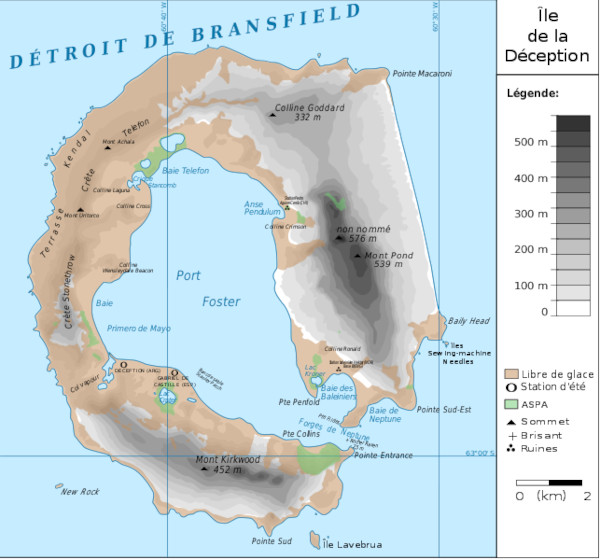
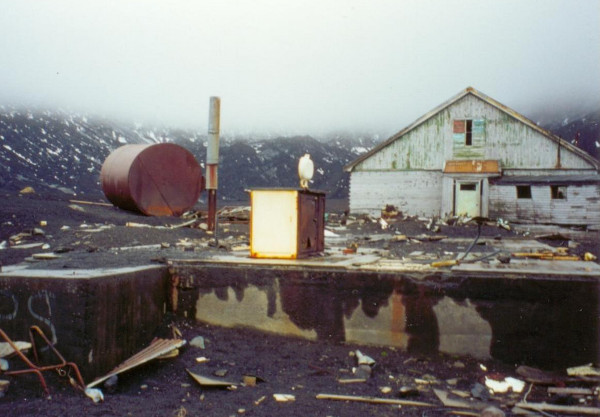
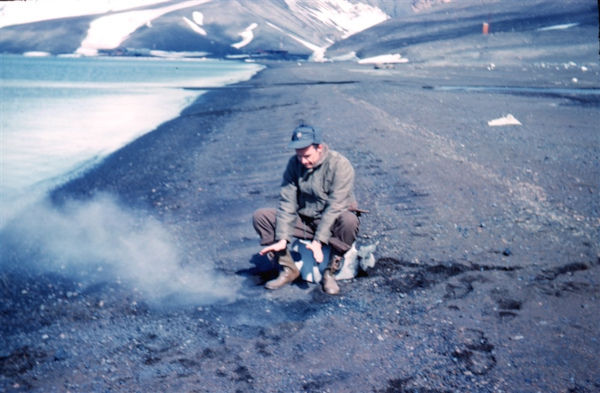
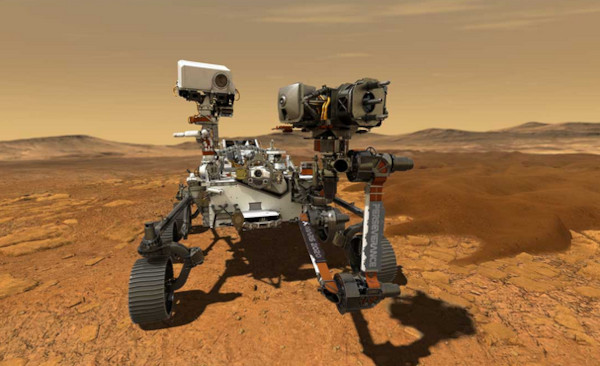
 Located in the South Shetland Islands, 120 km north of the Antarctic Peninsula, Deception Island is the exposed portion of an active shield volcano 30 km in diameter. Historical eruptions occurred in 1839–1842. The volcano returned to activity in 1967 and 1969, destroying the existing scientific stations. Both British and Chilean stations were demolished, and the island was abandoned for several years. The final major volcanic eruption was reported on 13 August 1970, causing ashfall on the Russian Bellingshausen station on King George Island and the Chilean station Arturo Prat on Greenwich Island.The eruption also forced the evacuation of an Argentine base. Deception Island is now dedicated to scientific research. Today, it provides clues to scientists about what life could look like on Mars.