 Après une période d’activité intense, le Momotombo (dont le nom signifie «gros sommet en ébullition») semble reprendre son souffle. Il y a quelques semaines, le volcan émettait d’épaisses colonnes de cendre qui montaient jusqu’à 500 mètres de hauteur. On enregistrait parfois plusieurs explosions par demi-heure et 27 épisodes éruptifs explosifs ont été signalés depuis le 5 décembre 2015.
La vie semble avoir repris un cours normal chez les habitants qui vivent à proximité du volcan. Ils disent qu’ils s’adaptent aux éruptions. Très peu disent qu’ils ont peur de vivre près du volcan mais ils reconnaissent qu’ils n’en mènent pas large quand le sol commence à trembler avant les explosions.
Les scientifiques restent vigilants et continuent de surveiller étroitement l’activité du Momotombo. Des journalistes du Tico Times fois ont rendu visite au volcan entre le 29 février et le 1er mars, alors que se produisait une forte activité explosive. Ils n’ont rencontré aucune restriction d’accès. Ils ont pu pénétrer dans le périmètre de sécurité et rapporter les photos que vous verrez en cliquant sur ce lien :
http://www.ticotimes.net/2016/03/17/photos-a-close-up-look-at-nicaraguas-momotombo-volcano
Les journalistes ont pu avoir un aperçu de l’activité volcanique et observer la puissance de la Nature, tant au niveau sismique que volcanique. Ils étaient accompagnés d’un garde du Parc et d’un volcanologue du Costa Rica. Après deux heures de marche, ils arrivèrent près de récentes coulées de lave, d’où émergeaient « de gros rochers pointus » qui rendaient la progression difficile. Certaines zones étaient de toute évidence encore très chaudes. Le volcanologue a remarqué qu’une grande partie des matériaux rejetés par le volcan pouvait être considérés comme géologiquement jeunes.
——————————————
 After a period of intense activity, Momotombo (which means “Big Boiling Summit”) seems to have taken a break A few weeks ago, the volcano was emitting dense ash columns more than half a kilometre in the sky. Explosions sometimes occurred several times in a half hour, and 27 similar eruptive episodes have been reported since December 5th 2015.
Life seems to be back to relative normality for residents near the volcano. Locals say they are adapting to the eruptions. Few say they are afraid of living in the volcano’s shadow, but they admit to being afraid when the ground begins to shake ahead of explosions.
Scientists remain vigilant and continue to monitor its activity. Tico Times journalists visited Momotombo at the height of the recent explosions, from February 29th to March 1st. They encountered no security restrictions at the perimeter and were able to bring back the photos to be seen at this address:
http://www.ticotimes.net/2016/03/17/photos-a-close-up-look-at-nicaraguas-momotombo-volcano
The journalists were able to catch a glimpse of volcanic activity and witnessed nature’s powerful volcanic and seismic behaviour. Accompanying them were a Nicaraguan park ranger and a Costa Rican volcanologist. After a two-hour walk, they arrived near recent lava flows, marked by “large, sharp rocks” that made hiking difficult. Some areas obviously were extremely hot. The volcanologist noticed that much of the material around the visitors was considered geologically young.

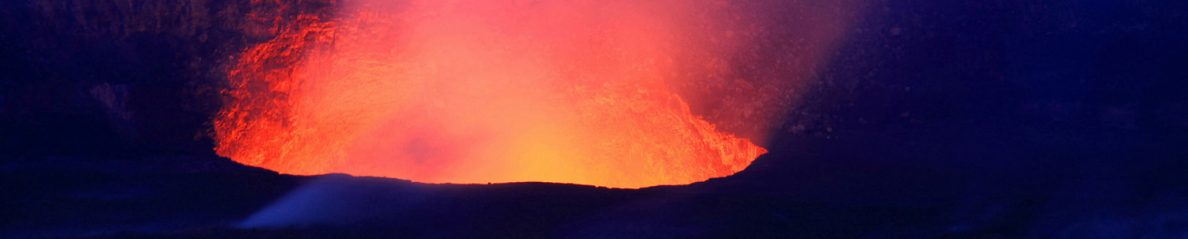
Séquence éruptive sur le Momotombo (Crédit photo: INETER)
 Comme le montre la capture d’écran de la webcam ci-dessous, l’activité du Fuego reste intense, avec des projections incandescentes et un panache de cendre qui monte jusqu’à environ 6 km d’altitude. Des retombées de cendre sont observées dans les villages sous le vent. Des coulées de lave descendent les ravines La Trinidad, Las Lajas et Santa Teresa sur 1500 – 2000 mètres, tandis que le risque de coulées pyroclastiques est élevé dans les ravines La Trinidad, Las Lajas et Santa Teresa.
 As can be seen on the webcam screenshot here below, activity remains elevated at Fuego Volcano, with incandescent ejections and an ash plume up to 6 km a.s.l. Ashfall is observed in several downwind communities. Lava flows are travelling down the La Trinidad, Las Lajas and Santa Teresa drainages over 1,500-2,000 metres while the risk of pyroclastic flows remains high in the La Trinidad, Las Lajas and Santa Teresa drainages.


