J’ai écrit dans plusieurs notes sur ce blog que l’Himalaya est le château d’eau de l’Asie. La neige et les glaciers fournissent de l’eau à 270 millions de personnes en Asie du Sud. L’Himalaya est donc une source d’eau douce vitale qui s’étend sur 2 400 kilomètres dans une zone qui comprend les plus hauts sommets du monde.
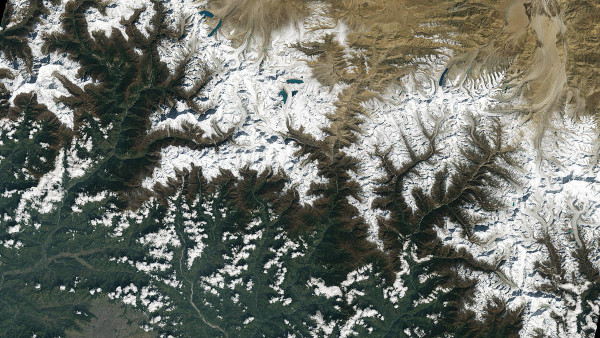
Source: NASA
Cependant, le réchauffement climatique fait reculer les glaciers et les climatologues avertissent que le niveau des rivières commencera à baisser vers 2050. Avec ses nombreux cours d’eau, la région devrait être en mesure de fournir une grande quantité d’ énergie hydroélectrique. Pourtant, seuls 20 % de ce potentiel estimé à 500 GW sont actuellement exploités.
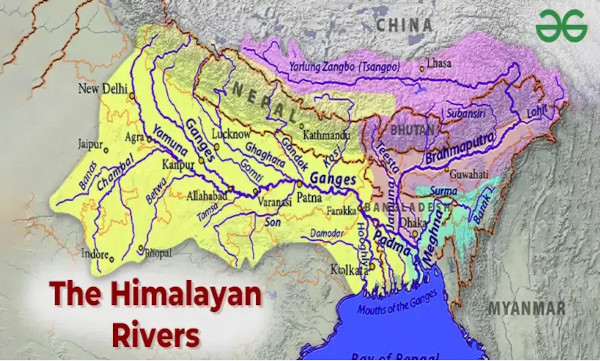
L’immense chaîne de l’Himalaya, avec ses glaciers et ses grands cours d’eau, traverse l’Inde, le Pakistan, le Népal, l’Afghanistan, la Chine et le Bhoutan. La partie indienne de l’Himalaya couvre environ 16,2 % de la superficie du pays et forme sa frontière nord.
Le potentiel hydroélectrique exploitable en Inde a été estimé à environ 84 GW. L’essentiel se concentre dans les États de l’Arunachal Pradesh, de l’Himachal Pradesh et du Jammu-et-Cachemire, ainsi que dans l’État septentrional de l’Uttar Pradesh.
L’Himachal Pradesh possède un fort potentiel de production d’énergie hydroélectrique grâce à la fonte des glaciers et des lacs gelés. L’État héberge la plus grande capacité hydroélectrique installée en Inde, avec plus de 10 500 MW. Le gouvernement prévoit de doubler cette capacité, même si 97 % de la superficie de l’Himachal Pradesh est sujette aux glissements de terrain.
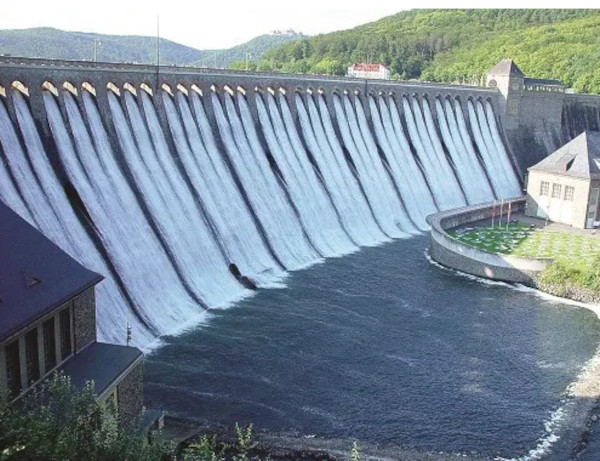
Centale hydroélectrique dans l’Himachal Pradesh (Crédit photo: Electrical India)
Bien que l’hydroélectricité offre des avantages autres que la production d’électricité en assurant la régulation du débit des rivières, l’irrigation et l’eau potable, les risques associés au développement de cette source d’énergie dans l’Himalaya sont plus importants que les avantages.
En effet, les glaciers de l’Himalaya fondent de plus en plus vite en raison du réchauffement climatique, avec l’apparition de grands lacs glaciaires retenus par de fragiles moraines. Ces moraines peuvent s’éventrer et provoquer d’énormes crues soudaines. Une étude de 2019 a révélé que plus de 5 000 lacs glaciaires dans la région étaient susceptibles de déclencher des inondations importantes qui pourraient avoir des conséquences sociétales catastrophiques.
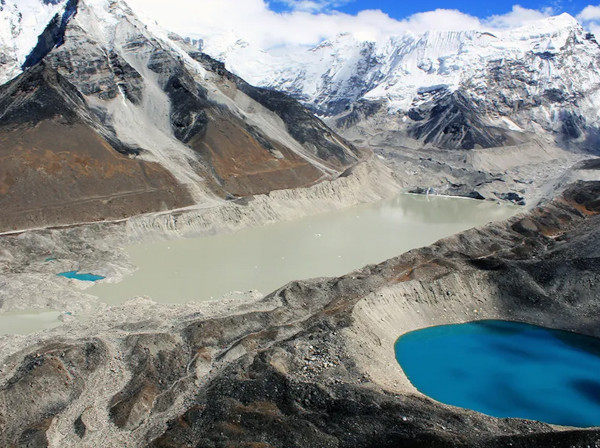
Lac glaciaire dans l’Himalaya (Crédit photo: Planetary Science institute)
Un autre risque découle des effets du réchauffement climatique dans la région. On observe de plus en plus de précipitations extrêmes qui peuvent détruire les infrastructures hydroélectriques et inonder les villages.
De plus, l’Himalaya est soumis à une instabilité géologique et présente un sérieux risque de séismes. De tels événements peuvent briser des barrages et provoquer des inondations soudaines qui détruisent les routes, les habitations et les terres agricoles. Lors du séisme de 2015 au Népal, plus de 30 projets hydroélectriques ont subi des dégâts, principalement suite à des glissements de terrain. Cette catastrophe naturelle a provoqué la perte de 34 % de la capacité hydroélectrique installée dans le pays.
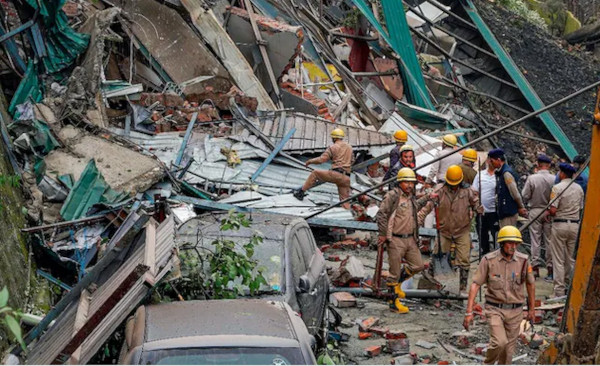
Glissement de terrain dans l’Himachal Pradesh (Crédit photo: India Today)
Les grands projets d’infrastructures tels que les centrales hydroélectriques sont également en grande partie responsables de la disparition des sources dans la région. Les statistiques gouvernementales montrent que la moitié des sources dans l’Himalaya indien se sont taries, avec de graves pénuries d’eau dans des milliers de villages.
De même, en Inde, trois projets hydroélectriques dans l’État himalayen de l’Uttarakhand ont subi des dommages lors d’inondations et de glissements de terrain en 2013 et 2021. Ces trois projets font partie de sept projets hydroélectriques en cours de construction auxquels le gouvernement indien a récemment donné le feu vert. Suite à cette approbation gouvernementale, un groupe de plus de 60 scientifiques, hommes politiques, environnementalistes et autres citoyens en proie à l’inquiétude ont écrit une lettre ouverte au Premier ministre indien. Ils ont demandé son intervention pour arrêter tout autre projet hydroélectrique dans l’Himalaya. Ils ont souligné que de tels projets étaient « voués à être détruits ou gravement endommagés » par des événements naturels.
Source : The Times of India et autres médias d’information internationaux.
—————————————————-
 As I put it in several posts, the Himalayas are the water tower of Asia. The snow and the glaciers provide water to 270 million people in South Asia. The Himalayas are a vital freshwater source covering 2,400 kilometres in an area that includes the world’s highest peaks. However, global warming is shrinking the glaciers, and the river level will begin to decrease around 2050. The region has become a hydropower hotspot. However, only 20% of the estimated 500-GW potential is currently tapped.
The immense mountain range of the Himalayas, which includes glaciers and large rivers, passes through India, Pakistan, Nepal, Afghanistan, China and Bhutan. The Indian part of the Himalayas covers about 16.2% of the country’s area and forms its northern boundary.
Exploitable hydropower potential in India has been estimated at about 84 GW. The bulk of this potential lies in the fragile Indian Himalayan states of Arunachal Pradesh, Himachal Pradesh and Jammu and Kashmir, as well as the northern state of Uttar Pradesh.
Himachal Pradesh has a potential for hydropower generation due to the thawing of glaciers and frozen lakes. The state is home to India’s highest installed hydropower capacity of over 10,500 MW. The government plans to double this capacity, even though an estimated 97% of Himachal Pradesh’s geographical area is prone to landslides.
While hydropower offers benefits beyond electricity generation by providing flood control, irrigation support and clean drinking water, the risks associated with developing this energy source in the Himalayas outweigh the benefits.
Indeed, glaciers in the Himalayas are increasingly melting due to climate change and creating big glacier lakes. These lakes can burst and cause huge flash floods. A 2019 study found that more than 5,000 glacier lakes in the region were at risk of extensive flooding and could cause catastrophic societal impacts.
Another risk stems from the changing weather patterns in the region, leading to more extreme rainfall events which can ruin hydropower infrastructure and flood villages.
Additionally, the Himalayas are plagued by geological instability and are at serious risk from earthquakes. Such disasters can fracture dams and release sudden floods that ruin roads, homes and agricultural land. During the 2015 Nepal earthquakes, more than 30 hydropower projects underwent damage, mostly by landslides. This natural disaster caused the loss of 34% of the country’s installed hydropower capacity.
Big infrastructure projects such as hydropower stations are also largely responsible for springs dying in the region. Government statistics show that half of the springs in the Indian Himalayas have dried up, resulting in acute water shortages across thousands of villages.
Similarly, in India, three hydropower projects in the Himalayan state of Uttarakhand suffered damage from floods and landslides in 2013 and 2021.These are among seven under-construction hydropower projects that India’s government recently allowed to restart. Following this approval, a group of more than 60 concerned scientists, politicians, environmentalists and other citizens wrote an open letter to the Indian Prime Minister. They requested his intervention in stopping any more hydroelectric projects in the Himalayas. They highlighted that such projects were “bound to be destroyed or extensively damaged” by natural events.
Source : The Times of India and other international news media.