 Voici quelques nouvelles de l’activité volcanique dans le monde :
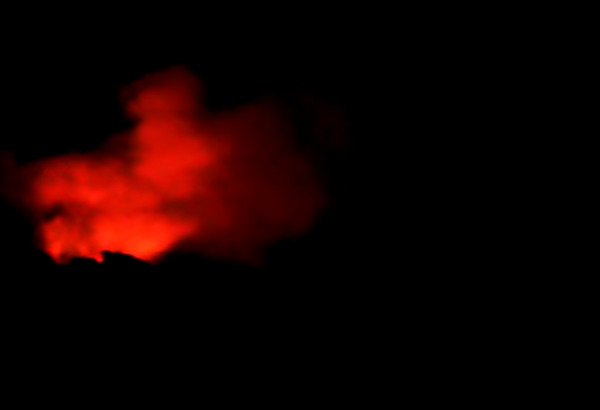
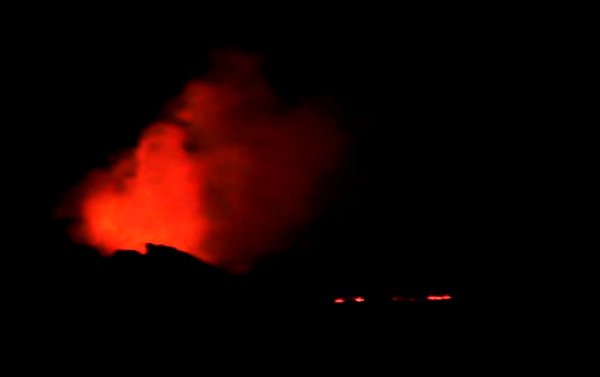
L’éruption du Kilauea (Hawaï) se poursuit dans la partie sud-ouest du cratère de l’Halema‘uma‘u. La vigueur des fontaines de lave a augmenté au cours des derniers jours, mais le HVO précise que leur intensité est inférieure à celle observée au cours des premiers jours de l’éruption. La hauteur des fontaines est estimée à 20-30 mètres. Les bouches éruptives continuent de produire un éventail de coulées de lave de plus en plus large qui couvre la zone sud-ouest du plancher du cratère. Bien que l’éruption se limite à l’Halema‘uma‘u, on enregistre des niveaux élevés de gaz volcanique qui peuvent avoir des conséquences pour les zones sous le vent. Le niveau d’alerte volcanique reste à Watch (Vigilance) et la couleur de l’alerte aérienne est maintenue à l’Orange.
Aucune activité n’a été constatée le long de la zone de rift est ou de la zone de rift sud-ouest.
Des centaines, voire des milliers de visiteurs viennent assister au spectacle mais sont confrontés à un nouveau danger qui n’est pas lié à l’activité volcanique. D’autres yeux observent l’éruption et attendent le moment propice pour agir. Le Parc national des volcans d’Hawaï met en garde contre les vols dans les véhicules. Il est fait état de voitures dont les vitres ont été fracturées et de la disparition de tout ce qui se trouvait à l’intérieur.
Source : HVO et médias d’information hawaïens.
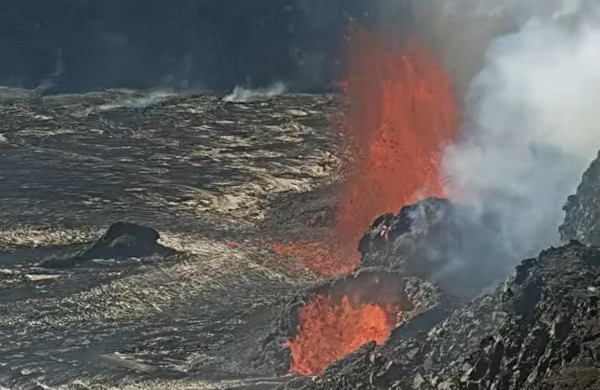
Belle activité du Kilauea le 1er janvier 2025 (Image webcam)
++++++++++
L’activité sismique autour du volcan Fentale (Éthiopie) a augmenté ces derniers jours avec plusieurs événements de magnitudes allant de M4,3 à M5,1. L’épicentre du plus fort séisme était situé à environ 46 km au nord de Metahara, à une profondeur de 10 km. Le dernier séisme de magnitude 4,7 a frappé à environ 23 km au sud-est de Metahara. Son hypocentre a également été localisé à une profondeur de 10 km. Le nombre réel de séismes est inconnu car il n’y a pas de réseau sismique couvrant la zone.
Suite à cette hausse de la sismicité, le risque d’une nouvelle éruption volcanique dans cette partie du rift africain est désormais plus élevé qu’auparavant. En effet, la cause probable des séismes est une intrusion magmatique sous le volcan Fentale, qui pourrait conduire à une éruption.
L’activité est cohérente avec le comportement historique du Fentale qui est entré en éruption pour la dernière fois en 1820 et a produit des coulées de lave basaltique à partir d’une fissure de 4 km sur son flanc sud. Le Fentale se trouve à l’extrémité nord du rift éthiopien principal, une région tectoniquement active façonnée par le système de rift est-africain qui s’étend sur plus de 3 000 km ; c’est le rift continental le plus important au monde. Le système de rift se caractérise par une sismicité et une activité volcanique fréquentes en raison de la séparation des plaques de Nubie et de Somalie.
La région affectée par la récente sismicité abrite plus de 3,4 millions de personnes dans un rayon de 100 km du volcan Fentale. Les villes voisines, notamment Metahara (23 400 habitants) et Awash (11 400 habitants), sont vulnérables. Les autorités ont émis des messages d’alerte exhortant les habitants à se préparer à d’éventuelles évacuations une activité volcanique devait apparaître.
Source : The Watchers, Global Volcanism Network.
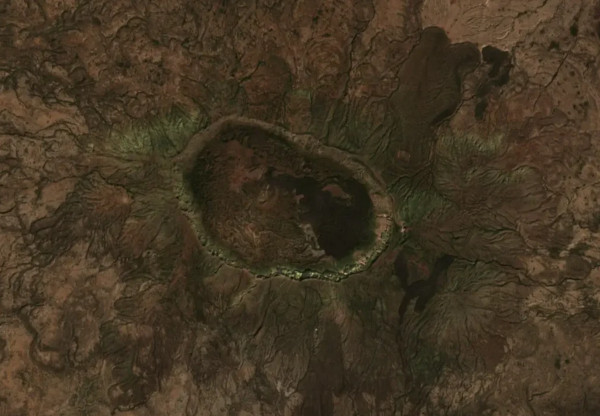
Image satellite de la caldeira du Fentale (Source : Copernicus Sentinel-2)
++++++++++
Une éruption phréatique s’est produite dans la partie est du cratère Sileri, dans le complexe volcanique de Dieng (Indonésie), le 18 décembre 2024, et n’avait pas été précédée de signes significatifs d’activité volcanique élevée. L’éruption a duré plus de trois minutes. Des sédiments et de la boue ont été projetés à une centaine de mètres au nord et à l’est, à environ 25 m à l’ouest et à une dizaine de mètres au sud. Des observateurs sur place ont signalé avoir vu un panache blanc s’élever de 10 mètres de hauteur.
Après l’éruption, des panaches blancs s’élevaient jusqu’à 40 m au-dessus du cratère. La température de l’eau du lac n’a pas augmenté. La couleur de l’eau était différente selon les endroits, apparaissant verdâtre ou gris clair à noirâtre, et son volume dans le lac était plus faible. Des dépôts de sédiments et de boue entouraient le cratère et il y avait une forte odeur de soufre. Le niveau d’alerte a été relevé à 2 (sur une échelle de 1 à 4) le 19 décembre. Le public a été invité à rester à au moins 500 m du cratère Sileri.
Une inspection du cratère a été réalisée le 22 décembre. Les paramètres de surveillance étaient à des niveaux normaux. Il n’y a pas eu de hausse de l’activité dans les autres cratères du complexe volcanique, même si certaines concentrations de gaz étaient à des niveaux relativement élevés à proximité ou autour des bouches d’émissions de gaz.
Source : PVMBG.

Émissions de gaz et de vapeur sur le plateau de Dieng (Crédit photo: VSI)
++++++++++
Toujours en Indonésie, une éruption soudaine du Raung, l’un des stratovolcans les plus actifs de l’île de Java, a surpris un groupe de touristes qui randonnaient près de son sommet le 24 décembre 2024. Les randonneurs ont réussi à fuir sans qu’il y ait de victimes alors que des panaches de cendres s’élevaient à une hauteur de 8 km au-dessus du niveau de la mer. Des panaches de cendres atteignant 7 km au-dessus du niveau de la mer avaient été signalés précédemment.
Les autorités maintiennent une zone d’exclusion de 3 km autour du sommet et ont conseillé aux pilotes d’aéronefs d’être vigilants à cause des panaches de cendres. .
Source : The Watchers.
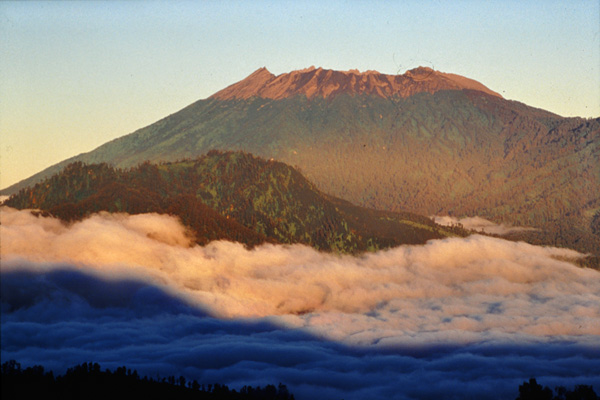
Le Raung vu depuis le Kawah Ijen (Photo : C. Grandpey)
++++++++++
L’activité éruptive se poursuit sur le Kanlaon (Philippines) avec quelques dizaines de séismes volcaniques quotidiens, ainsi que des émissions élevées de SO2. Le niveau d’alerte reste à 3 (sur une échelle de 0 à 5) et le public est invité à rester à au moins 6 km du sommet.
L’éruption continue d’avoir un impact sur la population. Le 31 décembre 2024, 14 441 personnes (soit 4 420 familles) étaient réparties dans 34 centres d’évacuation et 6 977 autres personnes (soit 2 192 familles) séjournaient ailleurs. 34 villes étaient en « état de catastrophe naturelle » et certains cours restaient suspendus dans les écoles.
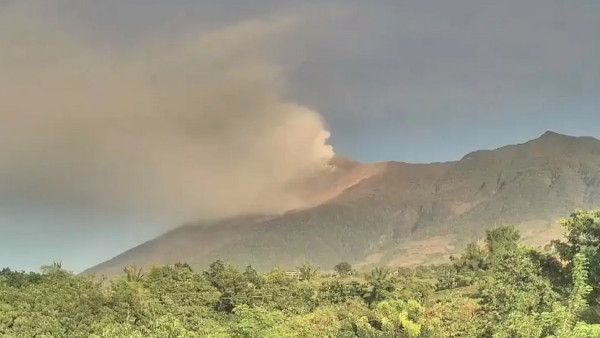
Crédit photo: PHIVOLCS
++++++++++
Un séisme de magnitude M3,8 a été enregistré sur le Bárðarbunga (Islande) le 29 décembre 2024. Quatre séismes de magnitude 5,0 ou plus ont été détectés sur le volcan cette année : un en avril, un autre en septembre, un troisième en octobre et un quatrième début décembre. Le dernier séisme de magnitude M3,0 s’est produit le 19 décembre. Selon le Met Office islandais, la hausse d’activité au niveau du volcan ces derniers mois montre qu’il se prépare à une éruption. L’activité du Bárðarbunga n’a pas été aussi élevée depuis 2015, époque où une grande éruption a eu lieu dans l’Holuhraun. Aujourd’hui, l’inflation et la sismicité indiquent un afflux significatif de magma sous le Bárðarbunga.
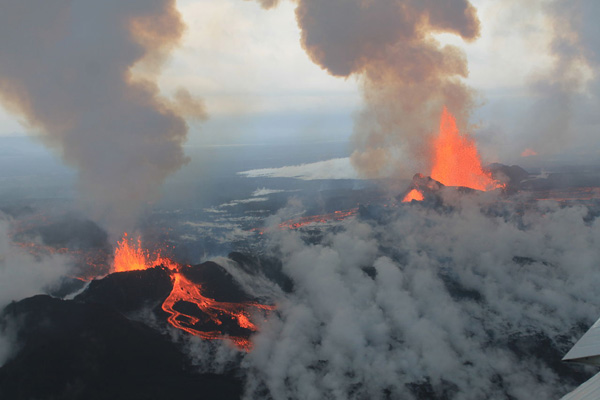
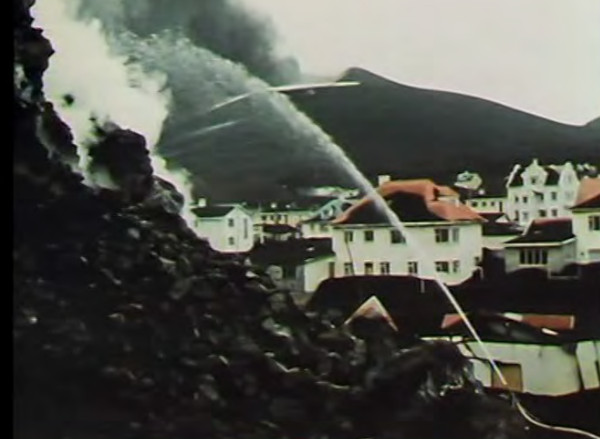
Vue de la dernière éruption (Crédit photo: Met Office)
°°°°°°°°°°
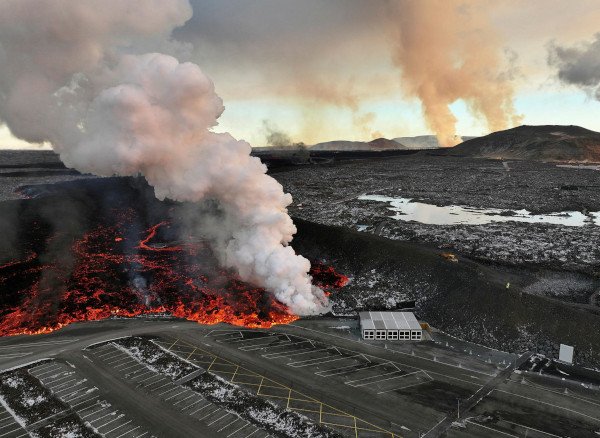
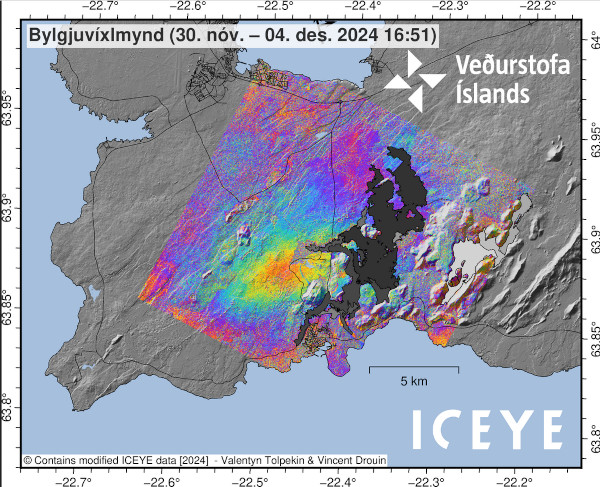
Un essaim sismique incluant 8 événements a également secoué la péninsule de Reykjanes les 28 et 29 décembre 2024. Au cours des dernières années, la péninsule a connu une forte activité sismique, ce qui est généralement un excellent indicateur d’éruptions à venir. L’éruption la plus récente s’est produite sur la chaîne de cratères Sundhnúksgígaröð ; elle a commencé le 20 novembre 2024 et a pris fin le 8 décembre. Il s’agit de la deuxième éruption la plus importante depuis 2023.
Selon les estimations, le Met Office pense que la péninsule de Reykjanes connaîtra sa prochaine éruption volcanique en janvier ou février 2025 [NDLR : personnellement, je dirais plutôt mi-mars]. Cependant, la dernière sismicité pourrait avoir été causée par des mouvements de plaques. Pour le moment, il n’y a aucun signe d’activité volcanique à l’horizon.
°°°°°°°°°°
Un essaim sismique significatif, avec un événement de M3,6, a été enregistré sur la dorsale de Reykjanes en Islande entre le 28 et le 30 décembre 2024. L’activité était concentrée autour d’Eldey, une zone tectoniquement active. L’activité sismique est attribuée aux mouvements tectoniques le long de la dorsale médio-atlantique où les plaques eurasienne et nord-américaine s’écartent. Il n’y a aucun signe d’activité volcanique.
Source : Met Office.
++++++++++
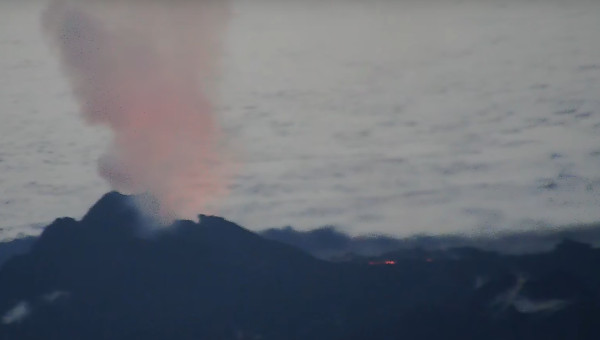
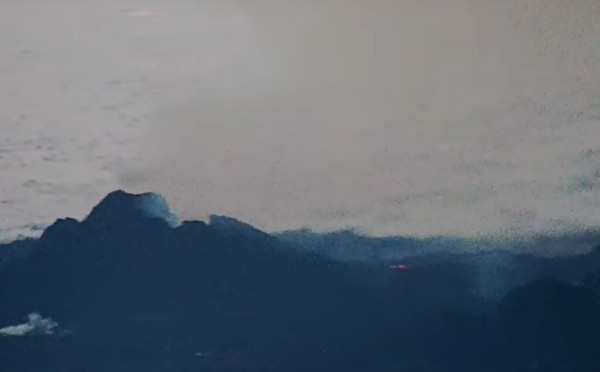
Dans un bulletin publié le 27 décembre 2024, l’INGV indique que le débordement de lave observé les jours précédents sur la partie haute de la Sciara del Fuoco du Stromboli (Sicile) est terminé. Une activité strombolienne, d’intensité variable, reste toujours présente dans la zone cratèrique nord.
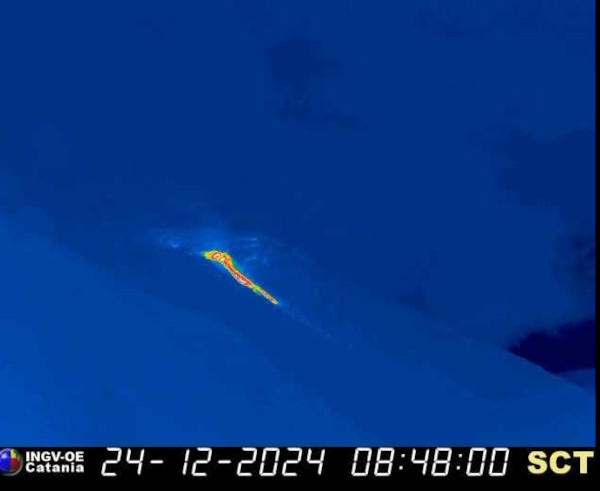
Vue du dernier débordement de lave (webcam thermique INGV)
++++++++++
J’ai attiré l’attention à plusieurs reprises sur ce blog (la dernière fois c’était le 18 juillet 2024) sur l’Axial Seamount, un volcan sous-marin situé au fond de l’océan Pacifique, à environ 480 kilomètres à l’ouest de la côte de l’Oregon. L’Axial Seamount se dresse à 700 mètres au-dessus de la dorsale Juan de Fuca ; son sommet se trouve à environ 1 400 mètres sous la surface de la mer. C’est le volcan sous-marin le plus actif du Pacifique Nord-Ouest.
Selon deux scientifiques de l’université d’État de l’Oregon et de l’université de Caroline du Nord, le volcan gonfle à un rythme régulier et devrait entrer en éruption avant la fin de 2025. Le nombre de séismes autour du volcan a connu une forte augmentation tout au long de 2024, avec des centaines d’événements détectés chaque jour. Le 26 octobre 2024, le gonflement de la caldeira avait atteint le seuil où elle se trouvait lors de la dernière éruption du volcan le 24 avril 2015. Cette éruption a provoqué des milliers de secousses sismiques et le fond marin environnant s’est affaissé d’environ 2 mètres.
Il est peu probable qu’une éruption ait des répercussions sur les personnes sur le continent, mais elle fournira une excellente occasion aux chercheurs de recueillir des données sur les éruptions volcaniques. Au cas où leur prévision serait erronée, les deux chercheurs ajoutent qu’« une éruption en 2025 n’est pas absolument certaine. »
Source : The Weather Network.
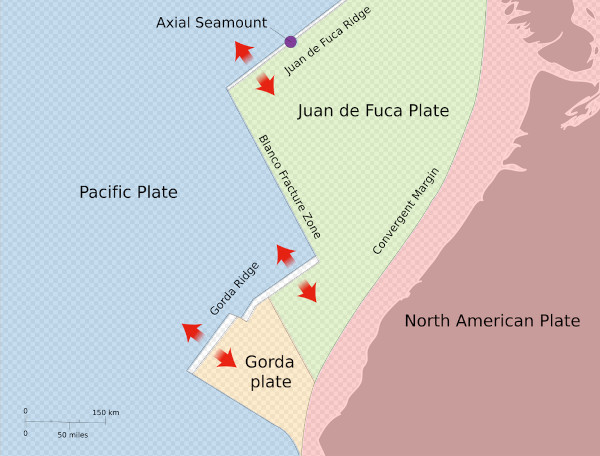
Source: USGS
++++++++++
L’activité reste globalement stable sur les autres volcans mentionnés dans les bulletins précédents « Volcans du monde ».
Ces informations ne sont pas exhaustives. Vous pourrez en obtenir d’autres en lisant le rapport hebdomadaire de la Smithsonian Institution :
https://volcano.si.edu/reports_weekly.cfm
°°°°°°°°°°
Flux RSS
Petit rappel : on me demande parfois comment il est possible de recevoir et lire mes articles au moment de leur parution. Pour cela, rendez-vous en haut de la colonne de droite de mon blog où figure le flux RSS qui permet de recevoir automatiquement des mises à jour du blog.
Vous pouvez également cliquer sur « Suivre Claude Grandpey : Volcans et Glaciers ».
——————————————-
 Here is some news about volcanic activity in the world:
The Kilauea eruption (Hawaii) continues in the southwest portion of Halema‘uma‘u Crater. Fountaining vigor increased during the past days, but the intensityis below that seen during the eruption’s first few days. The height of the fountains is estimated at 20-30 meters. The eruptive vents continue to produce an enlarging fan of lava flows covering the southwest area of the crater floor. While the eruption is confined to Halema‘uma‘u, there are high levels of volcanic gas which can have far-reaching effects downwind of the eruption. Kīlauea’s volcano alert level remains at Watch and its aviation color code at Orange.
No unusual activity was noted along the East Rift Zone or Southwest Rift Zone.
Hundreds, if not thousands, of visitors have come to watch the show but are confronted with a new hazard not linked to volcanic activity. There are other eyes watching and waiting for those awe-inspiring moments with more nefarious reasons in mind. “Thieves are looking for the right moment to steal your stuff,” warns the Hawai‘i Volcanoes National Park. There are reports of car wibdiws being smashed, with thieves stealing anything they can grab inside.
Source : HVO and Hawaiian news media.
++++++++++
Seismic activity around the Fentale volcano (Ethiopia) has increased over the past days with multiple earthquakes of magnitudes ranging from M4.3 to M5.1. The largest earthquake’s epicenter was located approximately 46 km north of Metahara, at a depth of 10 km. The latest M4.7 earthquake struck approximately 23 km southeast of Metahara. It also originated at a depth of 10 km. The real number of quakes is unknown as there is no seismic network covering the area.
Folloowing this increase in seismicity, the risk of a new volcanic eruption in this part of the African Rift is now higher than before because the likely cause of the quakes is a magma intrusion beneath the Fentale volcano, which may lead to an eruption,
The activity is consistent with the historical behavior of the Fentale volcano which last erupted in 1820 and produced basaltic lava flows from a 4-km fissure on its southern flank. The Fentale volcano lies at the northern end of the Main Ethiopian Rift which is a tectonically active region shaped by the East African Rift System (EARS) which extends over 3 000 km ; it is the world’s most prominent continental rift. The rift system is characterized by frequent seismicity and volcanic activity because of the separation of the Nubia and Somalia plates.
The affected region is home to over 3.4 million people within a 100 km radius of the Fentale volcano. Nearby towns, including Metahara (pop. 23 400) and Awash (pop. 11 400) are vulnerable. Authorities have issued advisories urging residents to prepare for potential evacuations if the volcanic activity intensifies.
Source : The Watchers, Global Volcanism Network.
++++++++++
A phreatic eruption occurred from the E part of Sileri Crater in the Dieng Volcanic Complex (Indonesia) on 18 December 2024 and was not preceded by significant signs of elevated volcanic activity. The eruption lasted more than three minutes. Sediment and mud were ejected about 100 m N and E, about 25 m W, and about 10 m S. Observers reported seeing a white plume rise 10 meters high.
After the eruption white plumes rose as high as 40 m above the crater. The water temperature of the lake did not increase. The water color varied in different locations appearing greenish, or light-to-blackish gray, and the volume was lower. Sediment and mud deposits ringed the crater and there was a notable sulfur odor. The Alert Level was raised to 2 (on a scale of 1-4) on 19 December. The public was asked to stay 500 m away from Sileri Crater.
An inspection of the crater was conducted on 22 December and revealed that the monitoring parameters were at normal levels. There was no increased activity at the craters in the volcanic complex, though some gas concentrations remained at relatively high levels near or around the gas vents.
Source : PVMBG.
++++++++++
Still in Indonesia, a sudden eruption of Mount Raung, one of Java’s most active stratovolcanoes, startled a group of tourists hiking near its summit on December 24th, 2024. The hikers managed to escape unharmed as ash plumes soared to a height of 8 km above sea level. An earlier advisory reported ash plumes reaching 7 km a.s.l.
Authorities maintain an exclusion zone of 3 km around the summit and urged plane pilots to stay alert for potential ash clouds.
Source : The Watchers.
++++++++++
Eruptive activity continues at Kanlaon (Philippines) with a few tens of daily volcanic earthquakes, along with elevated SO2 emissions. The Alert Level remains at 3 (on a scale of 0-5) and the public is asked to stay 6 km away from the summit
The eruption continues to impact residents. On 31 December 2024, 14,441 people (4,420 families) were spread across 34 evacuation centers and another 6,977 people (2,192 families) were staying elsewhere. 34 cities were under a “state of calamity”, and some classes remained suspended.
Source : PHIVOLCS.
++++++++++
A magnitude 3.8 earthquake struck Bárðarbunga (Iceland) on December 29th, 2024. Four earthquakes of or above M5.0 have struck Bárðarbunga this year; one in April, another in September, a third in October, and a fourth in early December. The last earthquake above M3.0 occurred on December 19th. According to the Icelandic Met Office, increased activity at the volcano in recent months suggests it prepares for an eruption. Activity at Bárðarbunga has not been higher since 2015 when a large eruption took place in Holuhraun. Today, inflation and earthquakes indicate an active inflow of magma into the Bárðarbunga volcano.
°°°°°°°°°°
A series of 8 earthquakes also rattled the Reykjanes Peninsula on December 28-29, 2024. Over the last few years, the Reykjanes Peninsula has experienced high levels of seismic activity, which are typically an excellent indicator that volcanic eruptions will soon follow. The most recent eruption occurred at the Sundhnúksgígaröð crater row, beginning on November 20 2024, and ending December 8th. It was the second largest eruption since 2023.
According to estimates, it is believed that the Reykjanes Peninsula will experience its next volcanic eruption in January or February 2025 [NDLR : personnaly I would rather say mid-March]. However, the Met Office explains that the latest seismicity may have been caused by plate movements. Ae the moment there are no signs of incoming volcanic activity.
°°°°°°°°°°
A strong earthquake swarm with the strongest event reaching M3.6 was registered on Iceland’s Reykjanes Ridge between December 28 and 30, 2024. The activity was concentrated around Eldey and nearby locations, a tectonically active area. The recent seismic activity is attributed to tectonic movements along the Mid-Atlantic Ridge where the Eurasian and North American tectonic plates diverge. There are no signs of volcanic activity.
Source : Met Office.
++++++++++
In a bulletin reteased on December 27, 2024, INGV indicates that the lava overflow observed in the previous days on the upper part of Stromboli‘s Sciara del Fuoco (Sicily) is no longer to be seen. Strombolian activity, of varying intensity, is still present in the northern crater area.
++++++++++
I have drawn attention several times on this blog (the last time was 18 July 2024) to Axial Seamount, a submarine volcano located at the bottom of the Pacific Ocean, about 480 kilometres west off the Oregon coast.Axial Seamount rises 700 metres above the Juan de Fuca Ridge crest to within about 1 400 metres of the sea surface. It is the most active underwater volcano in the North West Pacific.
According to two scientists of Oregon State University and the University of North Carolina indicate that the volcano has been inflating at an increasing rate and is likely to erupt before the end of 2025. The number of earthquakes surrounding the volcano has shown a sharp increase throughout 2024, with hundreds being detected every day. As of October 26th, 2024, the caldera has fully re-inflated to the threshold of where it was when the volcano last erupted on April 24th, 2015. It caused thousands of underwater earthquakes that were detected detected and for the surrounding ocean floor sank about 2 metres.
It’s unlikely that an eruption would have any impacts on those on land, but it would provide an excellent opportunity for researchers to gather data on volcanic eruptions. Just in case their prediction might be wrong, the two researchers add that « a 2025 eruption is not absolutely certain. »
Source : The Weather Network.
++++++++++
Activity remains globally stable on other volcanoes mentioned in the previous bulletins « Volcanoes of the world ».
This information is not exhaustive. You can find more by reading the Smithsonian Institution’s weekly report:
https://volcano.si.edu/reports_weekly.cfm
°°°°°°°°°°
RSS feed
Quick reminder: I am sometimes asked how it is possible to receive and read my posts when they are published. Just go to the top of the right column of my blog where you can see the RSS feed. It will allow you to automatically receive updates from the blog.
You can also click on “Suivre Claude Grandpey: Volcans et Glaciers”.