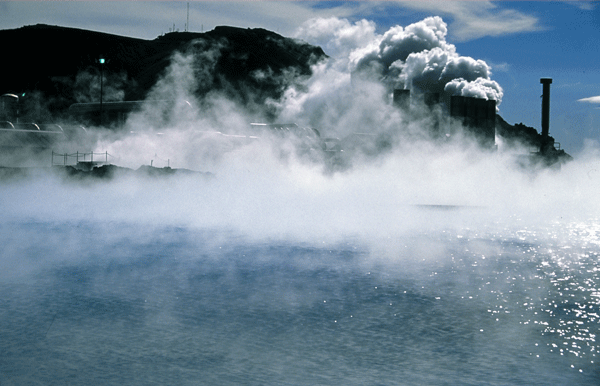
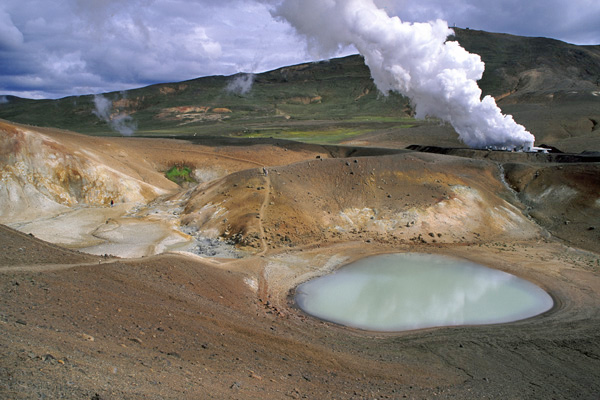
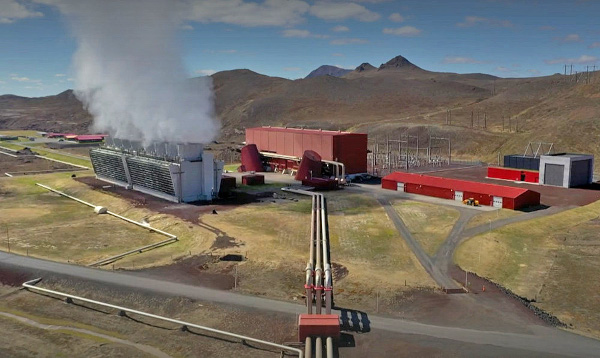
KMT, un projet ambitieux en Islande // KMT, an ambitious project in Iceland

Dans deux notes publiés le 28 septembre 2021 et le 22 janvier 2024, j’expliquais qu’un nouveau projet – Krafla Magma Testbed (KMT) – est en cours de développement en Islande.

https://claudegrandpeyvolcansetglaciers.com/2021/09/28/voyage-au-centre-de-la-terre-journey-to-the-centre-of-the-earth-3/

https://claudegrandpeyvolcansetglaciers.com/2024/01/22/islande-la-geothermie-au-coeur-dun-volcan-iceland-geothermy-at-the-heart-of-a-volcano/

Un article publié le 23 mars 2024 sur le site Iceland Monitor nous informe que deux des principaux objectifs du projet sont « d’améliorer considérablement les prévisions des éruptions volcaniques dans le monde et de concevoir de nouvelles méthodes plus économiques pour la production d’énergie géothermique. »
La société KMT vise à construire dans les années à venir un centre de recherche international de recherche en matière de volcanisme et d’énergie dans la région du Krafla à Þingeyjarsveit. L’idée du projet est née du forage IDDP-1 qui, en 2009, a atteint de manière tout à fait inattendue une poche de magma dans la région du Krafla, à une profondeur de 2,1 km.
L’équipement utilisé en 2009 n’était pas capable de résister à la chaleur, à la pression et à la corrosion à proximité du magma, mais des informations importantes ont été recueillies au niveau du forage avant sa fermeture. Les scientifiques ont pu déterminer l’emplacement exact d’une chambre magmatique, une première mondiale, et le forage s’est avéré dix fois plus puissant que les forages traditionnels déjà réalisés dans la région du Krafla.
Quinze ans après le forage de 2009, l’objectif est de récidiver avec une nouvelle technologie mise au point par la société KMT.
Voici une vidéo de KMT (en anglais) expliquant le projet et ses ambitions :
https://youtu.be/Bf-yA_L8mZA

Photos: C. Grandpey

————————————————-

In two posts released on September 28th, 2021 and January 22nd, 2024, I explained that a new project – Krafla Magma Testbed (KMT) – is being developed in Iceland.

https://claudegrandpeyvolcansetglaciers.com/2021/09/28/voyage-au-centre-de-la-terre-journey-to-the-centre-of-the-earth-3/

https://claudegrandpeyvolcansetglaciers.com/2024/01/22/islande-la-geothermie-au-coeur-dun-volcan-iceland-geothermy-at-the-heart-of-a-volcano/

An article published on March 23rd, 2024 on the website Iceland Monitor informs us that two of the main goals of the project are « to greatly improve global volcanic eruption predictions and design new and more cost-effective methods for the energy production of geothermal energy. »

KMT aims to build an international research center for volcanic and energy research in the Krafla area in Þingeyjarsveit in the coming years. The idea for the project stems from the Icelandic deep-water drilling project IDDP-1, where they unexpectedly drilled into magma at Krafla at a depth of 2.1 km in 2009.

The equipment used in IDDP-1 in 2009 was not able to withstand the heat, pressure, and corrosion closer to the magma but important information was gathered from the borehole before it was closed. Scientists were now able to determine the exact location of a base magma chamber, which is considered unique worldwide, and the borehole was found to be ten times more powerful than traditional production boreholes in Krafla.

Now fifteen years after the unexpected drilling of magma in Krafla, the aim is to do so again with a new instrumentation that KMT is developing.

Here is a video from KMT explaining the project and its ambitions:

https://youtu.be/Bf-yA_L8mZA

Islande : la géothermie au cœur d’un volcan // Iceland : geothermy at the heart of a volcano

Des chercheurs et des scientifiques ont élaboré un projet visant à repousser les limites de l’énergie renouvelable en forant au cœur de la chambre magmatique d’un volcan. Initié en 2014, l’ambitieux projet, baptisé Krafla Magma Testbed (KMT), vise à exploiter la chambre magmatique du Krafla, dans le nord de l’Islande, d’ici 2026.

Pour mener le projet à son terme, KMT recherche un financement de 100 millions de dollars et prévoit de commencer les forages d’ici 2027. KMT est une alliance internationale qui vise à réaliser « la première entreprise de recherche sur le magma pour effectuer des études et des expériences de pointe ». Le projet est porté par des scientifiques et des ingénieurs de 38 instituts de recherche et entreprises de onze pays dont les Etats-Unis, le Royaume-Uni et la France. Si elle réussit, cette stratégie permettra une production d’énergie géothermique sans précédent et ouvrira la voie à une alimentation énergétique illimitée dans toute l’Islande.
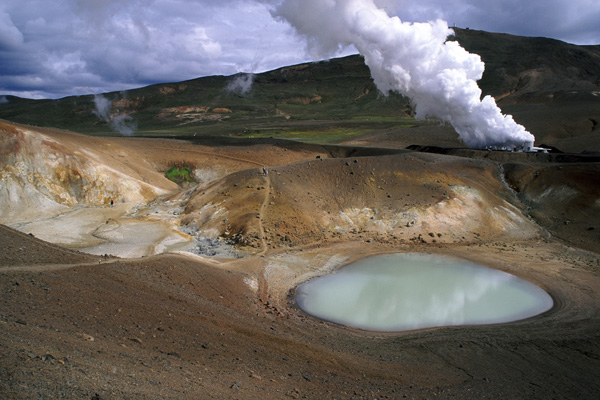
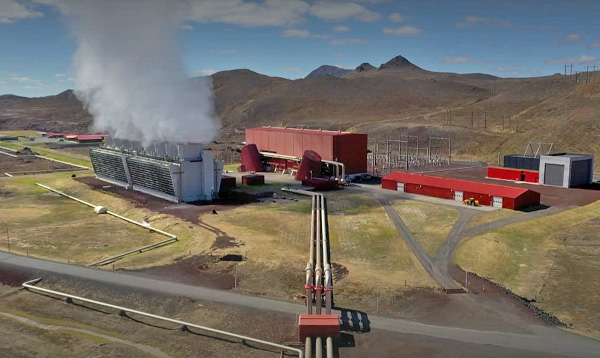
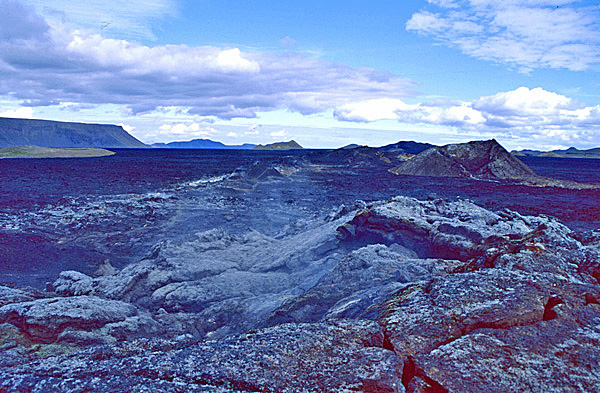
Le Krafla présente une caldeira volcanique d’une dizaine de kilomètres de diamètre et une zone de fissures de 90 kilomètres de long. Le volcan est l’un des systèmes géothermiques les plus étudiés. C’est le site de la première centrale géothermique du pays.

La chambre magmatique du Krafla se trouve à une profondeur relativement faible, entre 1,5 et 3 km seulement sous la surface, avec des températures atteignant 1 300°C. Elle  a attiré l’attention de manière tout à fait inattendue en 2009 lors d’un projet de forage géothermique pour le compte de la société Landsvirkjun. Un trépan a rencontré par hasard une poche magmatique près du Krafla, à 2,1 km de profondeur. L’incident n’a pas provoqué d’éruption volcanique, ce qui montre qu’un forage directement dans le magma peut être effectué en toute sécurité. A des kilomètres sous terre, la roche atteint des températures si extrêmes que les fluides rencontrés sont dits « supercritiques », c’est-à-dire au comportement intermédiaire entre l’état liquide et gazeux. L’énergie produite y est cinq à dix fois plus importante qu’avec un puits conventionnel. Lors de l’accident de 2009, la vapeur remontant à la surface a atteint 450°C. Deux puits supercritiques suffiraient pour atteindre la puissance de 60 mégawatts, ce que génère la centrale actuellement avec 18 puits conventionnels.
Le financement de 100 millions de dollars permettra d’accélérer l’avancement de ce projet grâce à l’acquisition des équipements de forage les plus performants, capables de résister à des températures extrêmement élevées. KMT a également l’intention de déployer un ensemble de capteurs haute technologie pour surveiller en permanence différents paramètres du magma, notamment sa température. L’équipe KMT s’est fixé un calendrier ambitieux, visant à exploiter la chambre magmatique du Krafla d’ici 2026.
D’un coût de 25 millions de dollars, la première phase de forage prévoit plusieurs trous d’exploration autour  du magma. Le forage, maintenu ouvert, permettra ensuite d’atteindre le magma et de prélever des échantillons. Grâce à cette exploration directe, les scientifiques de KMT espèrent améliorer leur compréhension du magma et de ses propriétés. KMT prévoit de procéder ensuite à un deuxième forage pour examiner la faisabilité de l’exploitation de l’énergie géothermique.
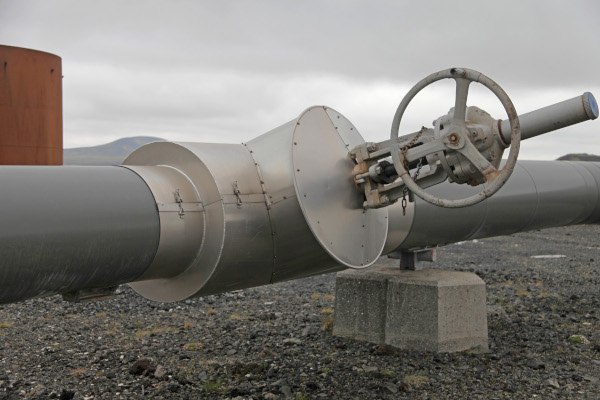
L’énergie géothermique est utilisée en Islande depuis plusieurs années grâce à un processus qui suppose des forages dans des régions dont le sous-sol est à haute température afin d’exploiter la chaleur naturelle de la Terre. La chaleur en provenance de l’intérieur de la Terre chauffe l’eau des réservoirs souterrains et la transforme en vapeur. Cette vapeur est ensuite canalisée à l’aide d’une tuyauterie vers des turbines reliées à des générateurs qui convertissent l’énergie en électricité. En Islande, cette stratégie s’est avérée efficace pour produire de l’électricité et répondre à une grande partie des besoins énergétiques de la population.

Avec la réussite du projet, l’Islande anticipe un bouleversement de son paysage énergétique. Le projet KMT pourrait non seulement transformer la production d’énergie en Islande, mais aussi servir de modèle pour d’autres régions volcaniques à travers le monde, tant sur terre qu’en mer.
Source  : Interesting Engineering.
Remarque personnelle : le projet KMT est ambitieux, mais il ne devra pas oublier que le Krafla est un volcan actif dont les éruptions peuvent être très spectaculaires. Le choix des emplacements des forages et des infrastructures devra se faire avec le plus grand soin pour éviter leur destruction par un accès de colère du volcan.

Photos: C. Grandpey

—————————————————

Researchers and scientists have worked out a project to transform the renewable energy landscape by drilling into the heart of a volcano’s magma chamber. Initiated in 2014, the ambitious Krafla Magma Testbed (KMT) project aims to tap into the magma chamber of Krafla in northern Iceland by 2026.

To make this vision a reality, KMT is actively seeking 100 million dollars in funding, with plans to begin drilling by 2027. KMT is an international initiative that seeks to construct the « world’s first magma research facility for advanced studies and experiments. » The project is led by scientists and engineers from 38 research institutes and companies from eleven countries including the United States, the United Kingdom and France. If successful, this strategy would allow for unparalleled geothermal energy output, opening the path to provide a limitless energy supply to houses across Iceland.

Krafla evinces a volcanic caldera with a diameter of around ten kilometers and a 90-kilometer-long fissure zone. It is recognized as one of the most extensively studied geothermal systems. It is the site of the country´s first geothermal power station.

Krafla’s magma chamber is located at a relatively short depth of only 1.5 – 3 km below the surface, with temperatures reaching 1,300°C.

The shallow depth of Krafla’s magma chamber gained attention unexpectedly in 2009 during a geothermal drilling project for the Iceland energy company Landsvirkjun. The project unexpectedly encountered a magma chamber near the Krafla volcano, at a depth of 2.1 km. The fact that the crew was not immediately faced with a volcanic eruption provided reassuring evidence that drilling into magma could be done safely. Kilometers underground, the rock reaches temperatures so extreme that the fluids encountered are called « supercritical », that is to say with intermediate behavior between the liquid and gaseous state. The energy produced there is five to ten times greater than in a conventional well. During the 2009 accident, the steam rising to the surface reached 450°C. Two supercritical wells would be enough to reach the power of 60 megawatts that the plant currently generates with 18 conventional wells.

The 100-million-dollar funding will expedite the advancement of this project by enabling the acquisition of advanced drilling equipment capable of withstanding higher temperatures.  KMT also intends to deploy a set of high-tech sensors to continually monitor different magma parameters, including temperature.

The first phase of drilling should be carried out by 2026 or 2027. Costing $25 million, it includes several exploration holes around and below the magma. The drilling, kept open, will make it possible to reach the magma and take samples.

The first borehole is likely to be drilled by either 2026 or 2027. Through this direct exploration, KMT scientists aim to enhance their understanding of magma and its properties. Following this, KMT plans to drill a second borehole to examine the feasibility of harnessing geothermal energy.

Geothermal energy has been utilized in Iceland for several years through a process that involves drilling into hot underground regions to tap into the Earth’s natural heat. The heat from the Earth’s interior causes water in these underground reservoirs to become hot and turn into steam. This steam is then channeled to drive turbines connected to generators, converting the energy into electricity. In Iceland, this strategy has proven effective in producing power and meeting a large amount of the country’s energy requirements.

As the project unfolds, Iceland anticipates a revolutionary shift in its energy landscape, harnessing the power of volcanoes to provide a renewable and sustainable source of electricity for homes and industries. The KMT project could not only transform energy production in Iceland, but also serve as a model for other volcanic regions around the world, both on land and at sea.

Source : Interesting Engineering.

Personal note: the KMT project is ambitious, but it should not forget that Krafla is an active volcano whose eruptions can be very spectacular. The choice of drilling and infrastructure locations should be made with the greatest care to avoid their destruction by the volcano’s anger.

Géothermie, l’énergie du futur ? // Is geothermal the energy of the future ?

L’Islande est connue pour ses faibles émissions de gaz à effet de serre, en grande partie grâce à l’énergie géothermique produite sur plus de 30 sites volcaniques qui alimentent également ses célèbres sources chaudes. L’utilisation par l’Islande de la géothermie pour le chauffage et d’un mélange de géothermie et d’hydroélectricité pour l’électricité lui a permis d’avoir de la chaleur et de l’électricité à des prix abordables, sans être impactée par le hausse du prix du gaz naturel comme ce fut la cas pour le reste de l’Europe suite à l’invasion de l’Ukraine par la Russie.
À l’heure actuelle, l’énergie géothermique représente moins de 1 % de la production d’électricité aux États-Unis. Contrairement à l’éolien et au solaire, qui ne produisent de l’énergie que dans certaines conditions, l’énergie géothermique est beaucoup plus constante. Les sources d’énergie éolienne et solaire doivent être complétées par des centrales qui brûlent du charbon ou du gaz. La géothermie n’a pas ce problème. En revanche, le coût de son exploitation peut être élevé dans les endroits qui nécessitent un forage profond. En 2021, un kilowattheure d’électricité généré par la géothermie coûtait en moyenne 3,991 dollars dans les pays du G20, contre 0,857 dollars pour l’énergie solaire et 1,325 dollars pour l’éolien terrestre.
Les progrès technologiques récents, tels que les systèmes EGS peuvent résoudre ce problème. [Remarque personnelle : EGS est l’abréviation de Enhanced Geothermal System, traduit littéralement par système géothermique amélioré, mais EGS est couramment utilisé sous l’appellation française ‘principe des systèmes géothermiques stimulés’ ou encore ‘géothermie profonde des réservoirs’ que nous utiliserons ici]. Dans un EGS, comme dans un puits de fracturation hydraulique, un fluide est injecté profondément sous terre, provoquant l’ouverture de fractures dans la roche, ce qui permet au fluide chaud de remonter vers la surface. En juin 2022, le Département Américain de l’Energie a annoncé un investissement de 165 millions de dollars dans la recherche et le déploiement de l’énergie géothermique. Le secteur privé prend également des mesures timides en matière d’énergie géothermique et un grand nombre de jeunes entreprises ont levé des millions de dollars en capital.
En janvier 2022, une entreprise danoise a signé un accord pour développer la plus grande centrale de chauffage géothermique de l’Union européenne. Des entreprises islandaises développent actuellement des projets de chauffage et d’énergie géothermiques dans d’autres pays. Dans le cadre d’un partenariat entre l’islandais Orka Energy Holding et le chinois Sinopec, la province chinoise de Xiong, qui compte 390 000 habitants, est en train de se convertir à la géothermie pour le chauffage résidentiel. Des puits d’environ 1 500 à 1 900 mètres de profondeur font remonter de l’eau à 70°C qui sert à chauffer les habitations. Dans cette région où les familles brûlaient auparavant du charbon pour se chauffer, le résultat est une réduction spectaculaire des émissions de carbone et de brouillard. Orka et la société islandaise Mannvit construisent également des centrales électriques qui produiront de l’électricité à partir de la géothermie dans des pays comme la Slovénie et la Hongrie.
Aux États-Unis, la géothermie représente 6 % de l’électricité produite en Californie et 10 % dans des états comme le Nevada. Hawaii, l’Utah, l’Oregon et l’Idaho qui ont également des centrales géothermiques. Comme en Islande, où 27 % de l’électricité et du chauffage de 90 % des foyers proviennent de la géothermie, ces États de l’ouest américain ont une activité volcanique qui fait remonter la chaleur près de la surface de la Terre. Cela rend la géothermie plus économiquement viable que dans la moitié Est des États-Unis où la chaleur est enfouie plus profondément sous terre.
Les détracteurs de la géothermie attirent l’attention sur les problèmes techniques liés au forage profond. Certaines sociétés espèrent faciliter le forage profond grâce à l’EGS, qui pourrait permettre un essor géothermique similaire à la fracturation hydraulique. Cette dernière a transformé l’extraction du pétrole et du gaz, mais pour le moment le coût de cette technologie reste trop élevé dans le secteur géothermique. On s’attend toutefois à ce qu’au cours de la prochaine décennie, l’intensification de la recherche et du développement dans le domaine de l’EGS réduise suffisamment les coûts pour rendre l’énergie géothermique économiquement compétitive.
En Oregon, la société AltaRock a mis en place un projet de démonstration sur le volcan Newberry qui permet de faire remonter de l’eau à plus de 400°C à 4 200 m sous terre. A 374°C, l’eau atteint l’état supercritique auquel elle s’écoule avec la facilité du gaz tout en gardant la densité d’énergie d’un liquide. Pour obtenir une eau aussi chaude dans des États comme celui de New York, il faudrait descendre de 6 000 ou 9 000 mètres de profondeur. AltaRock travaille actuellement en laboratoire avec la société Quaise Energy sur l’utilisation de la technologie des ondes millimétriques. (voir ma note du 27 décembre 2022 à ce sujet)
Les sceptiques font d’autre part remarquer que les systèmes de géothermie profonde rencontreront de nombreux obstacles techniques. Il y aura de l’eau qui s’échappera dans les fractures de la roche, le besoin de matériaux capables de résister à des températures extrêmement élevées et le fait que les nouvelles techniques opérationnelles dans une zone ne le seront pas forcément partout, étant donné la variabilité de la géologie à travers le pays.
Il y a aussi les obstacles politiques et économiques potentiels, tels que les objections de la population locale qui – comme pour la fracturation hydraulique – peuvent s’inquiéter des séismes qui pourraient être déclenchés par l’injection de liquide à l’intérieur de la Terre. Il y a aussi des coûts élevés que les distributeurs d’électricité devraient supporter, comme l’acheminement des lignes de transmission vers les sites des futures centrales géothermiques et le fait qu’un processus à forte consommation d’eau peut ne pas être réalisable dans les zones affectées par la sécheresse et le manque d’eau.

Néanmoins, les compagnies pétrolières et gazières sont de plus en plus intéressées. Elles possèdent la technologie et le savoir-faire pour effectuer des forages profonds. De plus, cette technologie a évolué et s’est développée, et peut être directement appliquée à la géothermie.
Source : Yahoo Actualités.

————————————————-

Iceland is known for its low greenhouse emissions thanks in part to its reliance on clean, geothermal energy derived from the more than 30 active volcanic systems that also power its famous hot springs. Iceland’s use of geothermal for heating and a mix of geothermal and hydropower for electricity has given it uninterrupted access to affordable heat and power, insulating its economy from the natural gas price shocks being felt by the rest of Europe since Russia’s invasion of Ukraine.

At present, geothermal energy accounts for less than 1% of the U.S. electricity portfolio. Unlike wind and solar energy, which do not produce as much energy in certain conditions, geothermal energy is much more constant. Wind and solar power sources need to be complemented with complementary plants which burn coal or gas. Geothermal does not have that problem. Yet the cost of tapping it can be expensive in places that require extensive digging. In 2021, a kilowatt hour of electricity generated by geothermal cost an average of $3,991 in G20 countries, compared to $857 for utility-scale solar power and $1,325 for on-shore wind

Recent technological advances, such as Enhanced Geothermal Systems (EGS) may solve that problem. In an EGS, much as in a fracking well, fluid is injected deep underground, causing fractures to open in the rock, which allows hot fluid to rise from far below. In June 2022, the U.S. Department of Energy (DOE) announced a $165 million investment in geothermal energy research and deployment. The private sector is also taking tentative steps into geothermal energy. A slew of geothermal energy startups have each raised millions of dollars in capital.

In January 2022, a Danish company signed an agreement to develop the largest geothermal heating plant in the European Union, and Icelandic companies are currently developing geothermal heating and energy projects in other countries. Under a partnership between Iceland’s Orka Energy Holding and China’s Sinopec, the 390,000-person Chinese county of Xiong is being converted to geothermal for residential heating. Wells roughly 1,500 to 1,900 meters deep bring up water at 70°C that is used to heat homes. In an area where families previously burned coal for heat, the result has been a dramatic cut in carbon emissions and smog. Orka and the Icelandic firm Mannvit are also building power plants that will produce electricity from geothermal in countries including Slovenia and Hungary.

In the U.S., geothermal accounts for 6% of the electricity produced in California and 10% in Nevada. Hawaii, Utah, Oregon and Idaho have geothermal plants as well. Like Iceland, where 27% of the electricity and heating in 90% of homes comes from geothermal, these western states have volcanic activity that brings heat close to the Earth’s surface. That makes geothermal more economically viable than in the eastern half of the U.S., where heat is buried deeper underground.

Skeptics of geothermal’s potential note the technological challenges to drilling deeper. Some energy companies hope to facilitate deeper drilling through EGS, which offers the possibility of a geothermal boom similar to the way fracking has transformed oil and gas extraction, but at the moment the cost is higher than other ressources. It is expected that over the next decade or so, increased research and development in EGS will bring the cost down enough to make geothermal energy economically competitive.

In Oregon, AltaRock is building a demonstration project at the Newberry Volcano to bring up water of more than 400°C from 4,200 m below ground. At 374°C, water reaches the supercritical state at which it flows with the ease of gas but carries the energy density of a liquid. Bringing up water that hot in states like New York would require going 6,000 to 9,000 meters below ground. AltaRock is currently working in a laboratory with the Quaise Energy company on using millimeter wave technology. (see my post of December 27th, 2022)

Skeptics point out that Enhanced Geothermal Systems will have plenty of technical obstacles. There will be water escaping into the rock cracks, the need for materials that can withstand incredibly high temperatures, and the fact that new techniques that work in one area may not apply everywhere, given the variability in geology around the country.

Then there are the potential political and economic roadblocks, such as objections of nearby residents who – like for fracking – may worry about earthquakes that could be triggered by injecting liquid into the Earth. There are also steep costs that utilities would have to bear, such as bringing transmission lines to the sites of future geothermal power plants and the fact that a water-intensive process may not be feasible in areas with water scarcity.

Nonetheless, oil and gas companies are increasingly interested. They have the technology and know-how to drill deep below the ground. Moreover, this technology has evolved and grown, and can be directly applied to geothermal power.

Source : Yahoo News.

Photos: C. Grandpey

La géothermie avec de nouveaux forages à très grande profondeur // Geothermal energy with new very deep drillings

L’immense potentiel d’énergie géothermique qui sommeille sous la surface de la Terre ne demande qu’à être exploité pour chauffer les maisons ou produire de l’électricité, comme cela se fait en Islande où cette énergie est convertie en électricité grâce à la force de la vapeur. Portée à haute température dans des réservoirs géothermiques ou les aquifères dans la croûte terrestre, l’eau se transforme en vapeur qui fait ensuite tourner des turbines qui activent un générateur produisant de l’électricité. Lorsque la vapeur redevient de l’eau, elle est renvoyée dans sol et le cycle recommence. En bref, l’énergie géothermique a, en théorie, le potentiel de fournir une énergie propre au monde entier.
Pour puiser cette puissance naturelle, les ingénieurs devront inventer de nouvelles stratégies pour forer jusqu’à 20 kilomètres de profondeur à l’intérieur de la Terre. Quaise Energy, une start-up rattachée au Massachusetts Institute of Technology (MIT) pense avoir la solution avec le forage à ondes millimétriques. Les scientifiques pensent que la technologie peut vaporiser suffisamment de roche pour créer les puits de forage les plus profonds au monde. Ils pourront ainsi récolter l’énergie géothermique à grande échelle pour satisfaire la consommation humaine sans avoir besoin de combustibles fossiles.
L’énergie géothermique est pratiquement illimitée, mais elle est actuellement sous-utilisée. Selon l’Agence Internationale de l’Energie, la production d’électricité géothermique n’a augmenté que d’environ 2 % en 2020 avec une capacité supplémentaire de 200 mégawatts, ce qui représente une baisse significative par rapport à la croissance enregistrée au cours des cinq années précédentes. À titre de comparaison, une centrale au charbon classique a une capacité d’environ 600 MW.
Pour atteindre zéro émission nette d’ici 2030, la production mondiale d’énergie géothermique devrait augmenter de 13 % chaque année entre 2021 et 2030, soit environ 3,6 gigawatts de capacité. Pour y parvenir, il faudra un meilleur accès à l’eau ultra-chaude qui se trouve à très grande profondeur. C’est le but recherché avec le forage à ondes millimétriques.
Actuellement, le puits de forage le plus profond au monde est le Kola Superdeep Borehole en Russie, près de la Norvège. Résultat d’un projet remontant à l’Union Soviétique, il s’agissait de forer le plus profond possible dans la croûte terrestre, qui fait en moyenne environ 30 kilomètres d’épaisseur sous les continents. Au final, ce puits n’atteint que 12,1 kilomètres dans la croûte et il a fallu 20 ans pour le réaliser car les équipements conventionnels, tels que les foreuses mécaniques, ne peuvent pas gérer les conditions rencontrées à une telle profondeur.
La nouvelle technologie mise au point par Quaise Energy, conçue pour perforer la roche avec des ondes millimétriques, pourrait être une solution. En remplaçant les forets conventionnels par des ondes millimétriques générées par une machine baptisée gyrotron, il est possible de faire fondre puis de vaporiser la roche. Un gyrotron dispose d’une puissante source de faisceaux, comme les lasers, mais avec une gamme de fréquences différente. Il a fallu plus de 15 ans à la start-up pour développer la technologie en laboratoire, et démontrer finalement que les ondes millimétriques pouvaient forer le basalte. La technologie devrait permettre de creuser à 20 kilomètres de profondeur, là où les températures atteignent plus de 480 degrés Celsius.
Le projet devrait débuter par une conception hybride, utilisant d’abord la technologie de forage rotatif conventionnelle développée par les industries pétrolières et gazières pour perforer les couches de surface de la Terre. C’est alors que l’on utilise les ondes millimétriques à haute puissance. La première plate-forme de forage hybride à grande échelle devrait être opérationnelle d’ici 2024. D’ici 2026, le premier système géothermique prévu pour produire 100 mégawatts d’énergie thermique fonctionnera à partir de quelques puits de forage. D’ici 2028, le nouveau système devrait commencer à remplacer les centrales à combustibles fossiles par des centrales géothermiques.
Grâce aux températures élevées atteintes à très grande profondeur, la nouvelle technologie produit de la vapeur très proche de la température à laquelle fonctionnent les centrales électriques au charbon et au gaz d’aujourd’hui. Ainsi, il sera possible de remplacer 95 à 100 % de l’utilisation du charbon en développant un champ géothermique et en produisant de la vapeur à partir des profondeurs de la Terre.
Il reste encore beaucoup à faire pour développer pleinement la nouvelle technologie. Les scientifiques doivent mieux comprendre les propriétés des roches à grande profondeur et faire progresser la chaîne d’approvisionnement des gyrotrons qui produisent les ondes millimétriques. De plus, l’équipement devra être produit en quantité et avec une conception robuste adaptée à l’environnement des forages.
Viennent ensuite des défis techniques supplémentaires, tels que la technique d’élimination des matériaux remontés lors du forage et la nécessité de maintenir les puits stables et ouverts une fois le forage terminé.
Au moment où les sources d’énergie géothermique plafonnent à travers le monde parce que les méthodes de forage conventionnelles sont inadaptées pour gérer des profondeurs supérieures à 120 mètres, le Département américain de l’Energie a octroyé à Quaise Energy une subvention pour accélérer les expériences avec un gyrotron plus puissant, et continuer à améliorer les capacités de vaporisation.
Source : Yahoo Actualités, Popular Mechanics.

——————————————-

The vast geothermal energy locked below Earth’s surface is just waiting to be tapped to heat the houses or to produce electricity, as this is done in Iceland where it is converted to electricity through steam. As water is heated in geothermal reservoirs or aquifers in Earth’s crust, steam is created, which then turns turbines that activate a generator, ultimately spitting out electricity. When the steam becomes water again, it’s returned to the ground so it can go through the cycle all over again. In short, it has the potential to provide clean energy to the entire world.

To tap into this natural power, engineers must devise a new strategy for drilling 20 kilometers into Earth, deep into rock. An MIT spinoff company believes it has the answer: millimeter wave drilling. Scientists believe the technology can vaporize enough rock to create the world’s deepest holes and harvest geothermal energy at scale to satisfy human energy consumption without the need for fossil fuels.

Although geothermal energy is a nearly limitless form of sustainable energy production, it is currently being underutilized. According to the International Energy Agency, geothermal electricity generation grew only about 2 percent in 2020 with an added 200 megawatts of capacity, a marked fall from the growth seen in the previous five years. As a comparison, a typical coal plant has about 600 MW of capacity.

To reach net-zero emissions by 2030, global geothermal energy production needs to increase by 13 percent each year between 2021-2030, or about 3.6 gigawatts of capacity. For that to happen, we need better access to this ultra-hot water from Earth’s core. It is hoped that millimeter wave drilling will do the job.

Currently, the world’s deepest drilled hole is the Kola Superdeep Borehole in Russia near Norway. A project of the Soviet Union, it was an attempt to drill as deeply as possible into Earth’s crust, which is on average about 30 kilometers thick beneath continents. But this hole reaches just 12.1 kilometerrs into the crust and took 20 years to complete because conventional equipment, such as mechanical drills, can’t handle the conditions at those depths.

The MIT new technology, designed to blast rock with millimeter waves, might be a solution. By replacing conventional drill bits with millimeter wave energy, powered by a gyrotron machine, it is possible to melt and then vaporize the rock to create many of these deep holes. A gyrotron features a powerful beam source, like lasers, but with a different frequency range. It took MIT over 15 years to develop the general technique in a lab, eventually demonstrating the millimeter waves could drill holes in basalt. The technology is expected to reach 20 kilometers into the ground, where temperatures reach over 480 degrees Celsius.

The plan is to usher in a hybrid design, first using conventional rotary drilling technology developed by the oil and gas industries to cut through Earth’s surface layers. Then, once crews reach the basement rock, they switch over to high-power millimeter waves. The first full-scale hybrid drilling rig will be operational by 2024. By 2026, the first geothermal system, rated to 100 megawatts of thermal energy, will be operating from a handful of wells. By 2028, ithe new system is likely to start replacing fossil fuel-powered energy plants with geothermal plants.

At these high temperatures, the new technology is producing steam very close to, if not exceeding, the temperature that today’s coal and gas-fired power plants operate at. So, it will be possible to replace 95 to 100 percent of the coal use by developing a geothermal field and producing steam from the Earth.

There is still a lot to do to fully develop the new technology. Scientists need to better understand rock properties at great depth and advance the supply chain for gyrotrons, the linear-beam vacuum tubes that produce the millimeter waves.The equipment must be produced in quantity and with a robust design suitable for a field environment.

Then come some additional engineering challenges, such as the proper removal technique for the ash created during the borehole drilling, and the need to keep the bored holes stable and open once completed.

With geothermal energy sources plateauing across the world because conventional drilling methods proved impractical to handle the hotter and harder crusts much deeper than the shallow depths of 120 meters, the United States Department of Energy has offered the MIT department a grant to increase the experiments with a larger gyrotron to continue improving the vaporizing abilities.

Source: Yahoo News, Popular Mechanics.

Vue du gyrotron (Source: Encyclopaedia Britannica)