 Après le Mont Hood aux États-Unis, voici le Mont Tauhara en Nouvelle-Zélande. Le volcan est situé à proximité du lac Taupo et sa dernière éruption remonte à environ 65.000 ans.
Un travail de recherche récemment mené par une équipe de scientifiques de l’Université de Victoria pourrait aider à mieux comprendre les éruptions rares mais dangereuses qui ont lieu dans le centre de l’Ile du Nord.
En comprenant les caractéristiques de la lave émise pendant l’éruption du Tauhara, les chercheurs seraient mieux en mesure de prédire le comportement de volcans de composition semblable, dans des régions comme les chaînes des Cascades et des Andes, en Amérique du Nord et du Sud.
Pour comprendre comment le magma s’est formé, l’équipe a effectué des recherches sur les cristaux identifiés dans les roches à l’aide d’un équipement de pointe dans le laboratoire de géochimie de l’Université de Victoria. La chimie minérale a donné des informations sur la composition du magma, ainsi que sur la pression et la température auxquelles il a été soumis pendant sa formation. Les scientifiques ont pu calculer qu’il a fallu seulement entre deux mois et deux ans pour que le magma s’accumule sous le volcan et seulement deux à trois semaines pour que le magma remonte à la surface et produise une éruption.
Des populations vivent à proximité de la zone volcanique de Taupo ; il est donc important d’avoir les meilleures informations possibles sur les différents types d’éruptions qui peuvent se produire.
Source : New Zealand Herald .
A côté du volcanisme, une belle légende entoure le Mont Tauhara. Comme souvent avec les volcans, c’est l’histoire d’une femme avec plusieurs prétendants. Ces derniers ont pris la forme de quatre montagnes – Taranaki, Putauaki, Tongariro and Tauhara. Ils sont éperdument amoureux de Pihanga, une belle montagne qui domaine Turangi, à la pointe sud du Lac Taupo. Une bataille acharnée oppose bientôt les quatre amoureux qui espérent gagner le cœur de Pihanga et c’est Tongariro qui sort vainqueur de ce combat de titans. Après leur défaite, les autres montagnes décident que s’éloigner de Tongariro. Elle voyagent le plus loin possible pendant la nuit suivante. Taranaki court vers l’ouest en direction du soleil couchant tandis que Putauaki et Tauhara se dirigent tout aussi vite vers l’est et le soleil levant. Putauaki décide de s’établir près de Whakatane où on le connaît aussi sous le nom de Mont Edgecumbe. Tauhara est en proie à une grande tristesse et il avance lentement, le cœur lourd. Quand l’aube apparaît, il a seulement atteint la rive nord-est du Lac Taupo. C’est là qu’on peut le voir aujourd’hui en train de contempler avec un regard triste sa bien-aimée Pihanga, de l’autre côté du lac.
———————————————-
 After Mount Hood in the United States, here is Mount Tauhara in New Zealand. The volcano is located close to Lake Taupo and last erupted about 65,000 years ago.
A recent research undertaken by a team of scientists at Victoria University could help understand the rare but hazardous eruptions in the central North Island.
By understanding the characteristics of the magma erupted from Tauhara, scientists would be better able to predict the behaviour of volcanoes of similar compositions, in regions such as the Cascades and Andes ranges of North and South America.
To understand how the unusual magma formed, the team carried out investigations on individual crystals found in the rocks using the state-of-the-art geochemistry laboratory at Victoria University. The mineral chemistry gave information about the composition of the molten magma it grew in, as well as the pressure and temperature at which it formed.
This provided information about what depths the magma formed and was stored, and also, importantly, for how long. For instance, the scientists were able to calculate that it took only two to three weeks for the magma to ascend to the surface and erupt.
People are living close to the Taupo Volcanic Zone, so it is vital to have the best information possible about the different types of eruptions that can occur.
Source: New Zealand Herald.
Independently of volcanism, there is a nice legend around Mount Tauhara. As often with volcanoes, it is the story of a woman with several lovers. The claimants were four mountains – Taranaki, Putauaki, Tongariro and Tauhara. They were deeply in love with Pihanga, a mountain that stands above Turangi at the southern end of Lake Taupo. There was a fierce battle to win Pihanga’s heart and the victor was Tongariro. After their defeat, the other mountains decided to leave Tongariro’s domain. They travelled as far away as they could in the course of one night. Taranaki fled west towards the setting sun while Putauaki and Tauhara fled north towards the sunrise. Putauaki moved fast and is now located near Whakatane where he is also known as Mt Edgecumbe. Tauhara was sad and with a heavy heart so that he travelled slowly and reluctantly. When overtaken by dawn he had only reached the north eastern shore of Lake Taupo. Here he stands to this day looking mournfully across the lake towards his lost love, Pihanga.

Le lac Taupo (Photo: C. Grandpey)
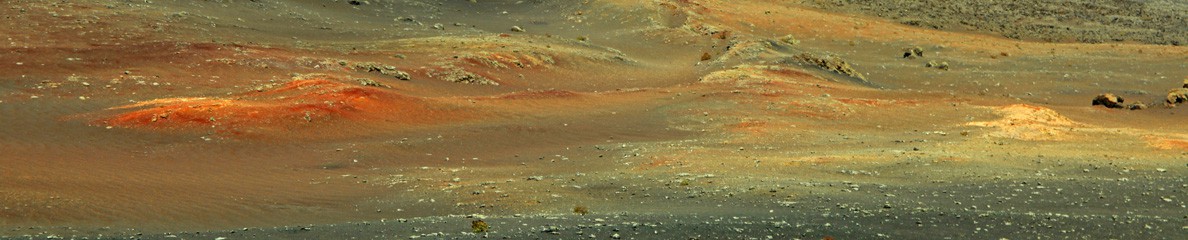
 En cliquant sur le lien ci-dessous, vous verrez une galerie de photos montrant les transformations subies par le cratère du Kelud et les effets de la cendre sur la région.
 By clicking on the link below, you will see a great gallery of photos showing the changes undergone by the crater of Mount Kelud, as well as the effects of the ash on the region.
 Claude Grandpey : Volcans et Glaciers