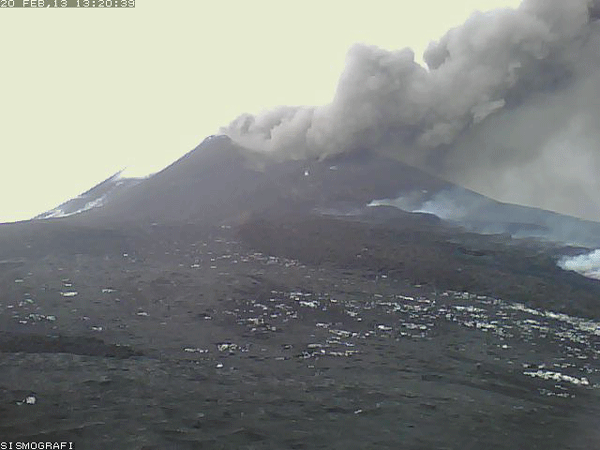
 13 heures: Ça recommence sur l’Etna! Moins de 12 heures après le début du précédent paroxysme, le Cratère SE reprend du service. Les webcams montrent toutefois une différence car une bouche s’est ouverte au pied du cône SE… En regardant la vue la plus générale des webcams Radio Studio 7, on a l’impression que ce sont en fait plusieurs bouches qui sont alignées au sud du Cratère SE. A moins que ce soit l’écoulement de la lave qui donne cette impression…
13h25: L’éruption continue, avec un volumineux panache de cendre émis par le Cratère SE.
13h35: Ça a l’air de se calmer. Le tremor étant réactualisé seulement toutes les 30 minutes, il est difficile de savoir si le paroxysme marque le pas. Les prochaines minutes nous le diront.
13h50: Le tremor ne faiblit pas et les webcams montrent que le Cratère SE est maintenant le siège d’une activité strombolienne.
14h25: L’activité est revenue sur les bouches au pied du cône SE . Le tremor n’a pas l’air de faiblir. Un volumineux panache de cendre s’échappe du cratère d’où semblent jaillir des fontaines de lave. Spectacle impressionnant!
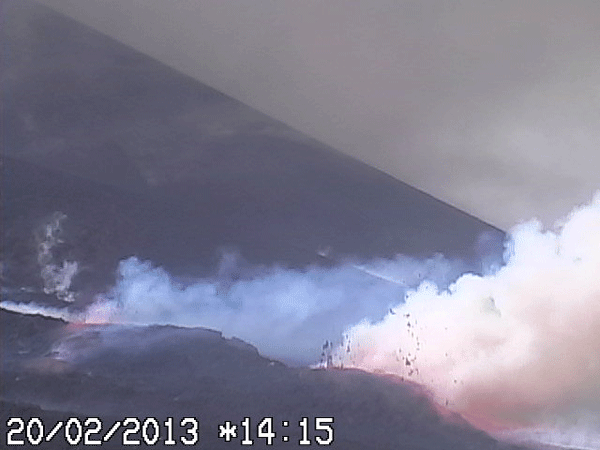
14:40: La lave jaillit de plusieurs bouches ouvertes au pied du cône. On peut raisonnablement penser qu’une fracture s’est ouverte dans ce secteur. Au vu du panache de vapeur à l’arrière-plan, on peut se demander si la lave ne s’écoule pas également derrière le cône SE en direction du sud. Le tremor continue à grimper!
14h50: On a vraiment l’impression que le panache de cendre se prolonge bien au-delà du cône SE. A se demander si une fracture n’est pas en train de le trancher. La vue générale du sommet tend à montrer qu’il s’agit plus qu’un puissant paroxysme.
16 heures: Après avoir atteint le pic d’activité décrit précédemment, le paroxysme est en train de prendre fin. Le tremor chute aussi vite qu’il a grimpé. L’événement a été particulièrement violent et a été marqué par l’ouverture d’une fracture ponctuée de bouches éruptives bien visibles sur la dernière capture d’écran ci-dessous. Reste à savoir maintenant pendant combien de temps l’Etna va se reposer.
20 heures: On remarquera qu’une émission de lave, certes peu abondante, a encore lieu en ce moment à partir des fissures qui se trouvent à la base SE du Nouveau Cratère SE. De plus, une lueur est visible au-dessus du cratère proprement dit.
 13:00: It’s starting again on Mount Etna! Less than 12 hours after the beginning of the last paroxysm, the SE Crater is active again. However, there is a diffrence this time: the webcams show that a new vent seems to have opened at the base of the cone… Looking at the broader view given by the Radio Studio 7 webcams, one gets the impression that several vents are aligned to the south of the SE Crater. This needs to be checked. It may be an impression given by the lava flow…
13:25: The eruption is going on with a voluminous ash plume coming out of the SE Crater.
13:50: The tremor is not decreasing and the webcams show that the SE Crater is the seat of strombolian activity.
13:35: It seems activity is decreasing now. As the tremor is updated every 30 minutes, it is difficult to know if the paroxysm is coming to an end.
14:25: Activity has moved back to the vents at the base of the SE cone. The tremor keeps increasing. A voluminous ash plume is coming out of the crater with probable lava fountains. What a show!
14:40: Lava is quirting from the vents at the base of the cone. A fracture has probably appeared in this area. Judging from the steam plume in the background, one may wonder whether lava is not also flowing beyond the SE cone toward the south. The tremor keeps increasing!
14:50: One gets the impression that the ash plume is starting well beyond the SE cone. Does that mean a fracture is slashing the cone? It seems to be more than a paroxysm, but a real summit eruption of Mount Etna.
16:00: After reaching the peak of activity I described previously, the paroxysm is coming to an end. The tremor is dropping as fast as it climbed. The event was quite violent and was characterised by the opening of a fissure with eruptive vents along it. They can be seen very clearly on the last screenshot here below. Now, the point is to know how long Etna will rest before the next paroxysm!
20:00: It should be noted that slow lava emission is continuing right now from the fissures at the southeastern base of the New South-East Crater. Besides, some glow can be seen above the crater proper.



Cette description du paroxysme n’aurait pas été possible sans la collaboration de l’INGV pour le tremor éruptif et des webcams Radio Studio 7 et LAVE pour suivre le déroulement des événements. Je les remercie chaleureusement.

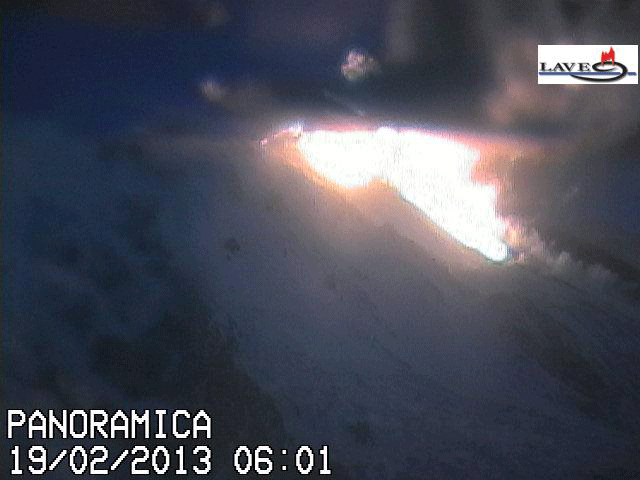
 L’Etna est en très grande forme! La phase de repos aura été de courte durée! Le tremor montre que le Nouveau Cratère SE a connu un nouvel épisode d’activité en deuxième moitié de nuit. Il a, semble-t-il, été plus bref que le précédent. Les conditions météo n’étaient pas optimales, mais la webcam L.A.V.E. montre qu’une activité strombolienne a de nouveau secoué le cratère, accompagnée d’un petit débordement de lave.
 Mount Etna is in great shape and only took a very short break. The tremor shows this morning that the New SE Crater was affected by a new episode of activity during the second half of the night. It looks as if it was shorter than the previous one. Weather conditions were not very good but the L.A.V.E. webcam shows some strombolian activity as well as a small lava overflow.


 Claude Grandpey : Volcans et Glaciers