Quatre Canadiens vont devoir rendre des comptes pour avoir piétiné les abords particulièrement fragiles du Grand Prismatic dans le Parc National de Yellowstone. Des vidéos réalisées par des témoins montrent les quatre individus en train de déambuler au bord du bassin hydrothermal.
https://youtu.be/wwZVr0VQvrU?t=2
Les quatre personnes ont été identifiées et des mandats d’arrêt ont été émis. Depuis le délit, les membres du groupe ont écrit sur Facebook qu’ils « parcourent le monde pour vivre, s’amuser et réaliser des vidéos de leurs aventures. » Ils commercialisent aussi une ligne de vêtements et publient les photos sur les réseaux sociaux.
Le groupe a par la suite reconnu que la décision de marcher sur le sol écologiquement sensible du Grand Prismatic était une «erreur regrettable» et a présenté ses excuses sur Facebook. Leurs propres photos les montrant en train de déambuler sur le site ont été retirées, mais de nombreux autres clichés réalisés par des personnes présentes ont été partagés en ligne.
On ne sait pas encore quelles sanctions seront prises contre les quatre Canadiens. Cependant, un journal du Wyoming rappelle qu’un touriste hollandais qui a fait s’écraser un drone dans le Grand Prismatic en 2014 a été condamné à une amende de 1000 dollars et a dû payer une somme supplémentaire de 2 200 dollars pour récupérer son engin.
Le Grand Prismatic est l’une des sources hydrothermales les plus populaires à Yellowstone. Un sentier en caillebotis a été aménagé pour que les visiteurs soient en sécurité et afin de protéger le site. De nombreux panneaux invitent à ne pas quitter le sentier.
Un porte-parole du Parc a par ailleurs déclaré que le groupe n’avait pas de permis de filmer sur le site, ce qui est obligatoire si le film est destiné à des fins commerciales. Filmer sans permis dans ces conditions à Yellowstone est un délit passible d’une amende pouvant aller jusqu’à 5000 dollars.
Cet incident à Yellowstone est le dernier d’une série montrant ce que l’on ne doit pas faire dans un parc national. La semaine dernière, des touristes ont embarqué un bébé bison dans leur 4X4 et sont repartis avec l’animal parce qu’ils pensaient qu’il avait froid. L’animal a ensuite été euthanasié. Il y a également de nombreux cas de blessures de touristes qui s’étaient approchés trop près de bisons pour réaliser des selfies.
Quand je vous dis que la bêtise humaine n’a pas de limites…
Source: The Huffington Post.
—————————————
 Four Canadians face criminal charges for stomping on the ecologically sensitive grounds of Yellowstone National Park’s Grand Prismatic Spring. Footage taken by eyewitnesses showed the four people walking on the delicate grounds of the spring.
They have been identified and warrants have been issued for their arrest.
The group wrote on Facebook that they “travel the world for a living and make fun and adventurous videos.” They also sell a line of clothing and post photos on social media.
The group later called the decision to walk on the ecologically sensitive grounds of the Grand Prismatic Spring an “unfortunate error” and apologized on Facebook. They also removed the photos of themselves walking on the spring, but many images of them off the trail were shared online:
It’s not yet clear what penalties the four Canadians will face. However, a Wyoming newspaper reported that a Dutch tourist who crashed a drone into the spring in 2014 was fined $1,000 and had to pay an additional $2,200 in restitution.
The Grand Prismatic is one of the most popular features in Yellowstone. It has a boardwalk to keep visitors safe and protect the grounds, and there are numerous signs warning people not to venture out of it.
In addition, a park spokesman said that the group didn’t have a permit to film on the location, which is required for commercial efforts. Filming without a permit is a misdemeanour with a potential fine of up to $5,000.
This incident was the latest in a string of examples at Yellowstone showing exactly what you shouldn’t do in a national park. Last week, tourists pulled a baby bison into their SUV and drove off with it because they thought it was cold. The animal was later euthanized.
There have also been a series of injuries caused by tourists getting too close to bison to pose for selfies.
Source: The Huffington Post.
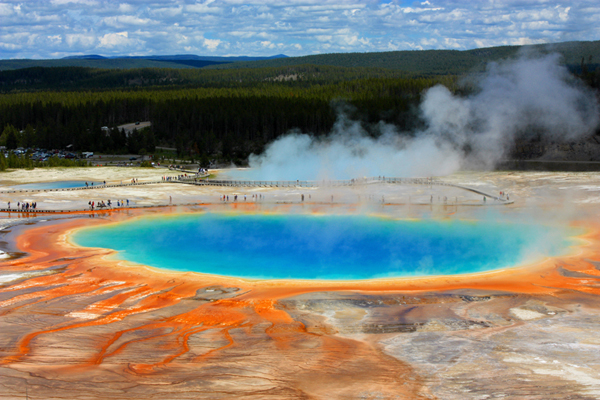
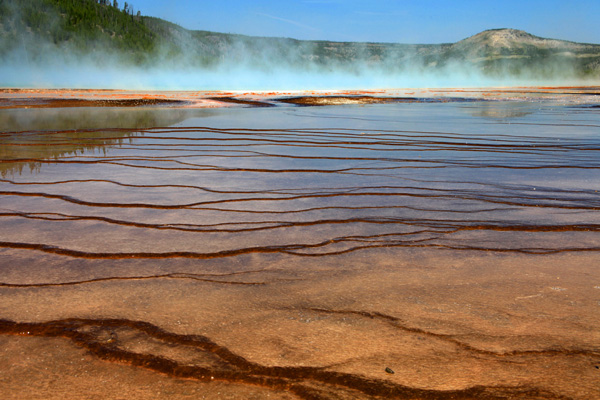
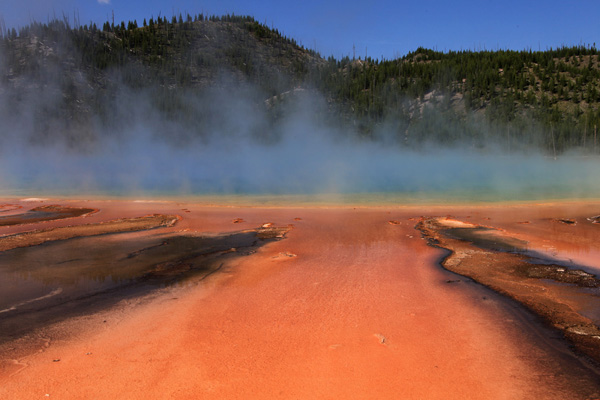
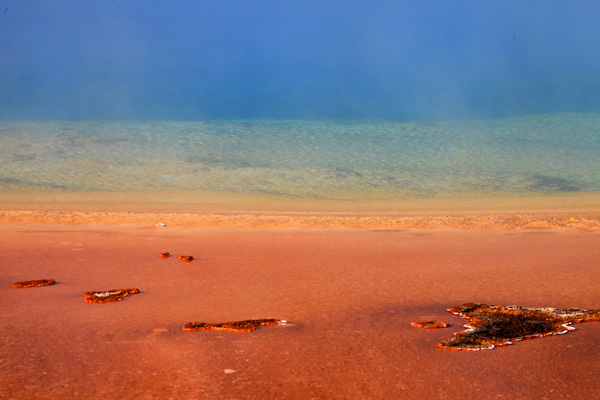
Le Grand Prismatic: Une merveille de la Nature.

Il est interdit de faire voler des drones à Yellowstone et dans tous les parcs nationaux aux Etats Unis.
(Photos: C. Grandpey)