 Dans une note publiée le 31 août 2019, j’écrivais: « Le président Joko Widodo a annoncé le 26 août 2019 que la capitale Jakarta sera transférée vers un site de l’est de l’île de Bornéo. Bornéo est la 4ème plus grande île du monde (743 330 km2) ; elle est partagée entre 3 pays : la Malaisie, le Sultanat de Brunei et l’Indonésie. Avec 73% de l’île, la partie indonésienne, appelée Kalimantan, en occupe la majeure. Le site proposé, entre les villes de Balikpapan et Samarinda, est situé dans une région de forêt tropicale dotée d’une grande biodiversité. Le site a été d’abord choisi parce qu’il présente un risque faible de désastre naturel, que ce soit au niveau des inondations, séismes, tsunamis ou éruptions volcaniques, bien qu’une vaste partie de l’archipel indonésien soit située sur la Ceinture de Feu du Pacifique. Le président a précisé que le nouveau site a aussi été choisi « parce que sa localisation est stratégique, au centre de l’Indonésie. »
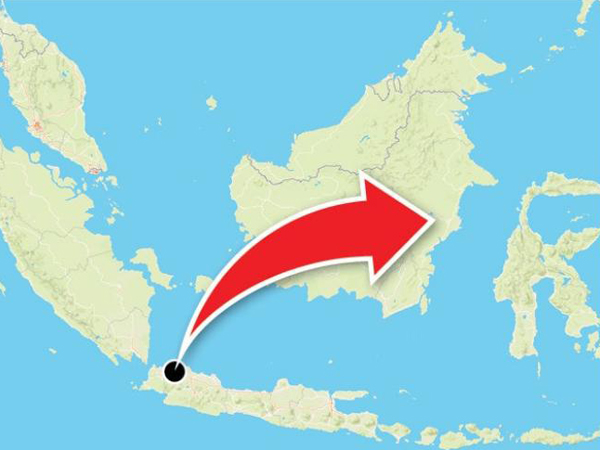
Le 17 août 2024, jour de la Fête de l’Indépendance de l’Indonésie restera une date importante pour le pays. C’est le jour où la capitale a changé de nom et de situation géographique. Il faut désormais oublier Jakarta sur l’île de Java et souhaiter la bienvenue à Nusantara (« archipel » en indonésien), dans la province de Kalimantan, sur l’île voisine de Bornéo. La cérémonie d’inauguration a eu lieu le 17 août, mais le décret officiel de transfert du statut de capitale pourrait avoir lieu après la prise de pouvoir du président élu Prabowo Subianto, en octobre prochain. L’inauguration marque la fin de la première des cinq étapes de construction de la ville qui devrait accueillir deux millions de personnes à horizon 2045.
Le transfert de la capitale indonésienne sur l’île de Bornéo est une conséquence du réchauffement climatique et de la montée du niveau des océans. De plus, Jakarta s’enfonce de 20 à 25 centimètres par an sous son propre poids et suffoque sous les nuages de particules fines. Passée de 500 000 habitants en 1945 à 11 millions actuellement (31 millions pour l’agglomération dans son ensemble), Jakarta étouffe littéralement, avec des problèmes de logement, d’infrastructures et d’alimentation en eau.
Sur l’île de Bornéo, Nusantara se veut une ville « verte », érigée en symbiose avec la nature. Avec 4 600 lames de cuivre pour symboliser des ailes, le nouveau palais présidentiel représente l’homme-oiseau Garuda, figure de la mythologie hindouiste. Garuda est aussi le nom de la compagnie aérienne nationale. Autour des immeubles flambant neufs, un tramway, un viaduc, des jardins dessinent les contours d’une ville aux airs futuristes.
Les autorités indonésiennes assurent que Nusantara est construite dans le respect de la faune et de la flore présentes sur place. Il devrait y avoir 70% d’espaces végétaux sur l’ensemble de la ville et 50% dans la ville administrative. Nusantara souhaite tirer 100% de son énergie de sources renouvelables, surtout du solaire et de l’hydraulique.
Tout le monde n’est pas d’accord avec le choix de la province de Kalimantan pour implanter la nouvelle capitale. Les associations et la population alertent sur les risques environnementaux liés aux travaux de construction toujours en cours. La zone abrite, par exemple, une importante population d’orangs-outans.
Les visiteurs des premières constructions ont émis des doutes sur les performances des bâtiments au niveau environnemental. Ils ont constaté, entre autres, qu’il y avait beaucoup de béton, une faible ventilation naturelle et le recours incessant à l’air conditionné.
Certaines communautés locales ont fait part de leurs craintes d’être un jour expropriés, ou de devoir renoncer à leurs activités de pêche. En effet, le barrage construit pour alimenter la future ville en eau a modifié le niveau des rivières.
L’ONG Forest Watch Indonésie explique qu’entre 2018 et 2021, la déforestation dans la zone prévue pour établir la nouvelle capitale a atteint 18 000 hectares, dont 14 000 hectares de forêt de production. L’organisation ajoute que la pollution et les dégradations liées au chantier de la capitale endommagent les fragiles écosystèmes, comme une forêt protégée voisine qui abrite les derniers orangs-outangs de Bornéo.
Pour répondre à ces critiques, les autorités indonésiennes font valoir que dans le plan de gestion de la biodiversité à Nusantara, il est prévu une stratégie à long terme pour restaurer les écosystèmes détruits par des décennies de déforestation, ainsi que par le chantier. Il est notamment prévu de replanter des espèces locales, donc une forêt tropicale à la place des forêts d’eucalyptus.
Les autorités parient sur le développement rapide de Nusantara. Comme je l’ai écrit plus haut, à l’horizon 2045, la nouvelle capitale doit compter une population de près de deux millions d’habitants.
Source : médias d’information internationaux.
TF1 a diffusé un petit reportage que l’inauguration de Nusantara qui résume assez bien la situation :
https://www.tf1info.fr/replay-tf1/videos/video-bonjour-du-16-aout-2024-2314912.html

Illustration du transfert de Jakarta vers Kalimantan (Source ; The Jakarta Post)
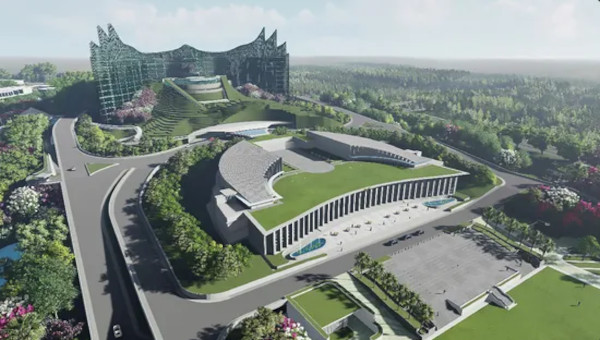
Vue synthétisée du futur palais présidentiel de Nusantara (Source : presse indonésienne)
————————————————–
 In a post published on August 31st, 2019, I wrote: « President Joko Widodo announced on August 26th, 2019 that Jakarta, the capital, will be transferred to a site on the east of the island of Borneo. Borneo is the 4th largest island in the world (743,330 km2); it is shared between 3 countries: Malaysia, the Sultanate of Brunei and Indonesia. With 73% of the island, the Indonesian part, called Kalimantan, occupies most of it. The proposed site, between the towns of Balikpapan and Samarinda, is located in a rainforest area with high biodiversity. The site was initially selected because of low risk of natural disaster, whether flood, earthquake, tsunami or volcanic eruption, although a large part of the Indonesian archipelago is located on the Pacific Ring of Fire. The president said the new site was also chosen « because of its strategic location in central Indonesia. »
August 17, 2024, Indonesia’s Independence Day, will remain an important date for the country. It was the day when the capital city changed its name and location. We must now forget Jakarta on the island of Java and welcome Nusantara (« archipelago » in Indonesian), in the province of Kalimantan, on the neighboring island of Borneo. The inauguration ceremony took place on August 17th, but the official decree transferring the status of capital is likely to take place after President-elect Prabowo Subianto takes office in October. The inauguration marks the end of the first of five construction phases of the city, which is expected to accommodate two million people by 2045.
The transfer of the Indonesian capital to the island of Borneo is a consequence of global warming and rising sea levels. In addition, Jakarta is sinking 20 to 25 centimeters per year under its own weight and is suffocating under clouds of fine particles. Having grown from 500,000 inhabitants in 1945 to 11 million today (31 million for the entire metropolitan area), Jakarta is literally suffocating, with problems of housing, infrastructure and water supply.
On the island of Borneo, Nusantara aims to be a « green » city, built in symbiosis with nature. With 4,600 copper blades to symbolize wings, the new presidential palace represents the bird-man Garuda, a figure from Hindu mythology. Garuda is also the name of the national airline. Around the brand new buildings, a tramway, a viaduct and gardens outline the contours of a city with a futuristic appearance.
The Indonesian authorities assure that Nusantara is built with respect for the fauna and flora present on site. There will be 70% green spaces throughout the city and 50% in the administrative city. Nusantara wants to get 100% of its energy from renewable sources, especially solar and hydraulic.
Not everyone agrees with the choice of the province of Kalimantan to locate the new capital. Associations and the population warn of the environmental risks linked to the construction work still in progress. The area is home, for example, to a large population of orangutans.
Visitors to the first constructions have expressed doubts about the environmental performance of the buildings. They noted, among other things, that there was a lot of concrete, little natural ventilation and the constant use of air conditioning.
Some local communities have expressed their fears of being expropriated one day, or of having to give up their fishing activities. Indeed, the dam built to supply the future city with water has changed the level of the rivers.
The NGO Forest Watch Indonesia explains that between 2018 and 2021, deforestation in the area planned to establish the new capital reached 18,000 hectares, including 14,000 hectares of production forest. The organization adds that pollution and degradation linked to the construction of the capital are damaging fragile ecosystems, such as a nearby protected forest that is home to the last orangutans of Borneo.
To respond to these criticisms, the Indonesian authorities argue that the biodiversity management plan for Nusantara includes a long-term strategy to restore ecosystems destroyed by decades of deforestation, as well as by the construction. In particular, there is a plan to replant local species, i.e. a tropical forest in place of eucalyptus forests.
The authorities are betting on the rapid development of Nusantara. As I put it above, by 2045, the new capital is expected to have a population of nearly two million inhabitants.
Source: International news media.


 Claude Grandpey : Volcans et Glaciers