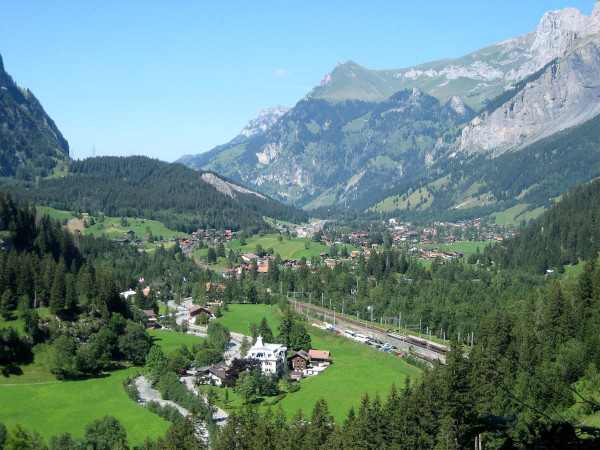
 Le 26 juillet 2022, dans une note intitulée « Village sous la menace de la montagne », j’avais cité l ‘exemple de Kandersteg, un village d’environ 1 300 habitants dans les Alpes suisses, entouré de vallées escarpées, de glaciers et de sommets imposants.
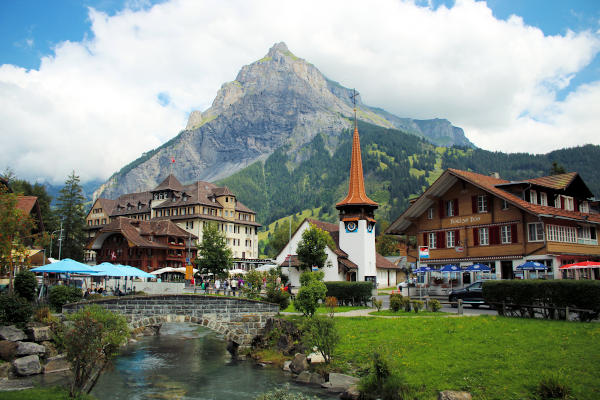
Crédit photo : Wikipedia
Le village fait à nouveau la Une des journaux en 2026, pour la même raison qu’en 2022. Je viens d’indiquer que l’année 2026 a enregistré un nombre record d’effondrements dans les Alpes, à cause des différentes canicules subies par les glaciers et les parois rocheuses où le permafrost de roche n’est plus en mesure d’assurer leur stabilité.
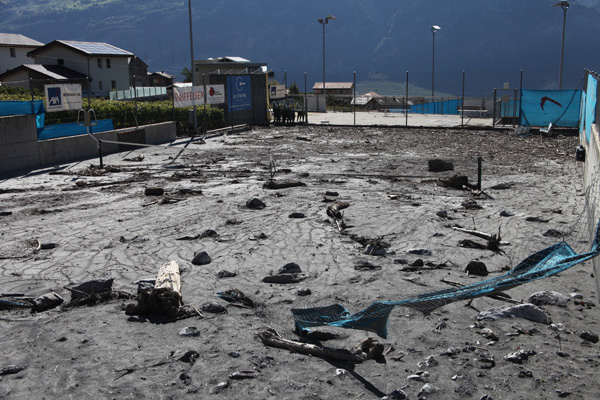
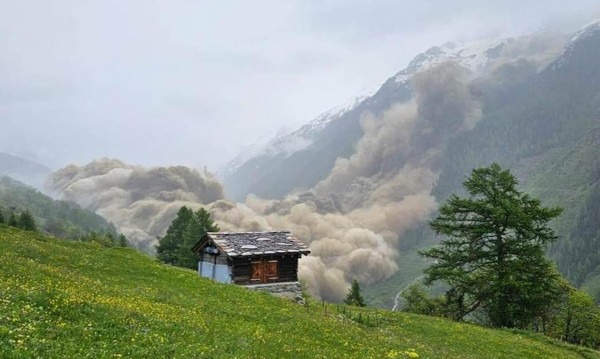
Au-dessus de Kandersteg se trouve le Spitze Stei (voir photo ci-dessus), une formation rocheuse instable dont le volume pourrait engendrer un éboulement potentiellement deux fois plus important que celui qui a enseveli une partie de Blatten en mai 2025.
Crédit photo : presse suisse
Les habitants vivent avec ce risque sans pour autant avoir peur. On sent une certaine fatalité au sein de la population. Des dépliants indiquent les itinéraires d’évacuation et cartographient les zones susceptibles d’être touchées. À cause du risque d’effondrement, la montagne fait l’objet d’une surveillance constante. Selon les autorités, en cas de menace réelle, un préavis d’au moins 24 heures serait donné avant un effondrement majeur.
Les géologues expliquent que le réchauffement climatique est la cause du problème. Comme je l’ai écrit plus haut, à mesure que les glaciers reculent et que le pergélisol dégèle, l’eau s’infiltre dans les fissures de la roche et le sol gelé qui assurait autrefois la cohésion des versants. Ainsi fragilisé, le sol perd sa capacité de retenue.
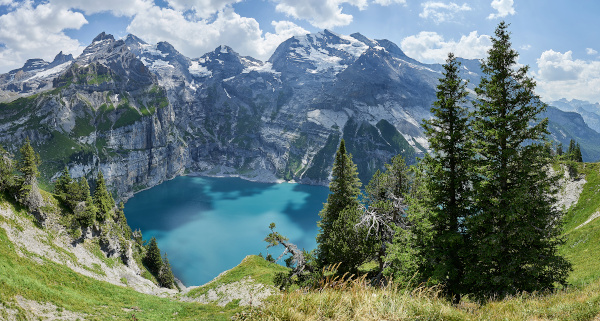
La Suisse, qui compte plus de glaciers alpins que tout autre pays européen, a perdu 4 % de son volume glaciaire en 2023, après une perte de 6 % l’année précédente. Le danger pour le village de Kandersteg ne se limite pas aux chutes de pierres. Un effondrement pourrait frapper le lac d’Oeschinen, situé en contrebas, et propulser une vague en direction du village.
Crédit photo : Wikipedia
Anticipant sur une hausse des températures qui ne fait qu’accélérer, les scientifiques entrevoient une situation qui pourrait devenir encore plus préoccupante. Un expert climat chez Greenpeace a déclaré : « Le problème va s’amplifier. Il se peut même qu’un jour nous devions abandonner certaines vallées ou certains villages, car il deviendra impossible d’y vivre. »
Source : différents médias européens.
———————————————–
 On July 26, 2022, in a post titled « Village Threatened by the Mountain, » I cited the example of Kandersteg, a village of about 1,300 inhabitants in the Swiss Alps, surrounded by steep valleys, glaciers, and towering peaks.
The village is making headlines again in 2026 for the same reason as in 2022. I have just explained that 2026 saw a record number of collapses in the Alps, driven by the various heatwaves affecting glaciers and rock faces where rock permafrost can no longer ensure stability.
Above Kandersteg lies the Spitze Stei, an unstable rock formation; its volume could trigger a rockslide potentially twice the size of the one that buried part of Blatten in May 2025.
The residents are confronted with this risk but do not necessarily live in fear; there is a sense of resignation among the population. Leaflets outline evacuation routes and map out the areas likely to be affected. Due to the risk of collapse, the mountain is under constant monitoring. According to the authorities, should a real threat arise, at least 24 hours’ notice would be given before a major collapse.
Geologists explain that global warming is the root cause of the problem. As mentioned earlier, as glaciers retreat and permafrost thaws, water seeps into cracks in the rock and the frozen ground that once held the slopes together. Weakened in this way, the ground loses its ability to hold the mass in place.
Switzerland, home to more Alpine glaciers than any other European country, lost 4% of its glacial volume in 2023, following a 6% loss the previous year. The danger facing Kandersteg is not limited to falling rocks; a collapse could strike Lake Oeschinen below, sending a wave surging toward the village.
Anticipating a rise in temperatures that is only accelerating, scientists foresee a situation that could become even more concerning. A climate expert at Greenpeace stated: « The problem will intensify. We might even have to abandon certain valleys or villages one day, because living there will become impossible. »
Source: various European media outlets.
 Voici un reportage comme je les aime, objectif et abordant les différentes facettes d’un problème.
 Here is the kind of report I like very much, objective and addressing the different aspects of a problem.