
 Les volcanologues islandais sont peut-être « très calés » (dixit un chercheur du laboratoire Magmas et Volcans de Clermont-Ferrand), mais des articles parus sur le site Iceland Monitor montrent que leurs points de vue divergent quant à la situation sur la péninsule de Reykjanes et à la probabilité d’une éruption.
Le volcanologue Þorvaldur Þórðarson explique qu’il est impossible de prédire si et quand une nouvelle éruption se produira sur la péninsule, car les hypothèses utilisées jusqu’alors pour effectuer des prévisions ne sont plus fiables. La dernière éruption sur la chaîne de cratères de Sundhnúkagígar a débuté le 20 novembre 2024 et a duré jusqu’au 9 décembre. Cependant, les prévisions concernant la date d’une nouvelle éruption se sont jusqu’à présent révélées inexactes.
Þórðarson a noté que l’inflation, qui montrait une hausse régulière, a considérablement ralenti en mars. « La courbe s’aplatit maintenant. Cela signifie peut-être que la situation est sur le point de se terminer. » Malgré ce ralentissement apparent, le volcanologue souligne que les modèles antérieurs de chronologie des éruptions ne sont plus valables. « Une éruption peut tout aussi bien commencer demain, la semaine prochaine, ou ne pas avoir lieu du tout. »
Quelques jours avant Þorvaldur Þórðarson, Páll Einarsson, professeur émérite de géophysique à l’Université d’Islande, avait proposé une approche différente de la situation sur la péninsule de Reykjanes. Selon lui, l’inflation continue et les séismes fréquents montrent qu’une nouvelle éruption pourrait être imminente. « L’inflation se poursuit, et les séismes se produisent en conséquence. » Tout porterait donc à croire qu’une intrusion magmatique se produira sous peu. Einarsson a ajouté que la plupart des paramètres montre que la huitième éruption à Sundhnúkagígar est imminente.
Bien que le moment précis de l’éruption reste incertain, le scientifique souligne que rien ne permet de prédire quand elle se produira. « La situation montre qu’elle pourrait se déclencher à tout moment, mais elle pourrait aussi être retardée. »
Depuis l’éruption de décembre 2023, l’intervalle entre les éruptions est de plus en plus long. Selon lui, ce retard est susceptible de provoquer une éruption plus puissante que les précédentes.
Il explique que divers scénarios sont possibles après la prochaine éruption, notamment un déplacement du flux magmatique vers d’autres zones de la péninsule de Reykjanes.
À la lecture des avis des deux scientifiques, on peut conclure que la meilleure chose à faire est d’attendre et voir. La Nature décidera de ce qui se passera. Il pourrait y avoir une éruption… ou pas d’éruption. En écrivant ceci, je ne dénigre pas les deux volcanologues islandais (comme le chercheur de Clermont m’en a accusé) qui font de leur mieux. Je confirme simplement ce que j’ai déjà écrit à plusieurs reprises : « Nous ne sommes pas capables de prévoir les éruptions volcaniques.»
Source : Iceland Monitor.
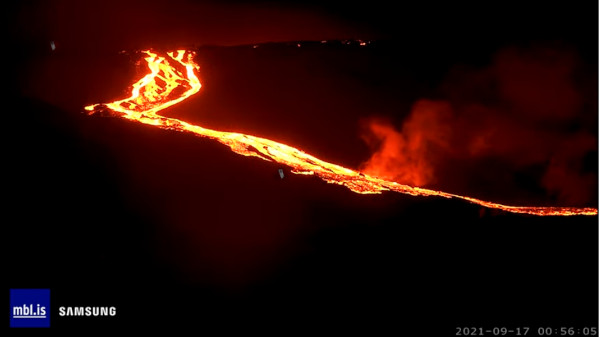
La lave coulera-t-elle à nouveau sur la péninsule de Reykjanes?
——————————————————-
 Icelandic volcanologists may be highly qualified (so told me a researcher at the Magma et Volcans Lab in Clermont Ferrand), but in Iceland they hold different points of view about the situation on the Reykjanes Peninsula and the likemihood of an eruption.
Volcanologist Þorvaldur Þórðarson cautions that it is impossible to predict if or when another eruption will occur on the peninsula, as the assumptions previously used to forecast eruptions are no longer reliable. The last eruption in the Sundhnúkagígar crater row began on November 20, 2024, and lasted until December 9. However, predictions about the timing of a new eruption have so far proven inaccurate.
Þórðarson has noted that inflation, which had been steadily increasing, has slowed considerably in March. “The curve is now flattening. Maybe that means this is just about to end.” Despite the apparent slowdown, the volcanologist emphasizes that previous models for eruption timing are no longer valid. “An eruption could just as easily begin tomorrow, next week, or not at all.
A few days before Þorvaldur Þórðarson, Páll Einarsson, professor emeritus of geophysics at the University of Iceland, held a different approach to the situation on the Reykjanes Peninsula. In his opinion, the ongoing inflation and frequent earthquakes on the Reykjanes Peninsula suggest that a new eruption may be imminent. « The inflation continues, and earthquakes are occurring correspondingly. Everything points to a magma run before too long. » Einarsson added that most indicators suggest that the eighth eruption in the Sundhnúkagígar crater row is about to occur. T
While the precise timing of the eruption remains unclear, the scientist emphasizes that there are no definitive signs to predict when it will occur. « The situation suggests that it could erupt at any time, but it could also be delayed. »
Since the December 2023 eruption, the period between eruptions has been longer than ever before. Einarsson does not rule out the possibility that this delay could result in a more powerful eruption than those preceding it.
Einarsson explained that various scenarios are possible after the next eruption, one of which is that the magma flow could shift to other areas on the Reykjanes Peninsula.
Reading the opinions of the two scientists, we can conclude that the thing to do is to wait and see. Nature will decide what will happen. There may be an eruption…or no eruption. Writing this, I am not denigrating the two Icelandic volcanologists (as the Clermont researcher accused me of doing) . I’m just confirming what I wrote severakl times before : We are not yet able to predict eruptions.
Source : Iceland Monitor.
 Le 23 mai 2024, un volcanologue islandais a déclaré dans un article sur le site Iceland Monitor qu’il était « très probable qu’il y ait une éruption volcanique au niveau du cratère Sundhnúkagígar, mais il faudra attendre encore deux semaines avant que quelque chose se produise. » Le scientifique rappelle au public qu’environ 17 millions de mètres cubes de magma supplémentaires sont entrés dans la chambre magmatique depuis le début de la dernière éruption sur la chaîne de cratères de Sundhnúkagígar le 16 mars. Il ajoute : « Il n’y a pas de formation de tunnel ou quelque chose comme ça, mais le magma s’accumule dans ce compartiment de stockage peu profond et provoque des tensions dans le toit du réservoir ; ces tensions semblent se relâcher, comme le montrent les secousses sismiques qui suivent le tunnel de Sundhnúkagígar. » Le scientifique pense que l’éruption ressemblera à celle qui a débuté le 16 mars et s’est terminée le 9 mai.
 On May 23rd, 2024, an Icelandic volcanologist declared on the website Iceland Monitor that it was « most likely that there would be a volcanic eruption at the Sundhnúkagígar crater row, but it might take two more weeks before something happened. » The scientist reminds that public that around 17 million cubic metres of magma have been added to the magma chamber since the last eruption on the Sundhnúkagígar crater row started on March 16th.. He added : « There is no tunnel forming or anything like that, but the magma is accumulating in this shallow storage compartment and it causes tension in the roof on top, which seems to be loosening in these tremors following the Sundhnúkagígar tunnel. » He expected the eruption to be similar to the eruption that began on March 16th and ended on May 9th.
 Claude Grandpey : Volcans et Glaciers