Le Lassen Peak (Californie) est le volcan le plus méridional de la Chaîne des Cascades. La dernière éruption majeure s’est produite en 1915, mais le volcan est resté actif pendant plusieurs années. Le 23 août 1917, trois adolescents se dirigeaient vers le sommet de la montagne lorsqu’un nouvel épisode éruptif a commencé. En 2017, comme plusieurs années auparavant, ils ont gravi le Lassen Peak le 23 août en souvenir de ce moment mémorable. Ils expliquent aujourd’hui que l’éruption a commencé avec « un grondement semblable à une douzaine de locomotives à vapeur en train de démarrer ». Le cratère expulsait de la cendre et des roches à seulement une vingtaine de mètres de l’endroit où se trouvait le premier adolescent à avoir atteint le sommet. Après avoir regardé le spectacle quelques minutes, il décida de redescendre en courant pour se mettre en sécurité. Après avoir parcouru une centaine de mètres, il rencontra son frère qui n’avait pas encore atteint le sommet. Ils ont remarqué que le vent emportait la cendre à l’opposé de l’endroit où ils se trouvaient et ils décidèrent de remonter pour mieux observer l’événement. Le volcan envoyait des nuages de cendre et des roches de quelques dizaines de centimètres de diamètre à intervalles d’une trentaine se secondes. Chaque explosion était un peu plus forte que la précédente et, au bout d’un moment, le nuage de cendre et de matériaux d’une centaine de mètres de hauteur leur fit réaliser qu’il valait mieux s’éloigner du cratère. Ils ont cependant eu le temps de prendre cinq bonnes photos de l’éruption. On peut voir l’une d’elles ci-dessous.
Source: ChicoER News.
————————————-
 Lassen Peak (California) is the southernmost volcano of the Cascade Range. The last major eruption occurred in 1915, but the volcano remained active for several years. On August 23rd 1917, three teenagers were on their way to the top of the mountain when a new eruptive episode started. This year, like several times before, they climbed Lassen Peak on August 23rd as a memory of this impressive moment. They explain that the eruption started with “a roar that sounded like a dozen steam locomotives getting underway.” Ashes and rocks were being blown from the crater, which was only 25 metres from where the first teenager who reached the top first was standing. After a few minutes of watching, he decided running for safety was a good idea. About 100 metres later he came upon his brother, who had not made it to the top. They observed the wind was blowing the ashes in the other direction, and decided to climb back up for a closer look. The volcano was sending out puffs of smoke and rocks a few tens of centimetres in diameter on half-minute intervals. Each burst was a little bigger than the one before, and after a time the 100-metre-high cloud of ash, smoke and rock brought them to their senses and they high-tailed it down from the crater. They had, however, snapped off five remarkable pictures which all came out. One of them can be seen here below.
Source: ChicoER News.

Crédit photo: Ord Canfield
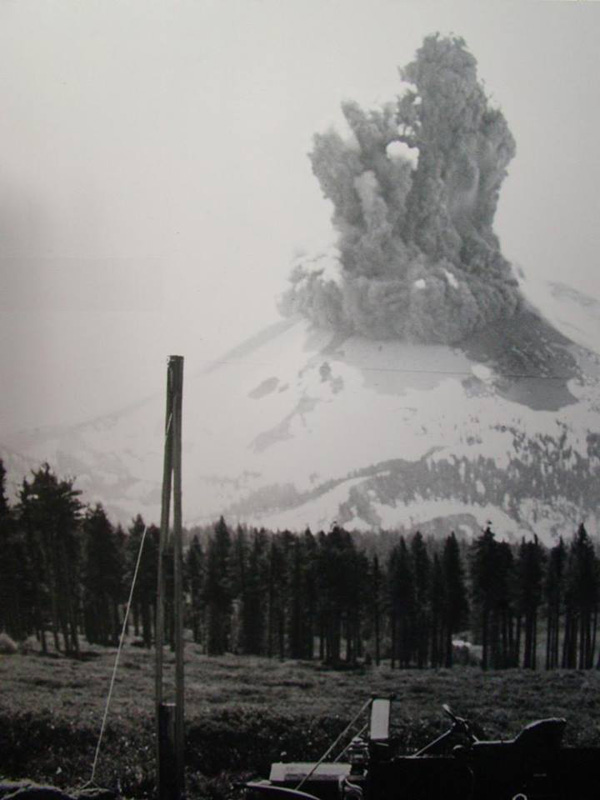
Eruption du Lassen peak en 1915 (Crédit photo: B.F. Loomis)
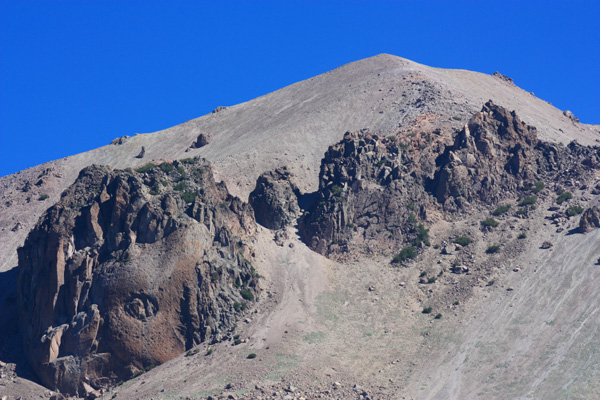
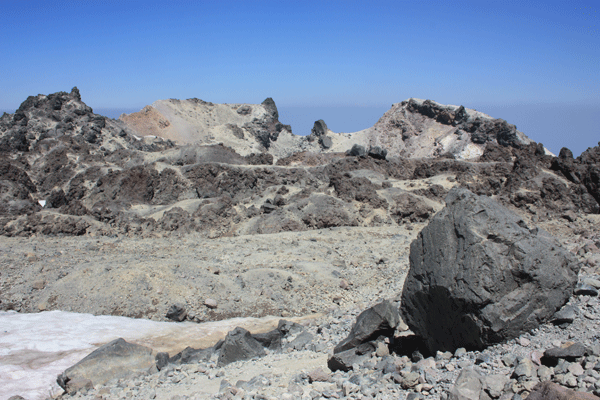

Vues du lassen Peak en 2008 (Photos: C. Grandpey)