 Voici une information qui a été mise sous silence par la plupart des médias français, alors qu’elle a provoqué un mouvement de panique dans le nord de l’Espagne, avec un impact environnemental non négligeable. Il n’y a pas eu de morts, alors ça n’intéresse pas les journalistes.
Plus de 160 000 habitants ont été placés en confinement suite à l’incendie qui s’est déclaré dans une usine chimique de Vilanova i la Geltrú, dans le nord-est de l’Espagne, à 48 km au sud de Barcelone. Cet incendie a émis un important panache de chlore gazeux toxique au-dessus de la région le 10 mai 2025.
La Protection civile a signalé avoir reçu des milliers d’appels d’habitants inquiets demandant des nouvelles et de l’aide suite à l’incendie. Bien qu’aucune victime n’ait été signalée, plusieurs personnes ont souffert d’irritation respiratoire due à l’inhalation de vapeurs toxiques, et certaines ont reçu des soins.
Les autorités ont fermé les routes et les gares à proximité de la zone touchée par l’incendie. Une zone d’exclusion de 500 m a été établie autour de l’usine pour des raisons de sécurité.
Le chlore s’enflamme difficilement, mais lorsqu’il prend feu, il est très difficile à éteindre. Bien que la cause de l’incendie reste incertaine, on pense qu’il pourrait avoir été causé par une batterie au lithium.
L’incendie a été maîtrisé et l’ordre de confinement a été levé plus tard dans la journée. Les autorités locales ont œuvré pour éliminer en toute sécurité les matériaux brûlés et prévenir la propagation des résidus toxiques. Les habitants ont été invités à limiter leurs activités de plein air, même après la levée de l’alerte, en raison de la présence de toxines en suspension dans l’air.
Source : Médias européens.

Crédit photo: presse espagnole
—————————————————
 Here is a piece of news that has been ignored by most French media, even though it caused panic in northern Spain, with a significant environmental impact. There were no deaths, so journalists were not interested.
Over 160 000 residents were placed under confinement after a fire broke out at a chemical factory in Vilanova i la Geltrú, northeastern Spain, 48 km (30 miles) south of Barcelona, releasing a large plume of toxic chlorine gas over the region on May 10, 2025.
The Civil Protection Service reported receiving thousands of calls from concerned residents seeking updates and assistance following the fire. While no casualties were reported, several residents experienced respiratory irritation due to inhalation of toxic fumes, with some receiving medical treatment.
Authorities closed roads and train stations near the affected area to prevent public access. A 500 m exclusion zone was established around the facility due to safety concerns.
It is very difficult for chlorine to catch fire, but when it does so it is very hard to put it out. Although the cause of the blaze remains unclear, it is believed that it might have been caused by a lithium battery.
The fire was brought under control, and the confinement order was lifted later in the day. Local authorities worked to safely dispose of burnt materials and prevent the spread of toxic residues. Residents were advised to limit outdoor activities even after the alert was lifted due to lingering airborne toxins.
Source : European news media.
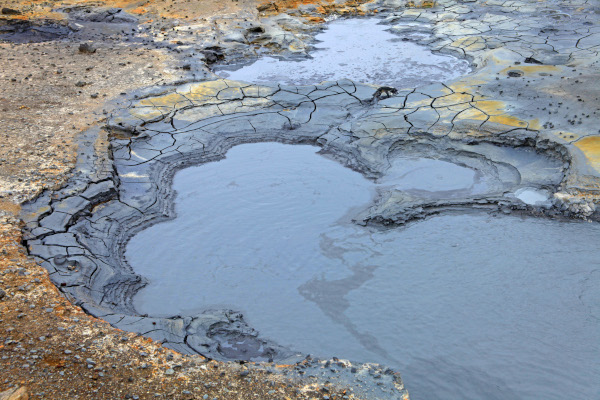
 Krýsuvík est une zone géothermale bien connue sur la péninsule de Reykjanes. Comme beaucoup d’autres sites à proximité, elle se trouve sur la dorsale médio-atlantique. La zone englobe plusieurs sites géothermaux parmi lesquels Seltún est le plus visité par les touristes. Des sentiers en bois ont été installés afin de parcourir ce lieu en toute sécurité parmi les fumerolles, les sources d’eau bouillante et les marmites de boue.
 Krýsuvík is a geothermal area located on the Reykjanes peninsula. Like many other sites nearby it is located on the Mid-Atlantic Ridge. The area consists of various geothermal fields among which Seltún is the most popular among tourists. Wooden pathways have been installed which allow to safely walk between the numerous fumaroles and mud pots with their boiling water.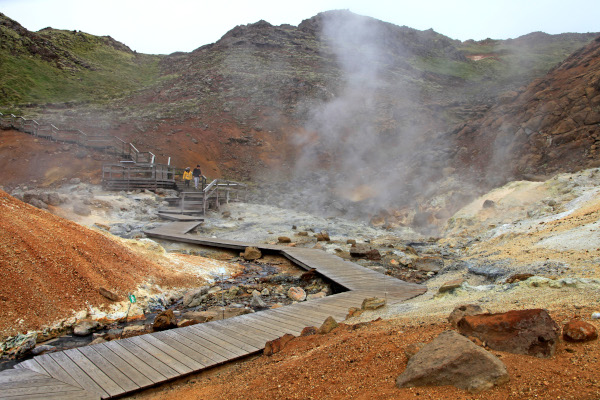


 Claude Grandpey : Volcans et Glaciers