 Les autorités ont décrété l’évacuation de plusieurs bourgades situées à proximité du volcan qui a connu une brève mais violente crise éruptive jeudi soir, avec niveau d’alerte rouge (le maximum).
Neuf personnes ont été blessées par des coulées de boue dans le lit de la rivière Paez qui traverse les villes de Paicol, La Plata et Belalcázar à proximité du volcan. Les victimes ont été évacuées vers l’hôpital de La Plata.
Plus d’une vingtaine de maisons et cinq ponts ont par ailleurs été détruits.
Les habitants de la région ont récemment procédé à des exercices d’évacuation afin d’être en mesure d’affronter une éruption. Les autorités ont aménagé des refuges dans des secteurs sûrs pour héberger les personnes qui ont été évacuées.
 Authorities ordered the evacuation of several small towns near the volcano, after a brief but violent eruption on Thursday night that forced the declaration of a red alert.
Nine people were injured by landslides on the Paez River which runs through three towns (Paicol, La Plata and Belalcázar) near the mountain.The injured were taken to a hospital in La Plata.
More than 20 homes and 5 bridges were destroyed.
The inhabitants of the region recently conducted evacuation drills in order to avoid bigger problems in case of an eruption. The authorities have prepared shelters in safe areas for those evicted.
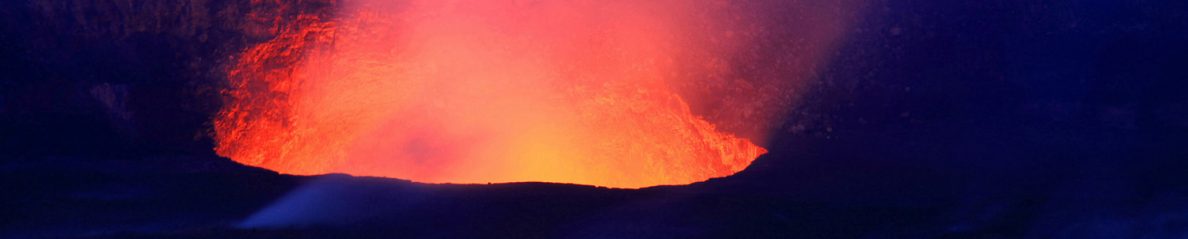
 Alors que la situation reste inchangée sur les autres volcans de la planète, il en va de même sur le Kilauea où la lave continue à s’écouler tranquillement en tunnels vers le Pacifique. La seule évolution notable au cours des dernières semaines est la faiblesse de l’incandescence émise par la bouche de l’Halema’uma’u ; elle est d’ailleurs quasiment invisible sur la webcam. Cette évolution correspond probablement à une baisse du niveau du magma qui se traduit par ailleurs par des dépôts de téphra moins importants autour de la bouche.
 While the situation is unchanged on the other volcanoes of the world, it is just the same on Kilauea where lava is quietly travelling in tunnels toward the Pacific Ocean. The only noteworthy evolution over the past few weeks is the weakness of the incandescence in Halema’uma’u vent. By the way, it can rarely be seen on the webcam images. This evolution probably corresponds with a lower level of magma inside the vent, which is also revealed by lighter deposits of tephra around the vent.
 Hier a commencé à Moroni, capitale des Comores, un colloque au cours duquel des experts en volcanologie, en ressources naturelles et en prévention des catastrophes vont étudier comment cet archipel de l’Océan Indien peut gérer le Karthala – volcan qui occupe les deux tiers de la Grande Comore – dans de meilleures conditions et en tirer un profit optimal.
 A conference started yesterday in Moroni, the capital of the Comoros, during which experts in volcanology, natural resources and disaster prevention will examine how the Indian Ocean archipelago can better manage and profit from the active volcano that covers two thirds of Grande Comore island; it erupted about 20 times over the past century and four times since 2005, displacing thousands of locals in the process.
 Des efforts sont actuellement faits par un certain nombre de personnes pour que le Mont St Helens (actuellement Monument National) devienne un Parc National, mais elles se heurtent à l’opposition des chasseurs qui demeurent inflexibles.
 Efforts are being made by some people to have Mt. St. Helens (currently a National Monument) declared a National Park, but they are facing opposition from die-hard hunters.

