
 L’Arenal est-il en train de sortir de sa torpeur? Depuis trois jours, les habitants de La Fortuna de San Carlos disent avoir entendu des « grondements » et ils ont pris des photos de panaches de vapeur émis par le volcan. La perspective d’un réveil de l’Arenal a déclenché une vague d’optimisme dans la localité dont l’économie dépend essentiellement du tourisme mais qui est en berne depuis que le volcan a cessé toute activité il y a trois ans.
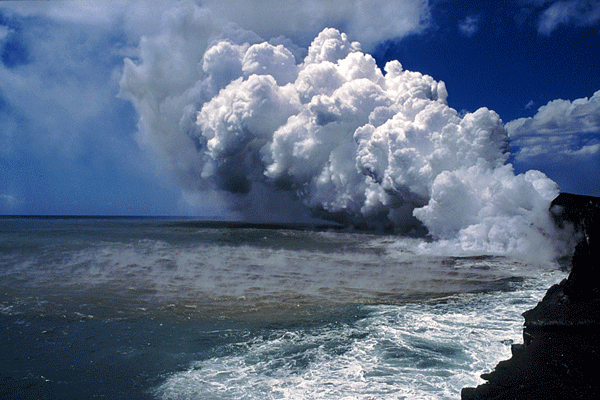
Toutefois, les volcanologues de l’Observatoire du Costa Rica (OVSICOR) tempèrent cet optimisme. Ils font remarquer que les panaches émis par l’Arenal contiennent essentiellement de la vapeur d’eau qui est probablement due aux fortes pluies qui se sont récemment abattues sur la région. Cette eau s’est infiltrée dans les fractures jusqu’à atteindre les roches très chaudes, ce qui a probablement produit la vapeur observée par les habitants de La Fortuna. De plus, aucune activité sismique n’a été détectée et les « grondements » sont certainement ceux produits par des chutes de roches suite aux dernières pluies.
Source: Inside Costa Rica.
 Is Arenal is becoming active again? For the last three days, locals in La Fortuna de San Carlos have reported « rumblings » and have taken photos of steam plumes emerging from the volcano. The possibility of an increase in volcanic activity at the volcano has brought optimism to the community which mainly depends on tourism but has seen a fall-off in tourists since the volcano fell asleep three years ago.
However, experts are cautioning not to get too excited. The Observatory of Costa Rica (OVSICORI) said that the plumes are containing mostly water, which may be the result of a recent increase in rainfall that subsequently made its way into the fractures of the volcano, producing steam when it reached hot sources. Besides, there has been no recorded seismic activity at the volcano and the ‘rumblings’ were likely falling rocks and boulders after recent heavy rains.
Source: Inside Costa Rica.


 Claude Grandpey : Volcans et Glaciers